Vikram-1 launch will be great boost for India’s private space sector: Pawan Kumar Chandana
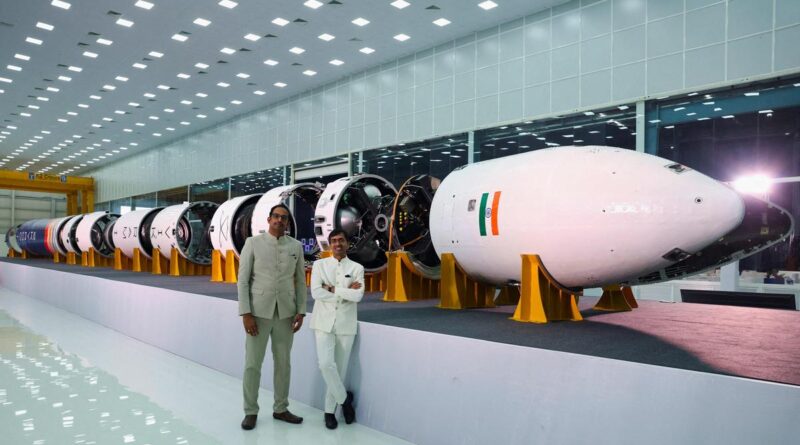
Pawan Kumar Chandana, co-founder & CEO of Skyroot Aerospace, spoke to The Hindu after the Hyderabad-based private space launch company announced the launch window for Vikram-1’s first test flight named Mission Aagaman from July 12 to August 4, 2026. The Vikram-1 launch vehicle is India’s first privately developed orbital-class rocket designed to carry small satellites weighing up to 350 kg to Low Earth Orbit. The rocket is now fully stacked at Satish Dhawan Space Centre in Sriharikota.
 What can we expect from Vikram-1’s first test flight?

The launch can happen anytime between July 12 and August 4 from the Satish Dhawan Space Centre (SDSC SHAR) in Sriharikota. Vikram-1 will be launched from the first launchpad of SDSC SHAR, which is India’s historic launchpad from where ISRO’s workhorse — the Polar Satellite Launch Vehicle (PSLV) — is generally launched. It is for the first time ever that a private company is launching from SDSC SHAR. The mission duration would be around 20 minutes. While ISRO will be offering their facilities, like launchpad, everything else during the mission will be overseen by us.
How different is Vikram-1 from ISRO launch vehicles, like the PSLV, GSLV, LVM3, or other rockets?
Among all the orbital vehicles, this is the smallest in size, a seven-storey-tall, multi-stage orbital launch vehicle. It has a payload capacity of over 300 kg to Low Earth orbit. This is smaller in size than the PSLV and the GSLV, and it is more of a dedicated rocket for launching small satellites.
During Vikram-1’s test flight, a mix of domestic and international customers would be joining it. Can you elaborate on this?
The launch vehicle would be carrying some test satellites and some inorbit payloads for inorbit experiments. We will be announcing the number of satellites which the launch vehicle will be carrying on-board in some time. While the purpose of this mission is to also launch these test payloads, the main objective is to gather and access critical data across propulsion, stage separation, guidance, navigation, control, and overall vehicle performance.
How significant is this launch for Skyroot Aerospace, and the private space sector in the country?
After India announced space reforms, which is opening up of the sector to private players, this is a major milestone considering that an orbital rocket is being launched. In fact, with the Vikram-S flight, Skyroot launched India’s first private rocket in November 2022. But that was a sub-orbital mission, and this is the first orbital mission with commercial capability for launching satellites in orbit. This is a major milestone as India’s ambition is to be a $44 billion market globally by 2033. Besides, globally, there are very few private companies that launch orbital-class rockets. An Indian company entering this market is a matter of great pride for the country, and also a great boost for India’s private sector.
What next after Vikram-1’s launch?
The second and third test vehicles are being manufactured. This is the first test flight. We will have more test flights. As part of the development process of any rocket, you need to have a certain number of test flights, typically two to three test flights might be required before a full commercial launch. We plan to have the second test flight this year, but it all depends on the performance of the Vikram-1’s flight.
 20
20 584226
 20
20
 20
20