Nagpur’s AI-driven nutrition initiative sees sharp fall in child malnutrition | Mumbai News
The Nagpur Zilla Parishad (ZP) has claimed significant improvements in child nutrition indicators under its AI-powered Anganwadi and nutrition monitoring initiative, reporting an 81.25% reduction in Severe Acute Malnutrition (SAM) cases between June 2025 and April 2026.
Implemented under the ZP’s ‘Mission Balbharari’ programme, the initiative combines AI-enabled Anganwadi centres with an AI Nutrition Tracker that allows real-time monitoring of children’s nutritional status. According to ZP officials, Nagpur has established 61 AI-enabled Anganwadi centres, making it one of the first districts in the country to use artificial intelligence for child-wise and centre-wise nutritional monitoring. The AI Poshan Tracker and AI Anganwadi system were developed in collaboration with Qolaba AI.

Data released by the Zilla Parishad showed that SAM cases declined from 923 to 173 during the period, registering a reduction of 81.25%.
Moderate Acute Malnutrition (MAM) cases fell from 4,252 to 1,196, a decline of nearly 72%. The number of severely underweight (SUW) children dropped from 1,696 to 995, while moderately underweight (MUW) children decreased from 10,397 to 4,674.
Officials also reported an increase in attendance at the 61 AI-enabled Anganwadi centres, from 1,608 children in June 2025 to 2,183 in April 2026. The number of children classified as having normal nutritional status rose from 75,712 to 79,188 during the same period.
Speaking to The Indian Express, ZP CEO Vinayak Mahamuni said the reduction in malnutrition indicators was the result of a coordinated public health effort, with AI serving as an enabling tool rather than the sole factor behind the improvement.
“Earlier, data was available, but identifying children who repeatedly appeared in SAM, MAM, SUW and MUW categories required significant manual effort. Through AI-based data segregation and analysis, we could generate child-wise lists, identify vulnerable children and prioritise them for follow-up,” Mahamuni said. He added that the system enabled Anganwadi workers, Accredited Social Health Activists (ASHAs), Auxiliary Nurse Midwives (ANMs) and health teams to focus interventions on the most vulnerable children. Around Rs 30 per day per child was spent on nutritional support for those identified in the SAM category.
Story continues below this ad
The AI system also helped with predictive analysis by identifying children at risk of slipping into more severe categories of malnutrition, providing an early-warning mechanism for intervention before their condition worsened.
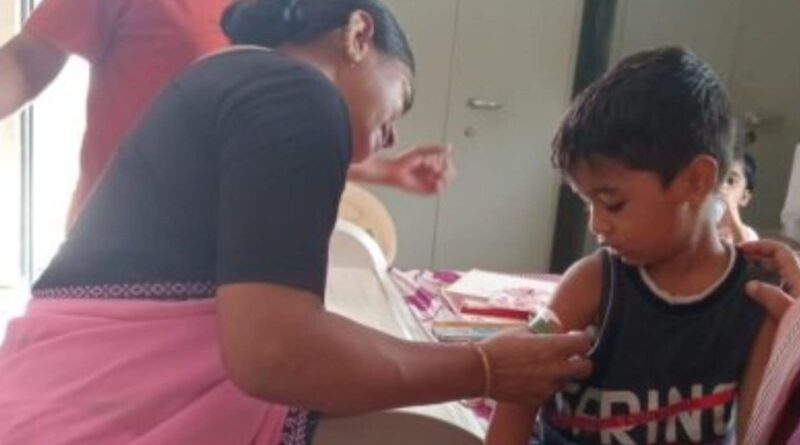
The AI Nutrition Tracker is used to monitor children’s height, weight and other health parameters in real time. Information on children identified as malnourished is shared with village-level stakeholders, including health teams and local authorities, to facilitate timely intervention.
Under the programme, Anganwadi workers, ASHAs and ANMs regularly record health data, which is then used to identify at-risk children.
Those identified with SAM and MAM receive health check-ups, nutritional counselling, referral services and follow-up support. The AI-enabled Anganwadi centres have also been equipped with digital learning infrastructure, including interactive panels and virtual reality headsets. Officials said these additions have helped improve attendance and engagement among children.
Story continues below this ad
Speaking about implementation challenges, Mahamuni said the model was designed to minimise barriers such as internet connectivity issues, training requirements and data-quality concerns. He stressed that Anganwadi workers are primarily responsible for accurate data collection, while the AI system handles analysis and risk identification. According to Mahamuni, the model is sustainable because it does not require extensive infrastructure at every Anganwadi centre and can be scaled through centralised data analysis and coordinated field-level action.
 20
20 584226
 20
20
 20
20