MahaMetro to shoulder any cost overruns on Kamptee-Kanhan corridor beyond sanctioned budget
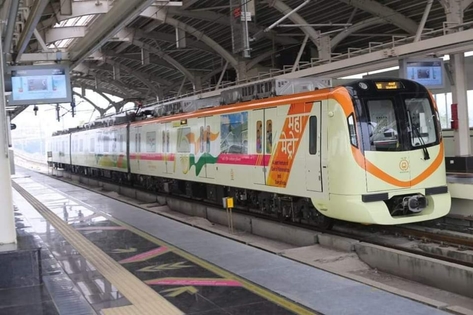
The Maharashtra government has formally approved the Kamptee-Kanhan Metro extension under Nagpur Metro Phase II, paving the way for construction of the final 1.4 km stretch that will extend Metro connectivity across the Kanhan River into Kanhan town.
The project has been scheduled for completion by December 2027, with the state making it clear that any expenditure exceeding the sanctioned project cost of Rs 310.35 crore will be borne entirely by MahaMetro.
The approval, issued through a Government Resolution (GR) following Cabinet clearance, establishes the project’s financing structure while limiting the state’s financial liability.
MahaMetro has been authorised to raise Rs 155.18 crore, representing 60 per cent of the eligible project cost, through bilateral, multilateral or other financial institutions.
The Centre and the Maharashtra government will each contribute Rs 39.88 crore as equity, while the state will also provide an interest-free subordinate loan of Rs 63.57 crore to support land acquisition, rehabilitation, taxes and financing costs.
The extension will introduce a new elevated station at Kanhan Town, strengthening Metro access to the rapidly expanding suburban corridor north of Nagpur.
Around 9,835 square metres of land will be acquired for the project, with Rs 27.10 crore allocated towards land acquisition and rehabilitation.
Civil works account for the largest share of the investment, including Rs 72.89 crore for the elevated viaduct and alignment and Rs 35.88 crore for station construction.
Additional allocations include Rs 33.77 crore for rolling stock, Rs 20.73 crore for signalling and telecommunications, Rs 14.77 crore for traction and power systems, and Rs 4.22 crore to improve multimodal integration.
The extension will utilise MahaMetro’s existing depots at Mihan and Hingna, eliminating the need for a separate maintenance facility.
The government has also approved the project’s fare framework, under which ticket prices will be linked to the existing Phase II fare structure with an annual escalation of 7 per cent.
Before commercial operations begin, MahaMetro will reassess the corridor’s financial viability and obtain state approval for any revisions if required.
While passenger fares will remain the primary source of income, the project also plans to generate revenue through advertising, station naming rights, commercial property development, parking facilities, kiosks and other non-fare sources.
Please click here to add Swarajya as your preferred and trusted news source on Google
Also Read: India’s Core Sector Growth Surges To Five-Month High Of 5 Per Cent In June Under Revised Base Year
 20
20 584226
 20
20
 20
20