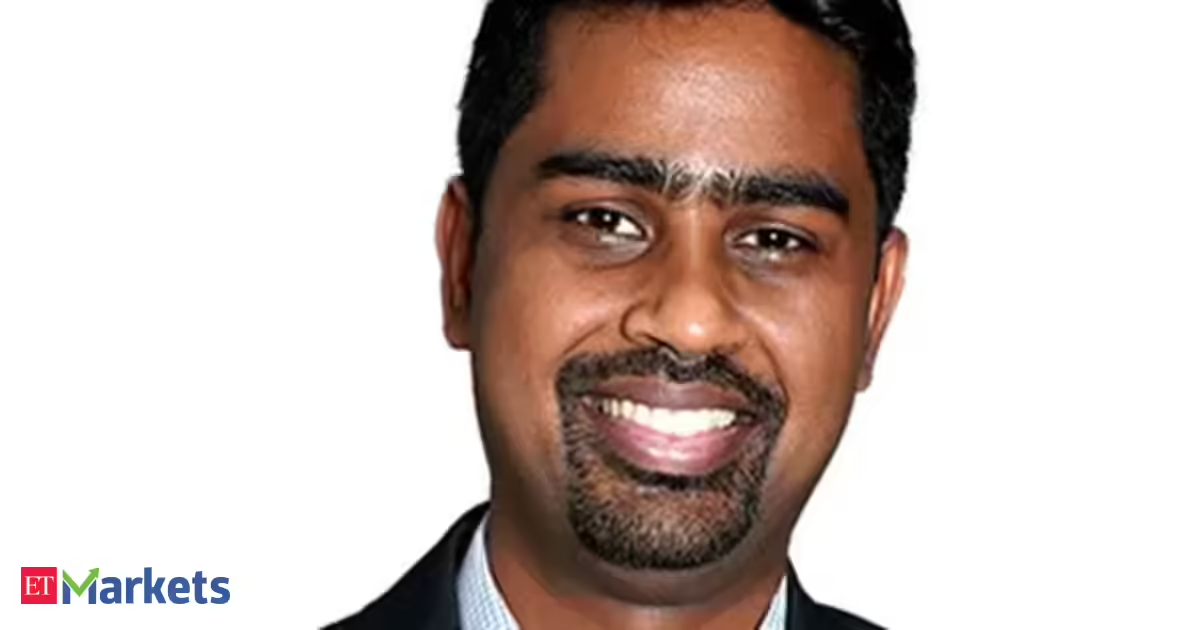

Rajeev Agrawal prefers domestic cyclicals as global markets stay concentrated in AI trade
On the sustainability of this trend, Agrawal emphasized that the AI cycle still has room to run as long as foundational models continue to improve and deliver tangible value to investors and enterprises. He pointed out that developments in large AI models are reinforcing capital allocation toward semiconductor-heavy economies, keeping the theme intact for the foreseeable future. In his view, this structural divergence is one of the key reasons why India has not been the preferred market for global investors in the current cycle.
Turning to energy markets, Agrawal addressed concerns around elevated crude oil prices and ongoing geopolitical tensions in West Asia, particularly around the Strait of Hormuz. While crude has remained elevated above the $100 per barrel mark, he suggested that the situation may gradually move toward de-escalation over the coming weeks. He explained that global oil dynamics are constrained by limited strategic reserves, making some form of diplomatic adjustment necessary. He also highlighted recent restrained responses between major geopolitical actors, suggesting that despite escalation risks, outright disruption has been avoided so far. Additionally, he pointed to the role of major global stakeholders, including China’s energy dependence and diplomatic leverage, as factors that could contribute to easing tensions over time.
On equity markets, Agrawal observed that global indices, particularly in the US, are already reflecting expectations that geopolitical disruptions will not persist indefinitely. US equities, including the Nasdaq and S&P 500, have posted mid-to-high single-digit gains, while Indian equities have lagged, especially when measured in dollar terms. He noted that higher oil prices have not yet fully filtered into corporate earnings in India, suggesting a lagged impact on profitability. However, he maintained that India’s underlying economic trajectory remains strong, expecting the country to sustain growth of over 6% in FY27, with earnings recovery likely to unfold over the medium term as macro pressures stabilize.
From an investment standpoint, Agrawal highlighted a clear shift toward domestic-oriented opportunities within India. He said that recent market corrections, particularly around March, have allowed investors to accumulate quality businesses at more attractive valuations. His focus has been on sectors tied to domestic growth rather than export-driven themes, given stronger visibility on local demand. Renewable energy, especially solar and wind, remains a key area of interest due to India’s push for energy independence and structural policy support. Financials and capital markets have also been important allocation areas, while selective opportunities in less crowded segments such as cash management are being evaluated. Overall, his strategy reflects a preference for domestic consumption-driven businesses, which he believes are better positioned to deliver consistent performance in the current environment.

The broader market picture, as outlined in the discussion, reflects a clear divergence in global equity leadership. AI-linked economies continue to dominate, semiconductor ecosystems are attracting sustained capital, and geopolitical factors are adding volatility to energy markets. Against this backdrop, India’s underperformance appears more cyclical and sectoral rather than structural, with earnings and flows likely to improve as global conditions stabilize over time.