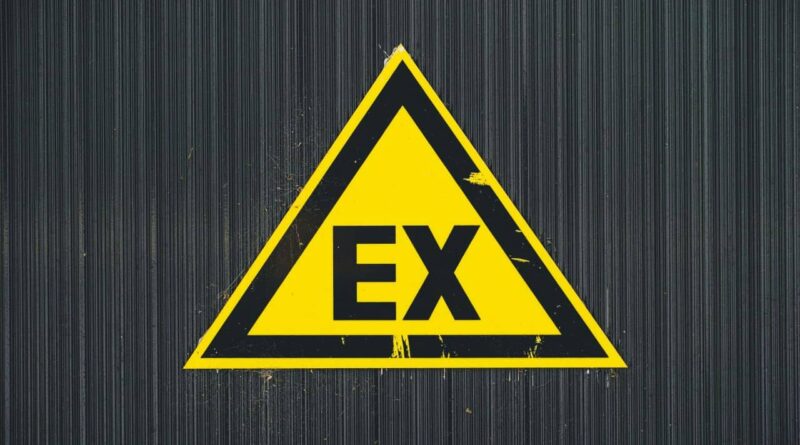
DPIIT eyes automation in explosives manufacturing after Nagpur blast killed 19 workers
The Department of Promotion of Industry and Internal Trade (DPIIT) is focusing on moving towards ‘automation’ in processes involved in manufacturing explosives to make operations safer, a senior government official has said.
The department, which functions under the Union Ministry of Commerce and Industry, has undertaken major regulatory reforms to strengthen safety and ease of doing business, DPIIT Joint Secretary Dr Kajal said on Thursday.
Talking to PTI in Nagpur on the sidelines of ‘Awareness workshop on reforms undertaken by the Petroleum and Explosives Safety Organisation (PESO)’, she asserted DPIIT is making concerted efforts to prevent accidental blasts at explosives manufacturing factories.
Asked what safety precautions DPIIT and PESO, which comes under the department, are taking to prevent blasts at explosives manufacturing units, the official said both agencies are making their best efforts to prevent such tragedies in the future.
She was asked specifically in the context of recent blasts at explosives units in Nagpur. At least 19 workers died and 23 were injured in a blast at the detonator assembly unit of SBL Energy, a mining and industrial explosives manufacturer, in Katol tehsil of the district in March.
Story continues below Advertisement
“We are trying to ensure that both sides make a combined effort, those who hold explosives licenses as well. The initial license is issued after looking at safety standards, the building, and everything. Now, coming to SOPs, both sides must follow a common SOP.
“An explosive factory has its own rules and SOPs that spell out how they should operate and manage day-to-day activities. On our side, we must decide how many inspections to carry out, how to enforce rules, and ensure compliance. So this is a combined effort from both sides,” she insisted.
DPIIT is trying to increase officers’ strength in PESO and the department recently sanctioned additional posts for which recruitment is underway, the official said.
Story continues below Advertisement
“We will continue to increase strength and build capacity so people understand how to implement SOPs, including PESO-related aspects. We will ensure these SOPs are properly followed. We will hold workshops with them (explosive units), so they remain aware of and adhere to rules and SOPs,” she stated.
DPIIT and PESO are focusing on moving towards ‘automation’ in processes in explosives manufacturing, she said.
“For example, electronic detonators have been introduced and old electric ones have been phased out and dismantled. With electronic detonators, you can know at which location and at what time a detonation occurred and why,” she maintained.
In 2025, safety standards were made more stringent to prevent accidents and continuous efforts are being undertaken to avert incidents, she informed.
“The government is making every effort to ‘automate’ critical processes and make rules more stringent. We do not want to hamper anyone’s business, but rules must be followed,” the bureaucrat emphasised.
“In critical areas, we will explore automation and test which steps can be automated to make operations safer. Explosives are inherently risky, so we are trying to figure out how much can be automated and at which points. We will see in time whether we are able to implement these reforms,” she said.
To a query on how DPIIT is looking at attracting foreign direct investment, she said India recorded an all-time high gross FDI inflow of nearly USD 95 billion in FY26.
“I think this year India has recorded over USD 94 billion (in FDI inflow). We have created a record, which is a very good thing, which shows investors have a very positive outlook for our country. DPIIT’s mandate is also to bring investment and the department is making all possible efforts so that our country, compared with other competing countries, proves to be a better location,” she stated.
“This reflects the confidence of foreign investors who are coming and investing in India, and we hope that next year we will cross the USD 100 billion-mark,” Dr Kajal said.
Earlier, at a press conference, she said under the Startup India project, more than 2.23 lakh startups across 56 industries have been recognised with over 51 per cent originating from Tier-II and Tier-III cities.
The initiative has supported creation of more than 23.36 lakh jobs and strengthened India’s innovation ecosystem, she said.
To accelerate industrial infrastructure development, DPIIT has proposed the development of 100 investment-ready industrial parks under the Bharat Audyogik Vikas Yojna initiative with Rs 33,660 crore outlay, she said.
The programme aligns with PM GatiShakti principles and focuses on multimodal connectivity and plug-and-play infrastructure, the official said.
She stated that India Industrial Land Bank has been expanded into a comprehensive GIS-enabled platform providing plot-level information on 2,541 industrial parks across all states and Union Territories, enabling investors to access industrial land and infrastructure information through a single digital interface.
As part of the government’s commitment to improving ease of doing business and promoting trust-based governance, DPIIT has advanced the Jan Vishwas reform agenda through measures aimed at decriminalising minor procedural violations and promoting a proportionate, compliance-oriented regulatory framework, the official maintained.
 20
20 584226
 20
20
 20
20