BMC vigilance department flagged structural faults in Mrinaltai Gore flyover 5 years before it was inaugurated | Mumbai News
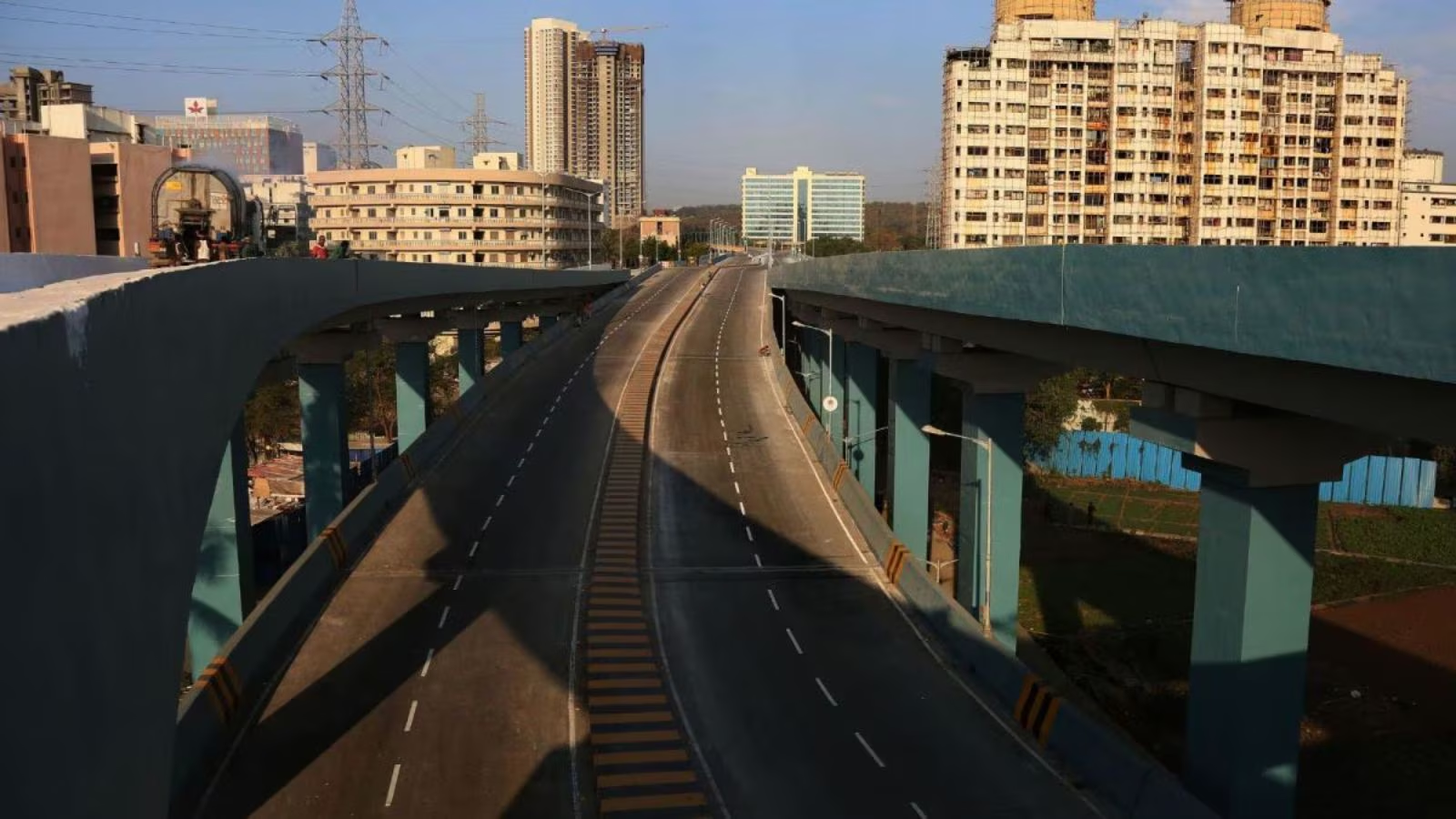
At a time when the newly constructed Mrinaltai Gore flyover is under the scanner for poor construction work, an internal vigilance report of the Brihanmumbai Municipal Corporation (BMC) has revealed that it had flagged multiple issues pertaining to the construction of the flyover two years ago.
The report was prepared in June, 2021 – three years after the work order for this project was issued by the civic body.
Within 24 hours after the bridge was inaugurated, citizens started to criticise the BMC authorities after videos of the surface road that emerged on social media showed wearing and tearing along with visible patchwork.
The BMC, however, issuing a statement on social media, defended the allegations stating that the condition of the road did not indicate any structural deficiency.
An official told The Indian Express that the civic vigilance department had submitted this report formally to the bridges department seeking a reply on the lapses that were pointed out in the report but no response has been received by the office till date.
Meanwhile, the reports point out a slew of lapses which included vigilance oversight, structural defects and incomplete records of crucial construction materials including steel and ready mix concrete (RMC).
One of the key lapses highlighted in the report was the vigilance team had already highlighted the possibility of development of cracks on the road surface once it opened for traffic.
Story continues below this ad
“There is a possibility of lifting (damaging) of the road panels adjoining the piers that have been erected for the flyover,” the report stated.
The observation further states that if the adjoining road is damaged, uplifted or becomes unsafe for traffic because of the flyover construction, the contractor would be responsible for repairing it at its own cost.
The report also sought clarification on whether the project’s design adequately addressed this risk and stated that any resulting damage rendering the road unsafe for traffic would have to be rectified by the contractor at its own cost.
The report also pointed out that cracks and honeycombs were seen in multiple joints and piers of the super structure.
Story continues below this ad
In civil engineering honeycombing is a phenomenon in which cavities resembling a beehive are seen to be formed on concrete surfaces as a result of poor compaction and leads to weaker strength.
The report stated that honeycombs and cracks were observed in as many as five pillars of the bridge.
The report also questioned that for the said lapses four separate penalties of Rs 500 were imposed on the contractor between February and May, 2019. However, the report states that the general contract conditions had set up the minimum penalty amount to Rs 5,000. The report also highlighted that the BMC didn’t impose any penalty on the contractor for the cracks and honeycombs that were developed on the surface.
The report also highlighted that the consulting engineer appointed for this bridge work was required to carry out a site inspection visit at least twice every month. However, the records show that there was no available record of visits made by the consultant.
Story continues below this ad
“The deputy chief engineer (Bridges) has been directed to take serious note of the lapses and initiate against concerned contractors,” the report read.
Meanwhile citizens and activists continued to criticise BMC owing to the poor construction work.
Social activist, Samir Shaikh said that the vigilance report contradicts the BMC’s explanation which it posted in its social media handle after people criticised the civic body for poor work.
“The BMC claimed that the road will become even after vehicles started to ply on it, while the work orders clearly suggest that the civic body should have already made the road surface even before opening it for the public,” Shaikh told the Indian Express.
Story continues below this ad
The 750-metre flyover, built at a cost of ₹247.97 crore, took nearly eight years to complete after the Brihanmumbai Municipal Corporation (BMC) issued the work order in November 2018. During this period, the project’s cost rose by nearly 45 per cent from the original estimate of ₹170.82 crore.
When contacted, officials from the BMC’s bridges department were unavailable for comments.
 20
20 584226
 20
20
 20
20