
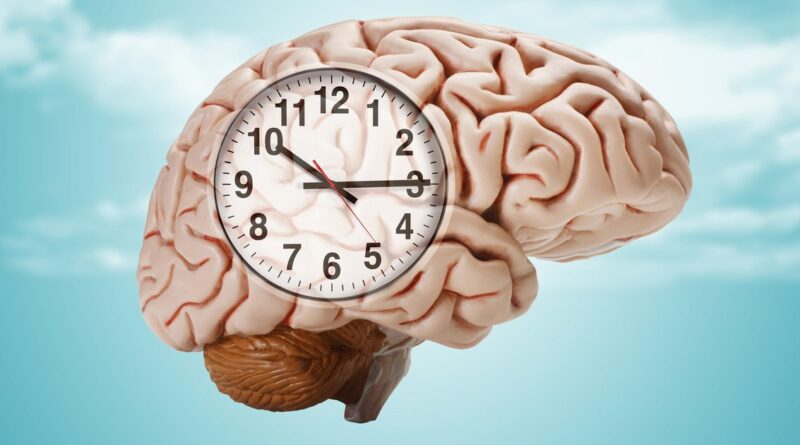
8 habits experts say are making your brain age faster (and how to turn back the clock)
Your brain age is worth thinking about. This organ ages along with the rest of us – but its rate of ageing could be either faster or slower than average, depending on a constellation of genetic, health and lifestyle factors.
We spoke to Professor Tara Spires-Jones, group leader and research division lead at the UK Dementia Research Institute, at the University of Edinburgh and author of Fighting for our Minds. She confirms that some of the factors known to accelerate brain ageing may be within our control.
“This is not to blame people for declining function, but there’s strong evidence to suggest there are things we can do in our everyday lives to make our brains more resilient,” says Prof Spires-Jones.
From what we eat and drink to physical and mental activities, this is how your lifestyle affects your brain age – and how achievable changes might turn back the clock.
What is brain ageing?
Brain ageing is the natural process of physical change in the brain throughout our lives. Like other aspects of ageing, we can speed it up or slow it down by making healthy lifestyle choices – although some factors, such as illness, injury and genetics, are uncontrollable to varying extents.
“We don’t fully understand the biology, but there are several things that happen in most people’s brains as we age,” says Prof Spires-Jones.
“Most of us experience brain shrinkage, which means our brain volume decreases due to loss of white matter and grey matter.
“We also start to have difficulty in getting rid of waste proteins, which are essentially the garbage in the brain. Two of the most problematic proteins, amyloid-beta and tau, are strongly associated with Alzheimer’s disease. When we’re young, these proteins get cleared efficiently, but as we age our ability to do this declines, so we develop clumps of protein pathology in the brain.”
Another accelerant of brain ageing is oxidative stress. This imbalance between two types of molecules – harmful free radicals and protective antioxidants – causes damage to DNA and proteins.
“Oxidative stress affects our neurons (nerve cells in the brain), which are very long-lived cells, most of which we’ve had since before we were born,” Prof Spires-Jones explains. “We lose a few neurons when we drink too much alcohol or have a head injury, but most of them are with us our whole lives. That’s one reason why they struggle to deal with proteins as we get older.”
According to Prof Spires-Jones, a third key factor in brain ageing is inflammation. “We accumulate inflammation as we age, and that manifests as immune cells becoming senescent – they go to sleep,” she says. “This change in inflammation status causes damage and loss of brain volume.”

What are the effects of brain ageing?
Brain ageing affects us all. It encompasses several physical changes in the brain, and the effects vary from person to person. Some people appear more resilient to certain changes (especially protein buildup) than others.
“Most of us will experience some cognitive decline, even in the absence of dementia or degenerative disease,” says Prof Spires-Jones. “Processing speed tends to go down, which can mean it’s harder to make decisions – but some things can get better with age, like vocabulary and general knowledge.
“Almost everyone experiences effects in other domains pretty subtly, like when you walk into a room and forget why you’re there.”
Dr David Choluj, a neurologist at London Neurology Clinic, looks for telltale signs of brain ageing when assessing his patients.
“They might report subtle indicators such as increased forgetfulness (for example, they misplace items more often), slower word-finding, difficulty multitasking or reduced mental stamina,” he says.
“Objective neurological findings may include slower gait, subtle slowing of information processing, impaired executive function, or changes on cognitive testing and other symptoms.
“Early identification is key, as many of the factors that contribute to these effects are modifiable.”
8 factors that accelerate brain ageing – and what to do about them
1. Smoking
If you’re a smoker, one brain ageing factor that you can focus on modifying is to quit the habit (which is easier said than done).
Smoking has been shown to accelerate thinning of the brain’s outer layer, which is called the cortex. This layer naturally shrinks as we age, affecting our capacity to plan, make decisions and solve problems – but smoking has been shown to speed up the process.
You almost certainly have time to limit the harm. Researchers at the University of Edinburgh identified that study participants who had given up smoking earlier in life tended to have a thicker cortex – contributing to a younger brain age – than those who had quit more recently.

2. Alcohol
Drinking excessive amounts of alcohol is another of life’s questionable pleasures that can cause a brain to age faster than average. Research has shown that the more disordered a person’s drinking is, the higher their brain age is likely to be relative to their chronological age. For this, we can thank alcohol’s infamous ability to kill brain cells – especially neurons.
The good news is that some of the neurological symptoms associated with alcohol abuse may be reversible. “Importantly, the treatment of alcohol misuse disorder and drug misuse can often lead to significant improvements in brain volume on follow-up scans,” says Dr Choluj.
There are plenty of tried-and-tested ways to cut down on alcohol.

3. Eating ultra-processed foods (UPFs)
Among the many ill effects of eating too many ultra-processed foods, accelerated brain ageing is surely one of the worst.
“UPFs such as sugary cereals, processed meats, packaged snacks and additive-laden ready meals are a big concern,” says Tony Ward, a rehabilitation-focused dietician and director at Neuro Rehab Nutrition.
“There is no direct evidence through randomised control trials, but observational evidence across large studies and different populations has found associations between UPFs and elevated neurodegenerative disease risk, as well as some structural brain changes.”
Where a UPF-heavy diet might contribute to brain ageing, healthier foodstuffs seem to have the opposite effect.
“Large observational studies are repeatedly finding that people who consistently follow a Mediterranean-style diet with minimal processed food can have lower rates of cognitive decline,” says Ward.
“Don’t try to be perfect as that will be hard to sustain; be consistent with plenty of vegetables, oily fish, extra virgin olive oil, legumes, wholegrains, nuts, and berries.
“Research shows modest but meaningful improvements in memory and cognition following consistent patterns of having B vitamin from wholegrains and leafy green veg, and fish have a protective role, too,” he adds.
Sadly, access to wholesome foods that contribute to healthy brain ageing is not equitable. “Across the UK we’re seeing huge inequalities in people’s ability to access food that is good for their health,” says Tilda Ferree, senior policy and advocacy officer at The Food Foundation.
“The poorest fifth of the population need to spend 49 per cent of their disposable income, rising to 85 per cent for households with children, to afford the government-recommended diet. This is compared to just 11 per cent for the wealthiest fifth. We need strong leadership and bold policies to ensure that our children can have a diet that’s good for their physical health, mental health and brain development.”

4. Sedentary lifestyle
“There’s strong evidence that a physically active lifestyle increases brain resilience,” says Prof Spires-Jones. “Exercise has been shown to boost neurogenesis, the formation of neurons. It also improves vascular health – and what’s good for your heart is good for your brain.”
Even climbing a taller flight of stairs each day is associated with cognitive benefits, so doing a little more physical activity can go a long way towards keeping your brain young.
One study focusing on post-menopausal women found that regular pilates training, in particular, can improve cognitive function as we age, boosting our verbal fluency and executive function.
“You’re stimulating your brain and body, so you’re then able to move better in everyday life,” says pilates specialist and founder of Studio 281, Georgia Testa.
“As people get older, they sometimes feel like exercise is something they’re no longer able to do, but pilates opens doors for movement even when someone has an ailment or injury, because it’s so low impact,” she says.
One of the advantages to an activity such as pilates is that it engages the mind, as well as the body.
“We see more cognitive benefits in older people who come to various classes to learn different types of pilates,” says Testa. “I get the sense that variety keeps your brain young, because you’re continually challenging it.”

5. Under-stimulation
You’ll often hear the phrase “use it or lose it” in discussions around cognitive decline – but a better phrasing might be “stimulate it to rejuvenate it”.
Certain mentally engaging activities have been shown to limit brain ageing. Playing a musical instrument and meditation are both particularly associated with neurological youth – so if you can find the time to be mindful or make music, your brain may benefit in the long run.
“Having a career that’s stimulating or challenging is associated with better resilience, and the same goes for any activity you’re engaged in outside of work,” Prof Spires-Jones notes.

6. Inadequate sleep
Research has linked sleep disorders with a two-year increase in brain age – but it’s not always clear-cut whether this relationship is causal.
“Both too little sleep and, in some cases, too much (the latter usually reflecting underlying ill health rather than being harmful in itself) are linked to poorer brain health and differences in both grey and white matter,” says Dave Gibson, sleep expert and founder of The Sleep Site.
“The glymphatic drainage system of the brain, which is thought to become substantially more active during sleep (especially the deep, slow-wave stage), is the most widely researched factor linking poor sleep to brain ageing.
“Reduced and fragmented deep sleep is associated with less efficient clearance of metabolic waste products such as beta-amyloid and tau, which are implicated in dementia and Alzheimer’s. However, most of the research is in animal studies, with emerging work in humans,” he adds.
Gibson has practical advice for those concerned about disordered sleep and its impact on their brains. “Sleep regularity is emerging as a predictor of health outcomes that is potentially as important as sleep duration itself,” he says. “So, having a regular bedtime and, especially, wake time, supports sleep quality, quantity, and restorative deep NREM sleep which is thought to be important for glymphatic clearance.”
Other avenues to explore include reducing alcohol consumption within a few hours of sleep, keeping your bedroom cool and doing aerobic exercise regularly.

7. Reckless approach to activities
Head injuries are a significant cause of brain ageing and neurological harm. We can’t always avoid them, but following good safety practices in sports and other activities will reduce the risk.
“Wear a helmet when an activity requires it, and try to avoid head-on collisions in contact sports,” Prof Spires-Jones advises.
If you play football, be aware that frequently heading the ball has been linked to cognitive decline. You might be best off using your feet, when possible.

8. Leaving hearing and vision problems unresolved
“I was surprised when research into this was published, but hearing and vision problems that go unchecked seem to accelerate brain ageing,” says Prof Spires-Jones.
“It seems to relate to under-stimulation. If you have hearing or vision loss, it’s likely you’re reducing stimulation in your brain.”
In a 25-year study, participants with hearing loss showed faster decline in all cognitive domains than participants without it, while below-average vision was shown to correlate with lower processing speed and executive control. Perhaps it’s time to book that eye test or hearing test.

How is brain ageing assessed?
“As neurologists, we can assess whether brain ageing appears broadly consistent with what would be expected for a person’s age using structural MRI, alongside the clinical history and neurological examination,” says Dr Choluj.
“We mainly look at brain atrophy, which occurs to a certain degree as part of normal ageing. If atrophy is more pronounced, it can relate to multiple external and internal factors such as neurodegenerative diseases, excessive alcohol consumption, recreational drug use, chronic stress, insufficient sleep and others.”
Another detectable aspect of brain ageing is white matter damage. “This is in the deep part of the brain that sends messages to other parts,” says Prof Spires-Jones. “We see signs on MRI scans called ‘white matter hyperintensities’. They’re like little dots and they indicate vascular damage.”

Your brain has years to gain
The difference between a person’s brain age and their chronological age is sometimes called the ‘brain age delta’ – a quantity of years, for better or worse. If you pay attention to the lifestyle factors discussed previously, there’s a good chance you can shift your brain age delta in the right direction.
Thinking about brain ageing can be unsettling, but it’s comforting to know that there are many options within our grasp to keep our brains ‘younger’ and healthier.
All health content on bbcgoodfood.com is provided for general information only, and should not be treated as a substitute for the medical advice of your own doctor or any other healthcare professional. If you have any concerns about your general health, you should contact your local healthcare provider. See our website terms and conditions for more information.
 20
20 584226
 20
20
 20
20