Running low: Mumbai’s water crisis fuels tanker price surge | Mumbai News
4 min readMumbaiJun 18, 2026 10:26 PM IST
The delayed onset of the monsoon, plummeting water stocks and soaring demand for additional sources of water have sent tanker rates spiralling across Mumbai, with citizens and developers reporting a significant surge in the prices of both raw tanker water and civic-run potable water tankers.
Typically, the rates of water tankers, which supply non-potable water drawn from groundwater sources such as borewells and ring wells, hover between Rs 1,200 and Rs 1,800. While a 2,000-litre tanker generally costs up to Rs 1,200, a 10,000-litre tanker costs around Rs 1,500.

However, this week, many residents have reported a sharp spike in rates.
Dipti Thakur Desai, secretary of Highland Tower in Kandivali’s Akurli area, told The Indian Express, “Generally, we pay Rs 1,500 for a borewell-water tanker, but today we paid Rs 2,000. Similarly, today I purchased potable water from BMC tankers at the rate of Rs 4,500, which is significantly higher than the Rs 3,500 we paid last summer.”
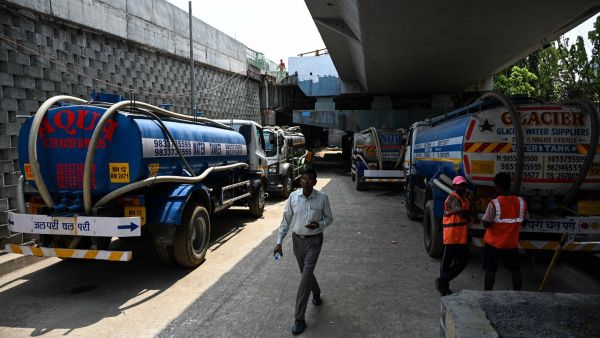 The spike in water tanker rates has also taken a toll on construction projects, where the BMC stopped supplying water from Wednesday. (File)
Despite the higher rates, Desai pointed to a lack of adequate supply. “Even though we are willing to pay higher rates, we are getting only one BMC tanker against the three tankers we require. Our building has over 120 flats and, with the ongoing water cut, we are left with no choice but to procure tanker water,” she added.
Residents of Oberoi Splendor in Jogeshwari East reported a similar jump in tanker rates.
According to Anita Pathak, a resident of the complex, the rate for a raw-water tanker has risen from Rs 1,200 to Rs 2,000, while the cost of potable water has increased from Rs 1,800 to Rs 2,500. Additionally, the transport cost of BMC-permitted tanker water has risen from Rs 3,000 to Rs 4,800 per tanker.
Story continues below this ad
“We are heavily reliant on water tankers in the face of the BMC water cut, as we are a complex of seven 27-storey buildings that is home to 5,000 residents, 300 building staffers and house helps. Additionally, we have staff washrooms on several floors for delivery personnel. Since the water cut was announced, we have been imposing water cuts throughout the night despite relying on water tankers. Over the past two days, tanker rates have risen,” Pathak claimed.
The spike in water tanker rates has also taken a toll on construction projects, where the BMC stopped supplying water from Wednesday. Amit Jain, chairman and managing director of Arkade Developers, said, “With the hike in water tanker rates, developers will face higher input costs and logistical challenges. For us, the way forward lies in integrating water-efficient construction practices, recycling wastewater and investing in rainwater harvesting infrastructure, enabling projects to remain on track while reducing reliance on costly alternative water sources.”
According to spokespersons for the Mumbai Water Tankers Association (MWTA), the spike in tanker rates comes amid declining groundwater reserves.
“In Mumbai, tankers draw water from borewells. However, we are facing an immense crisis as groundwater levels have fallen significantly. With water cuts in place and borewell levels depleted, we are also facing a challenging time as we have been receiving calls throughout the day for tanker supply,” they said.
Story continues below this ad
MWTA is the apex body of water tanker suppliers and supplies 2,000 million litres of water daily across Mumbai’s residential and commercial establishments through a registered fleet of 2,000 tankers.
The rising dependence on water tankers has been driven by stricter water cuts enforced by the BMC on Wednesday. While the city has been reeling under a 10 per cent water cut since May 15, the BMC on Wednesday suspended water supply to construction sites and swimming pools, while also enforcing a 20 per cent cut for commercial establishments. The measures were tightened owing to depleting lake levels and the delayed onset of the southwest monsoon.
On Monday, the total stock in the seven lakes catering to Mumbai’s potable water needs dipped below 10 per cent to 9.67 per cent of total capacity.

Stay updated with the latest – Click here to follow us on Instagram
 20
20 584226
 20
20
 20
20