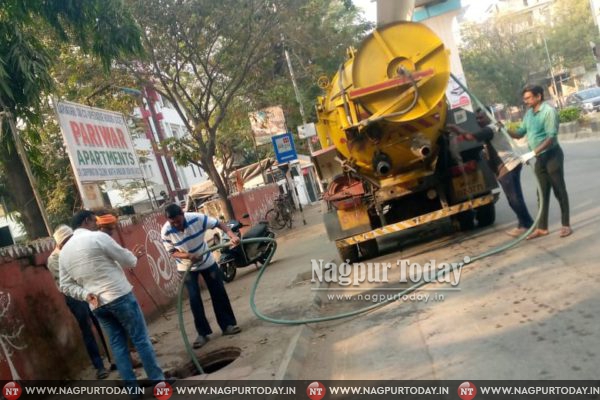
RTI EXCLUSIVE: Crores Spent on Drain Cleaning, So Why Does Nagpur Still Flood Every Monsoon?
Advertisement

 Nagpur : Every monsoon, Nagpur witnesses the same scenes—waterlogged roads, flooded homes and shops, traffic chaos, and disrupted daily life. While heavy rainfall is often blamed, a Right to Information (RTI) response has raised fresh questions about the city’s drainage management and the effectiveness of desilting operations.
The RTI, filed by RTI activist Abhay Kolarkar, sought details from the Nagpur Municipal Corporation’s (NMC) Solid Waste Management Department and Mechanical (Workshop) Department regarding expenditure on cleaning rivers and major drains. The information supplied by the civic body reveals that crores of rupees have been allocated and spent on drain-cleaning operations over the past few years.
Budget for Drain Cleaning Increased Every Year
According to the RTI reply, the sanctioned budget for cleaning major drains and rivers has steadily increased:
Gold Rate
July 30 ,2026 – Time 10.30Hrs
Gold 24 KT
₹ 1 43,100 /-
Gold 22 KT
₹ 1,32,800 /-
Silver/Kg
₹ 2,18,100/-
Platinum
₹ 88,000/-
Recommended rate for Nagpur sarafa Making charges minimum 13% and above

- 2022-23: ₹99 lakh
- 2023-24: ₹1.93 crore
- 2024-25: ₹7 crore
- 2025-26: ₹8 crore
- 2026-27: ₹9 crore allocated.
The documents also state that the estimated expenditure for drain-cleaning work during 2026-27 is approximately ₹4.95 crore.
Crores Spent on Machinery
The RTI further reveals that NMC hired heavy machinery for river-cleaning operations at significant cost:
Advertisement

- 2024: Approximately ₹2.89 crore
- 2025: Approximately ₹5.30 crore.
In addition, NMC spent around ₹8.79 lakh on fuel for its own long-boom excavator during 2026.
1,669 Personnel Deployed
The Solid Waste Management Department informed that 1,669 employees have been deployed across various zones for river and drain cleaning operations.
Rivers Cleaned in 2026
According to the official reply, desilting and cleaning work during 2026 covered the Nag, Pivli and Pohra rivers.
Questions That Remain
The RTI establishes that substantial public funds were allocated, manpower was deployed, and machinery was engaged for drain-cleaning operations.
However, it does not explain why several parts of Nagpur continue to experience severe waterlogging during heavy rains.
This raises several public-interest questions:
- Why do the same areas continue to flood every monsoon?
- Has the quality and effectiveness of drain-cleaning work been independently audited?
- Is the city’s drainage infrastructure adequate to handle current rainfall?
- Have civic authorities reviewed whether desilting operations are delivering the intended results?
The RTI documents provide expenditure and operational details but do not address these questions.
Need for Accountability
The information obtained by RTI activist Abhay Kolarkar has renewed debate over Nagpur’s flood preparedness. While the municipal records show increasing investment in drain-cleaning activities, residents continue to face recurring flooding during the monsoon.
With crores of public money being spent year after year, citizens are now asking whether the issue lies in execution, planning, drainage infrastructure, or monitoring—and whether greater accountability is needed to ensure that public expenditure translates into visible improvements on the ground.
Advertisement

 20
20 584226
 20
20
 20
20