
Record Assembly bypoll victory under her belt, Suntera Pawar now faces challenges in ‘stabilising’ NCP | Mumbai News
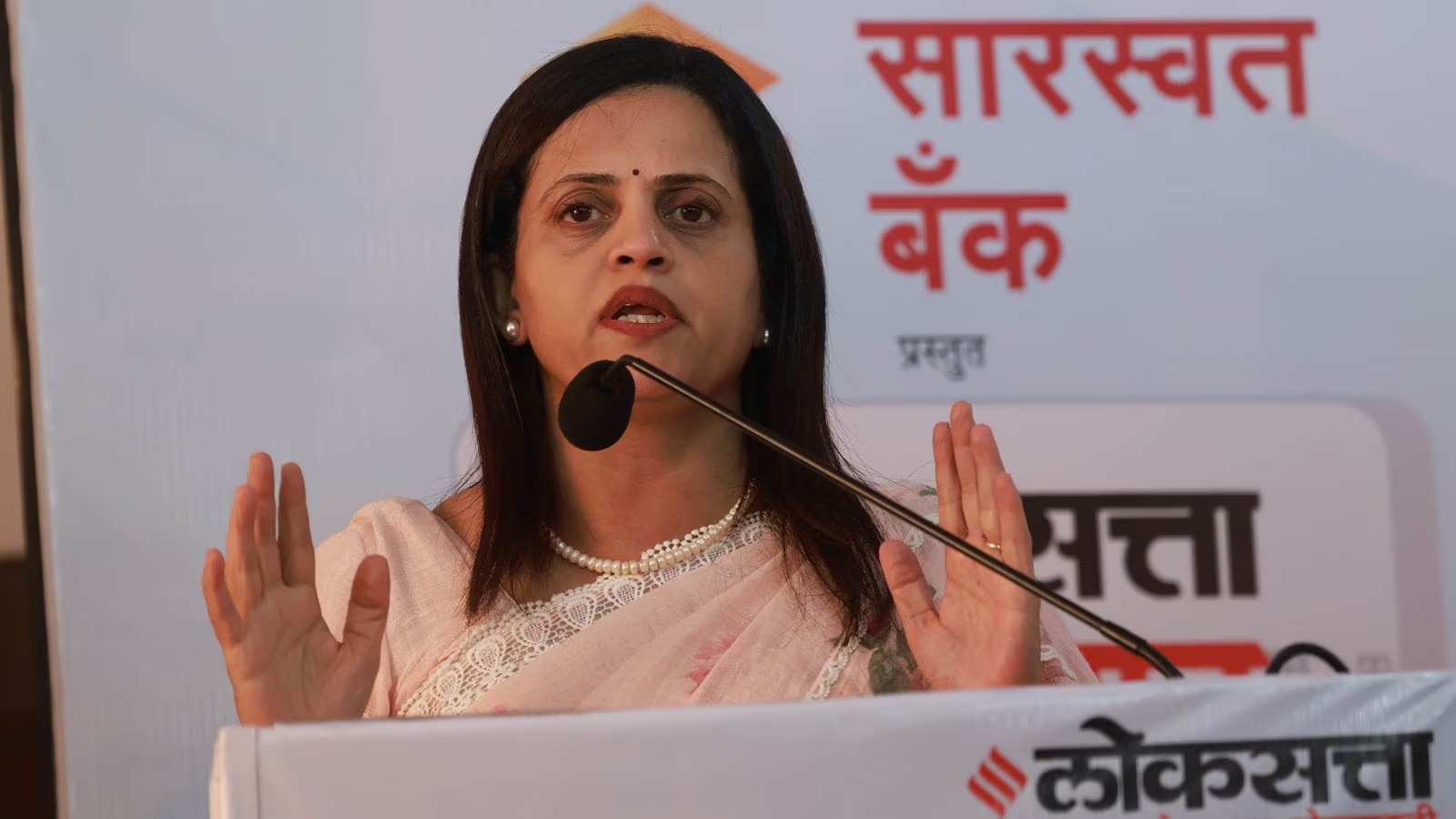
Three months after being sworn in as Maharashtra’s Deputy Chief Minister following the untimely death of her husband Ajit Pawar in an air crash, <strong>Nationalist Congress Party (NCP) chief Sunetra Pawar faces the formidable challenge of stabilising her party and executing an internal organisational reshuffle. The task requires her to assert control while also not rubbing entrenched senior leaders the wrong way.
On Monday, Sunetra registered a record victory in the Baramati Assembly bypoll, winning by a margin of around 2.18 lakh votes. Yet, her initial months in office have been anything but smooth in terms of organisational cohesion. From writing to the Election Commission (EC) to disregard party correspondence submitted before she assumed charge, to backing an unexpected candidate for the council elections, her decisions have been marked by unpredictability, unsettling many within the NCP.

Ajit was known for his accessibility to party workers and his firm grip over the bureaucracy — qualities that helped consolidate his authority. Sunetra, so far, has not demonstrated either attribute. While she has begun asserting her authority within the party structure, translating that influence into governance remains a key test in the months ahead.
Sunetra was sworn in as the state’s first woman Deputy CM on January 31, three days after Ajit’s death. Her appointment came amid ongoing tensions between factions of the NCP and the NCP (SP) over a possible merger — talks that had been initiated by her late husband.
Complicating matters is the growing influence of her son, Rajya Sabha MP Parth Pawar, who is increasingly seen as a power centre within the party. Her reliance on Parth and her younger son Jay for organisational decisions has caused discomfort among senior leaders, many of whom view the Pawar scions as politically inexperienced.
The unease was evident during the Baramati bypoll. Senior leaders and ministers had advised approaching the Congress to secure an unopposed election. However, Parth’s remarks against the Congress prompted the party to field a candidate instead. The development forced top leaders, including Chief Minister Devendra Fadnavis and Sunetra herself, to intervene and appeal to the Congress leadership to withdraw.
Early signs of internal discord also emerged following Sunetra’s letter to the EC. She requested that any correspondence submitted between January 28 — the day of Ajit’s death — and February 26, when she formally took over as party president, be deemed invalid. The move raised concerns among senior leaders, including working president Praful Patel and state unit chief Sunil Tatkare, who were reportedly taken aback. Since then, they have urged her to consult them before making key organisational decisions.
Story continues below this ad
Parth’s reported veto over the party’s council poll candidate further underscored his growing role in decision-making. Sources indicate that a broader organisational overhaul is in the works, with Parth expected to play a central role in shaping the party’s future direction.
Beyond internal dynamics, the circumstances surrounding Ajit’s death continue to cast a shadow. Sunetra’s limited public response to the incident has not gone down well with sections of the party, particularly as NCP (SP) MLA Rohit Pawar has been vocal in demanding a thorough probe. Whether she pushes for a deeper investigation remains to be seen and could become another test of her leadership.
Her position within the state government also appears constrained. Three months into her tenure, the NCP has been unable to secure a major portfolio for her. The finance department, previously held by Ajit, remains with the CM. Sunetra currently oversees Excise, Minority Affairs, and Sports and Youth Welfare.
Recent controversies have added to the party’s challenges. Fadnavis had to intervene and ask state women’s commission chief and NCP leader Rupali Chakankar to resign following allegations linked to an allegedly fraudulent godman. The episode was seen as an embarrassment for the NCP, which failed to act promptly. Additionally, two party ministers have already resigned amid controversies, while others, including Narhari Zirwal and Hasan Mushrif, continue to face scrutiny.
Story continues below this ad
Meanwhile, talks of a merger between the two NCP factions have been postponed indefinitely. The party now faces the dual challenge of maintaining internal stability while preparing for the 2029 Lok Sabha and Assembly elections. Unlike its allies — the BJP and Eknath Shinde-led Shiv Sena — which are actively expanding their base by inducting new leaders, the NCP appears preoccupied with internal issues.
For Sunetra, the road ahead is complex. She must not only consolidate her leadership within the party but also establish credibility in governance. With organisational tensions simmering and political rivals strengthening their position, her ability to navigate these challenges will determine the NCP’s trajectory in the coming years.