New Procedure for Type 2 Diabetes Shows Promising Weight Maintenance After Stopping GLP-1 Drugs, ETHealthworld
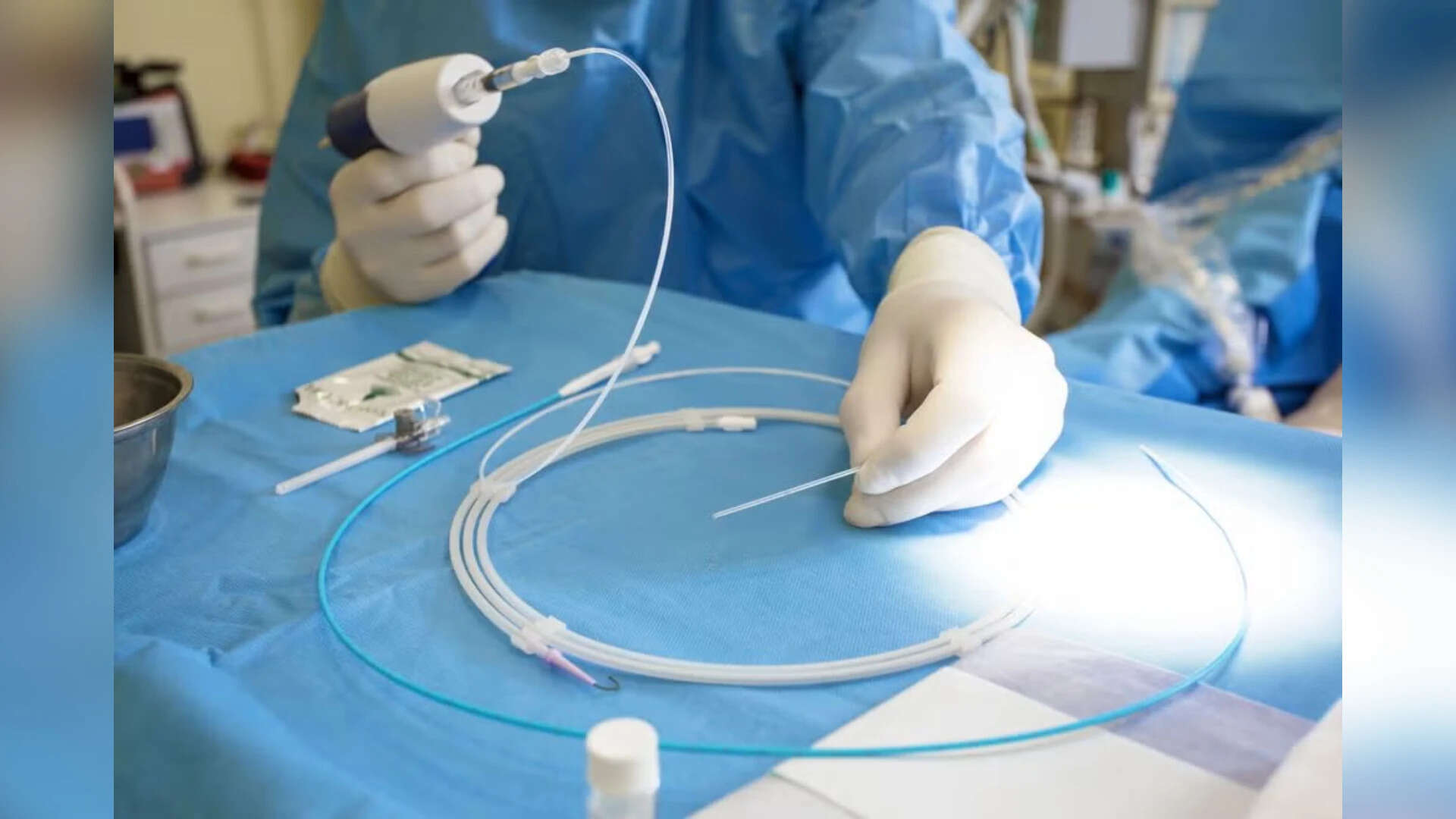
London: An outpatient endoscopic procedure used to treat type 2 diabetes can help prevent people from regaining weight after they discontinue taking GLP-1 drugs, interim results from a clinical trial suggest.
Patients in the trial had each lost at least 15% of their body weight, or about 40 pounds (18 kilograms) using Eli Lilly’s tirzepatide before they stopped taking the drug, sold as Zepbound for obesity and Mounjaro for diabetes.
Trial participants either underwent a procedure used to improve blood sugar control in type 2 diabetes called duodenal mucosal resurfacing, or a sham procedure.
Results from the first 45 people in the more than 300-patient trial found that those who had the sham procedure had regained 40% more weight than the treatment group at six months.
Patients who had the most tissue resurfaced maintained over 80% of their weight loss, regaining about 7 pounds (3.2 kg) on average – roughly half the weight regained by the control group, the researchers said.
Over time, high-fat, high-sugar diets can lead to changes in the lining of the duodenum – the upper part of the small intestine – ultimately rewiring how the gut responds to food. This affects hormone production, leading to insulin resistance and metabolic diseases, the researchers explained.
“As effective as GLP-1 medications are, many people stop taking them because of cost, side effects or simply not wanting to take a drug long-term,” study leader Dr. Shelby Sullivan of the Dartmouth Geisel School of Medicine said in a statement”Finding a treatment that allows patients to stop these medications without weight regain or loss of metabolic benefit is a huge unmet need,” she added.
Duodenal mucosal resurfacing uses heat to destroy the interior surface of the duodenum, allowing for regeneration of healthier tissue and “resetting” of individuals’ metabolism to their new post-GLP-1 weight.
The procedure is approved for patients with type 2 diabetes in Europe but is still considered experimental in the United States.
“These findings indicate that this minimally invasive procedure may provide lasting weight-loss maintenance,” Sullivan said.
The researchers plan to report their findings at the upcoming Digestive Diseases Week meeting in Chicago.
Trial sponsor Fractyl Health has said it expects to release six-month data on the entire study population and apply for regulatory approval by the end of 2026.
SURGERY MAY BE BEST FOR REPLACING FAILED ARTIFICIAL HEART VALVE
When an artificial mitral valve in the heart wears out, long-term survival is better when it can be replaced via open-heart surgery rather than in a minimally invasive procedure, according to a new study.
Over the years, medical advances have allowed doctors to repair or replace heart valves during catheter-based procedures without opening the chest, typically leading to shorter hospital stays and fewer complications.
In the study, patients who had their artificial valves replaced via open-heart surgery and those who underwent transcatheter mitral valve replacement through an artery in the arm showed similar safety and procedural success at 30 days.
However, key differences emerged over time, particularly beyond the first year, researchers reported in Annals of Thoracic Surgery.
Tracking 229 patients who underwent one or the other procedure to replace an artificial valve between 2004 and 2023, researchers found mortality rates at five years were roughly 20% in the surgery group versus 41% in the minimally invasive group.
The surgery group also had better valve performance at five years.
The choice between major chest-cracking surgery or the transcatheter option often depends on patients’ health status.
“These findings support current guideline recommendations that favor surgical replacement in low-risk patients with longer life expectancy, while reserving transcatheter approaches for those at higher operative risk,” study leader Dr. S. Christopher Malaisrie of Northwestern Medicine in Chicago said in a statement.
IS IT TIME FOR A LOW-PLASTIC DIET?
With tiny plastic particles finding their way into plants, animals and people, researchers in Australia tried to reduce exposure to the contaminants by adherence to a low-plastic diet. They randomly assigned 60 volunteers to follow either their usual routine or the low-plastic diet for seven days, according to a report in Nature Medicine.
Diet participants received combinations of plastic-free kitchenware, low-plastic personal-care products and food sourced from producers that minimized all plastic touchpoints from paddock to plate.
The interventions maintained participants’ daily energy intake while decreasing their urinary levels of markers of plastics exposure, including bisphenol A by nearly 60%. Urinary levels of mono-n-butyl phthalate were reduced by 37.5% and monobenzyl phthalate by 53.5%, the researchers found.
Unexpectedly, in a separate group of volunteers observed as they followed their usual routines, the researchers found that each additional serving of fruits and vegetables was associated with a roughly 2% decrease in urinary mono-iso-butyl phthalate but a 7% increase in urinary bisphenol S, two other markers of plastics exposure. “This leads to the question of whether these chemicals are in the food at the time it is harvested,” a separate team of researchers wrote in a commentary published with the study.
“Growing evidence now reveals that agricultural soils are a major long-term sink for plastic pollution,” they said, particularly from plastic particulates in the sewage sludge used as fertilizer on agricultural lands.
“Recommendations for how individuals can minimize their personal exposure are numerous,” the commentary authors wrote. “However, this study also illustrates a more pervasive problem that will only be addressable through large-scale regulatory actions on behalf of public health.”
(Reporting by Nancy Lapid; additional reporting by Shawana Alleyne-Morris; Editing by Bill Berkrot)

 20
20 584226
 20
20
 20
20