India’s Bold Health Insurance Reforms to Combat Rising Medical Costs, ETHealthworld

Mumbai: India is weighing wide-ranging reforms of health insurance, from benchmarked treatment rates to a nationwide claims exchange, as it looks to boost transparency in a struggle to hold down some of the highest medical inflation in Asia, two sources said.
Medical inflation of roughly 12% to 14% a year, according to industry estimates, puts pressure on families and prompts authorities to hunt ways to standardise pricing and coverage, said the sources, who are directly familiar with the matter.
Reform recommendations are expected by year-end from a panel of regulators, industry leaders, hospitals and the Confederation of Indian Industry (CII) group, with implementation to be rolled ut later, added the sources, who sought anonymity as the discussions are private.
“The idea is to benchmark treatment rates, agreed between insurers and hospitals, to reduce disputes and fraudulent claims,” said one of the sources.
Industry estimates suggest 10% to 15% of health claims are unwarranted or fraudulent, one of the sources said.
The chief of the Insurance Regulatory and Development Authority of India (IRDAI) chairs the panel, the sources said.
The regulator IRDAI did not respond to requests for comment. A CII spokesperson declined to comment.
INDIA LOOKS TO SPUR HEALTH INSURANCE
India wants more of its population of 1.4 billion to invest in insurance, where such spending stands at less than 4% of GDP, as compared to a global average in excess of 7%.
It has lifted curbs on foreign investment and reformed distribution of its $130-billion insurance industry in the effort to do so.
More than 40 insurers, including joint ventures of global groups such as Lombard, ERGO and AIG, operate in India’s health insurance market, generating premiums of about 1.17 trillion rupees ($12.3 billion) in the fiscal year ended March 2025.
Just this week, lawmakers urged government action to make private healthcare more affordable, as rising costs for consumers prompt authorities to focus on health insurance.
Private hospital stays in India cost about $530 on average, as compared to $70 at public facilities, a parliamentary committee report showed last week.
Standardised tariffs and billing transparency are seen as the biggest levers to slow the rampant growth of costs over time, said one of the sources.
The reforms envisage a common health insurance product that all insurers will be required to offer alongside existing plans, aiming to standardise coverage and rates for a range of illnesses and procedures, the sources said.
UNIFORM LIST OF ADMISSIBLE TREATMENTS
It could also include a uniform list of admissible treatments that makes coverage provisions easier for policyholders to understand.
The widely varied rates and coverage now on offer from providers prompt consumers to switch policies more often in search of the best deal.
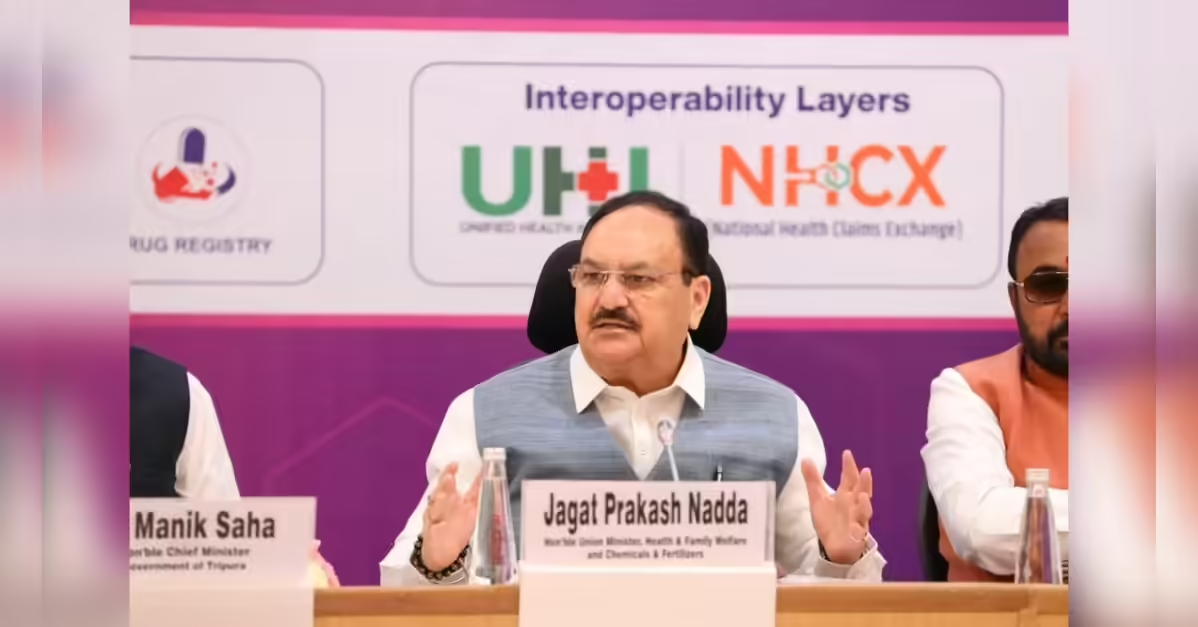
The committee will also push for wider adoption of the National Health Claims Exchange, a platform developed by India’s health ministry and the insurance regulator, the sources said.
It would offer hospitals and insurers a common format to share claims and billing data, allowing faster settlement by speeding up verification and making prices more transparent.
“By functioning as a bridge … the common exchange can significantly speed up time to settle claims at the time of discharge,” said Amit Chhabra, the chief business officer of online insurance marketplace Policybazaar.
($1=95.4350 Indian rupees)

 20
20 584226
 20
20
 20
20