
India to become major defence exporter in 25-30 years: Rajnath Singh | India News
4 min readMumbaiUpdated: May 23, 2026 10:23 PM IST
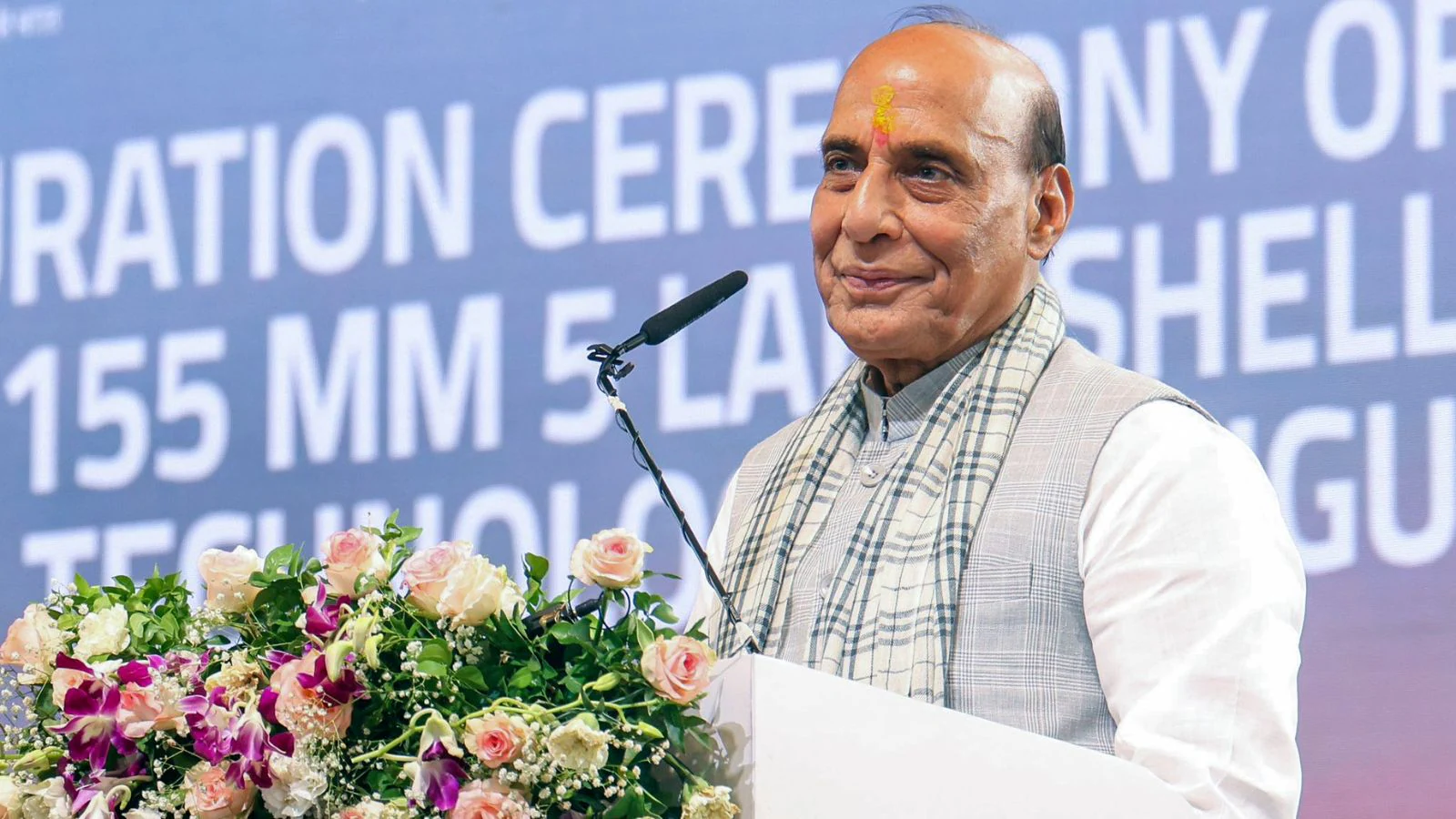
Defence Minister Rajnath Singh on Saturday said India has the potential to emerge as a major global exporter of defence equipment within the next 25 to 30 years, asserting that countries with strong indigenous defence capabilities “write their own destiny”.
Addressing a gathering at Shirdi in Maharashtra, Singh flagged off the first batch of the ‘Suryastra’ universal rocket launchers from Nibe Ltd’s upcoming facility for induction into the Indian Army. The rollout marks partial fulfilment of a Rs 293-crore emergency procurement order awarded to the company in January.

“We are witnessing not one or two, but several milestones today,” Singh said, referring to the launch of a modern artillery shell manufacturing facility with an annual capacity of five lakh shells, the foundation stone laying for a missile complex linked to the Universal Rocket Launching System, and the signing of a contract with the US-based BlackSky.
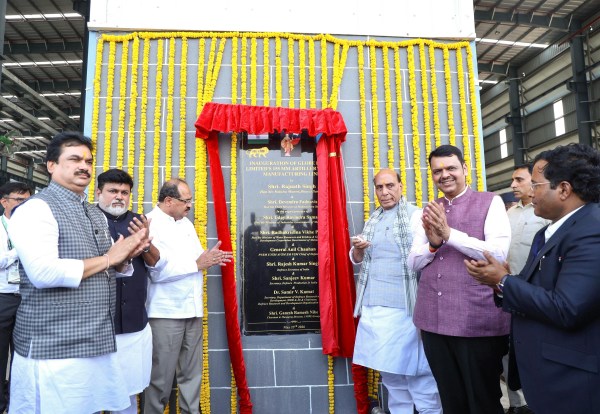 Union Defence Minister Rajnath Singh inaugurates the Missile Complex & Artillery Shell Production Line in Ahilyanagar on Saturday. Maharashtra Chief Minister Devendra Fadnavis, and Legislative Council Chairman Ram Shinde and others also seen. (@CMOMaharashtra X/ANI Photo)
“As we have experienced, the country that manufactures its own weapons is the one that shapes its own destiny,” he said, adding that foreign firms were increasingly seeking partnerships and technology transfer agreements with Indian companies.
Highlighting the transformation in India’s defence sector, Singh said the country had earlier depended heavily on imports for military equipment. “Gone are the days when India was known only for manufacturing nuts and bolts. Today, we are moving rapidly towards indigenous production of advanced weapon systems that strengthen the armed forces,” he said.
The minister said private-sector participation has increased to 25-30 per cent in defence manufacturing, and is expected to rise to nearly 50 per cent in the coming years.
“The visit to this (missile) complex has reassured me of India’s capabilities,” he added.
Story continues below this ad
Chief Minister Devendra Fadnavis, also at the event, said that Maharashtra was poised to become a leading hub for defence manufacturing in the country. “The Defence Minister has approved a defence corridor for Maharashtra. We already have defence hubs in Nashik, Pune, Ahilyanagar and Nagpur,” Fadnavis said.
He said India has never attacked another nation but always delivered a strong response when provoked. “A strong and powerful nation alone can ensure security and stability, both domestically and globally,” he said.
Earlier in the day, Singh inaugurated Nibe Group’s Rs 3,000-crore defence manufacturing complex in Shirdi. Among others present were Chief of Defence Staff General Anil Chauhan, DRDO Chairman Samir V Kamat and Nibe Group CMD Ganesh Nibe.
What is ‘Suryastra’?
According to the company, the ‘Suryastra’ system — developed using technology from Elbit Systems and in-house research and development — successfully underwent firing trials on May 18 and 19 at the integrated test range.
Story continues below this ad
The launcher features “shoot-and-scoot” capability and can fire multiple types of munitions, including precision-guided rockets with ranges between 150 km and 300 km, besides loitering munitions with operational ranges of up to 100 km.
Nibe Group Chief Technical Officer Balakrishnan Swamy said the Indian Army could eventually require seven to nine regiments of the ‘Suryastra’ system, potentially translating into orders worth nearly Rs 6,000 crore over the long term.
The company also plans to invest Rs 10,000 crore in phases to expand manufacturing capacity, strengthen the local supply chain and generate around 5,000 jobs, he said.
Swamy further said an indigenous drone with a strike range of 1,000 km is expected to be ready for demonstration within six months. The project, he said, draws lessons from the battlefield deployment of Iran’s Shahed Kamikaze drones being used in conflicts involving the US and Israel.
 20
20 584226
 20
20
 20
20