How to make Pomegranate Juice – Dassana’s Veg Recipes

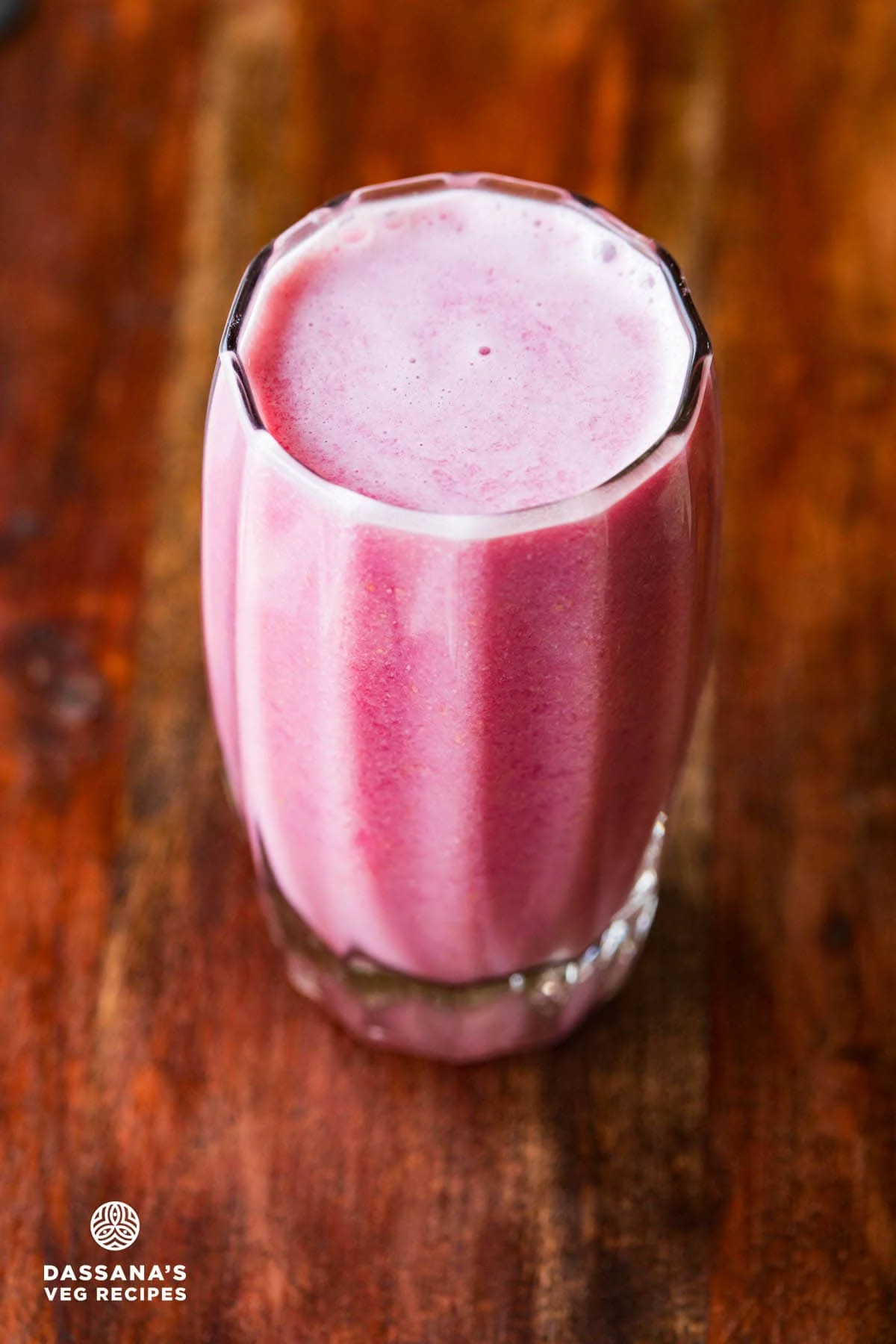
Fresh Pomegranate Juice is a naturally sweet and slightly tart fruit juice made by extracting the juice from pomegranate arils. In this recipe, I show you how to make pomegranate juice using both an electric juicer and a blender. This homemade version has no added sugar, and its color can range from pale pink to deep ruby red depending on the variety of pomegranate you use.

My Homemade Pomegranate Juice
Pomegranate juice, or anar juice as we commonly call it in India, is one of the fresh fruit juices I like to make at home. When good pomegranates are in season, I prefer making fresh juice. If the fruit is naturally sweet and juicy, there is no need to add any sugar.
An easy way to remove the arils. Pomegranates can stain your hands, clothes and work surface while you are cutting and opening them. I use a bowl of water to separate the arils from the peel and white pith. The arils settle at the bottom while much of the lighter pith floats, making the fruit much easier and less messy to prep.
No special equipment needed. I usually make the juice in a blender. You only need to pulse the arils enough to release their juice and then strain it. Avoid grinding them for too long, as finely crushed seeds can make the juice gritty and may also give it a slightly bitter taste. You can also use an electric juicer if you have one.
About the different colors in my photos. The preparation photos in the step-by-step were taken earlier with locally grown organic pomegranates that had very pale pink arils, though they were naturally sweet. For the juicing photos, I have used another variety with deep ruby-red arils, which gives the juice its brighter pink color. Pomegranate varieties differ naturally in color, so your homemade juice may be lighter or darker than mine.
Pomegranates naturally contain polyphenols and other nutrients. I enjoy this juice without any added sugar or flavorings, especially when the fruit is naturally sweet and juicy.
I hope this simple method makes preparing fresh anar juice at home easier for you.

Ingredients
- Pomegranates: Fresh, ripe and juicy pomegranates are all you need for this recipe. Both pale and deep-red varieties work well. The flavor can range from quite sweet to sweet-tart depending on the variety.
- Water (Optional): You don’t need water to make pure pomegranate juice. Add a little water after juicing only if you prefer a lighter, less concentrated juice.

How To Choose A Good Pomegranate
Choose pomegranates that feel heavy for their size. A heavier fruit generally contains more juice.
The fruit should feel firm and have intact skin without soft, mushy areas or signs of mold. Don’t judge a pomegranate only by how red its skin looks. Skin and aril colors vary considerably between varieties.
The same applies to the arils. They may be pale pink, bright red or a deep ruby color. Pale arils do not necessarily mean the fruit is unripe or less sweet.
More Homemade Fruit Juices To Try
How To Make Pomegranate Juice (Stepwise)
Prep Pomegranate
1. Rinse 2 to 4 medium to large pomegranates well. Slice off a thin portion from the top of each fruit.

2. Cut each pomegranate into 4 sections. Take care while cutting, as pomegranate juice can stain clothes and some work surfaces.

3. Fill a large bowl with enough water to immerse the pomegranate pieces. Place the quartered pomegranates in the water.

4. Keeping the pieces submerged, loosen the pomegranate arils from the peel and membranes with your fingers.
The arils will settle towards the bottom while much of the white pith will float. Remove and discard the peel and floating pith.

5. Drain the arils in a strainer and let all the water drain away.
A note about the photos: The pomegranates shown in the preparation steps above are a locally grown variety with naturally pale-pink arils. For the remaining juicing steps, I have used a different variety with deep ruby-red arils. Both varieties work for making pomegranate juice, and the final color will depend on the pomegranates you use.

Using A Juicer
6. Add the pomegranate arils to the feeding tube of an electric juicer. Run the juicer so that the arils are crushed and the juice is extracted.

7. Continue juicing until all the arils are processed. The fresh pomegranate juice will collect in the juicer container.
Pour the fresh juice into glasses. If you prefer a lighter juice, stir in a little water after juicing. Serve immediately.

Using A Blender
1. Add the pomegranate arils to a blender or mixer-grinder jar. Depending on the size of your jar, work in batches if needed.
2. Pulse a few times until the arils break down and release their juice. Avoid blending continuously or grinding the seeds very finely, as this can make the juice gritty and slightly bitter.

10. Place a fine-mesh strainer over a bowl or pan. Pour the blended pomegranate mixture into the strainer.

11. Stir and press the pulp with a spoon to extract as much juice as possible. Discard the remaining seed pulp.

12. Pour the fresh pomegranate juice into glasses and serve straightaway. If the flavor is too concentrated for you, mix in a little water according to taste.

Serving Suggestions & Storage
Serve pomegranate juice fresh, preferably soon after making it. You can serve it at room temperature or chilled, depending on your preference.
For a colder drink, chill the pomegranates before juicing rather than adding plenty of ice, which can dilute the flavor.
If you have leftover juice, transfer it to a covered glass bottle or container and refrigerate for up to 1 day. You can also freeze leftover juice in ice-cube or popsicle molds.
The pomegranate ice cubes are useful for adding to sparkling or plain water. You can also use the fresh juice in my Pomegranate Smoothie.
Dassana’s Recipe Tips
- Choose by weight: Pick pomegranates that feel heavy for their size, as they generally contain more juice.
- Don’t judge by color alone: Pomegranate skin and arils can range from pale pink to deep crimson depending on the variety. Pale arils can be just as sweet as darker ones.
- Use the water method: Separating the arils in a bowl of water keeps the preparation relatively neat and makes it easier to separate the white pith.
- Don’t over-blend: Pulse the arils just enough to release their juice. Finely grinding the inner seeds can give the juice a gritty texture and slightly bitter taste.
- Skip the sugar when possible: Taste the juice first. Naturally sweet pomegranates don’t need any added sweetener.
- Adjust the consistency: For pure pomegranate juice, don’t add water. Add a little only if you prefer a milder or less concentrated drink.
Preparation
-
Rinse the pomegranates well and slice off a thin portion from the top.
-
Cut each pomegranate into 4 sections.
-
Fill a bowl with water and place the quartered pomegranates in it.
-
Keeping the pomegranate pieces immersed in the water, use your fingers to gently separate the arils from the peel and white pith.
-
The arils will settle at the bottom of the bowl while much of the white pith floats to the top. Remove and discard the peel and pith.
-
Drain the arils thoroughly in a strainer and set aside.
Making Pomegranate Juice In A Blender
-
Add the pomegranate arils to a blender or a mixer-grinder jar.
-
Pulse the arils a few times until they are lightly crushed and release their juice. Avoid blending or crushing the seeds too finely, as this can give the juice a gritty texture.
-
Place a fine-mesh strainer over a bowl or pan and pour the blended pomegranate mixture into it.
-
Using a spoon, stir and press the mixture against the strainer to extract as much juice as possible. Discard the remaining seed pulp.
-
Pour the fresh pomegranate juice into glasses and serve immediately.
-
If you find the juice too concentrated, add a little water as needed. You can also dilute it with another fruit juice of your choice.
Juicing In An Electric Juicer or Slow Juicer
-
Prepare the pomegranates as described above and set the drained arils aside.
-
Add the pomegranate arils gradually to the feeder tube of an electric juicer or slow juicer.
-
Run the juicer until all the arils are processed and the juice is extracted.
-
Pour the fresh pomegranate juice into glasses and serve immediately.
- Make ahead: For the best flavor and freshness, I recommend drinking pomegranate juice soon after making it. If needed, keep leftover juice covered in the refrigerator for up to 1 day.
- Prep ahead: Remove the pomegranate arils in advance and refrigerate them in an airtight container for 1 to 2 days. You can also freeze the arils for 1 to 2 weeks.
- Freeze leftovers: Freeze leftover pomegranate juice in ice cube or popsicle molds. Add the frozen juice cubes to plain, mineral or sparkling water, or enjoy the popsicles as a refreshing treat.
- Make pomegranate syrup: Simmer leftover juice until it reduces to a thick, syrupy consistency. Use the syrup with desserts, drinks, pancakes, ice cream or puddings. Refrigerate in a covered container for up to 1 week.
Calories: 234kcal | Carbohydrates: 53g | Protein: 5g | Fat: 3g | Saturated Fat: 1g | Polyunsaturated Fat: 1g | Monounsaturated Fat: 1g | Sodium: 154mg | Potassium: 666mg | Fiber: 11g | Sugar: 39g | Vitamin B1 (Thiamine): 1mg | Vitamin B2 (Riboflavin): 1mg | Vitamin B3 (Niacin): 1mg | Vitamin B6: 1mg | Vitamin C: 29mg | Vitamin E: 2mg | Vitamin K: 46µg | Calcium: 28mg | Vitamin B9 (Folate): 107µg | Iron: 1mg | Magnesium: 34mg | Phosphorus: 102mg | Zinc: 1mg
Pomegranate Juice recipe from the archives was first published on May 2017.
 20
20 584226
 20
20
 20
20