
Congress grapples with internal strain & shrinking footprint
Congress MP Jairam Ramesh and media department head Pawan Khera were scheduled to hold a press conference in the evening, but it did not take place, signalling a lack of excitement due to the poor performance in the other four states.
The party has been reduced to single digits in West Bengal, Tamil Nadu and Puducherry, and has fallen short in Assam—a contest where it was expected to mount a serious challenge.
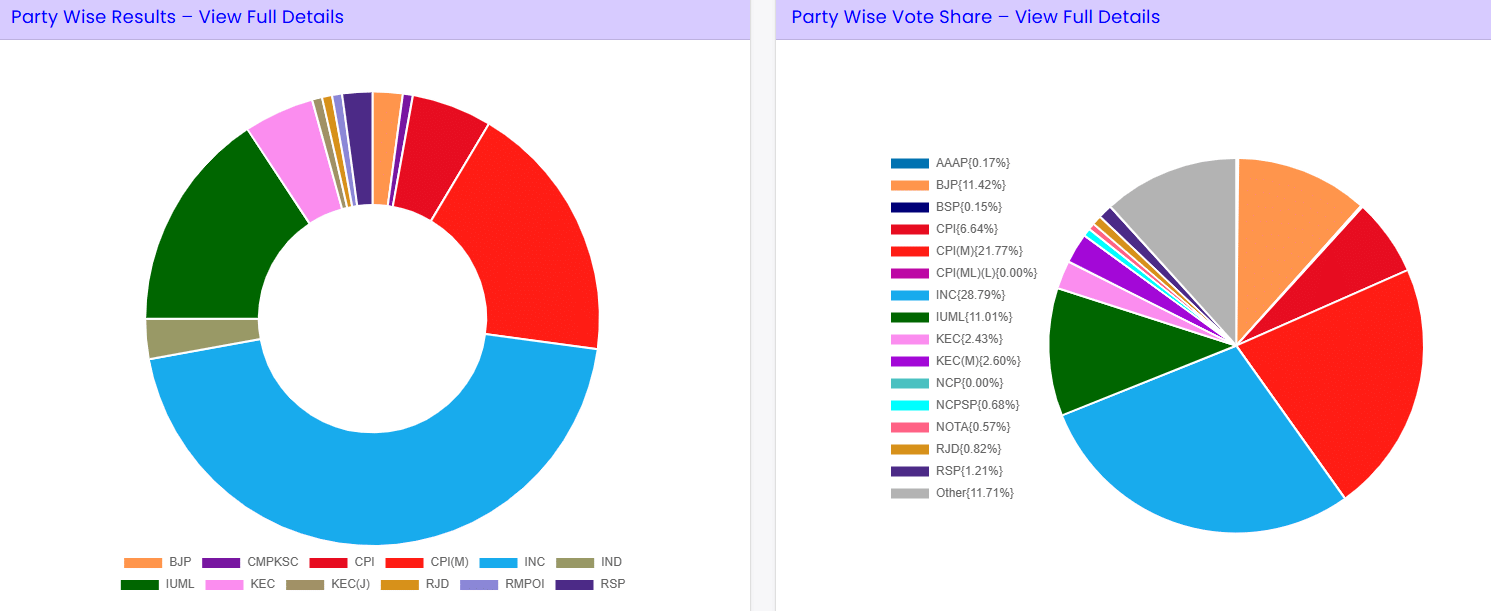
The Congress ended up with just two seats in West Bengal, five in Tamil Nadu and one in Puducherry. It won 19 seats in Assam.
Its lone success in Kerala, under the UDF alliance, appears driven more by anti-incumbency against the Left Democratic Front (LDF) government than a decisive endorsement of the Congress’s own organisational strength.
Reshaping the contours of national politics, India’s 2026 assembly verdict shows the deepening crisis within the Indian National Congress, which is grappling with consecutive electoral losses across key states and a shrinking national footprint.
The bigger setback for the Congress is not just the election result, but the cascading effects of severed ties within the INDIA bloc, a weak organisational structure, factional infighting, and deepening credibility issues that continue to erode its position across states.
Despite a significant uptick in its national tally in the 2024 Lok Sabha elections—where the Congress won 99 seats with around 21 percent vote share—the party has struggled to translate that momentum into state-level gains.
In Haryana, it fell short of power despite winning 37 seats with 39 percent vote share, losing to the BJP. In Maharashtra, while the Congress and its allies performed strongly in the Lok Sabha polls, it failed to convert that into stable state-level control.
In Bihar, the collapse of the opposition alliance after Nitish Kumar’s exit derailed its prospects. The party remains marginal in Delhi, with no seats in the last assembly elections, Odisha, where it has a single-digit seat presence, and Andhra Pradesh, with a near-zero footprint.
A senior Congress leader and a former minister told ThePrint that the “feedback” reaching Rahul Gandhi is detached from ground realities, alleging that he is being shielded from senior leaders who may offer critical views.
The leader claimed that a small group of gatekeepers is providing flawed advice, contributing to a lack of awareness of on-ground issues, citing his visit to the Andaman and Nicobar Islands just days before polling as an example.
“Elections are not won by attacking people like Gautam Adani or Mukesh Ambani—they are won on people connect and organisation, and right now both are missing. The organisational machinery is almost non-existent, and the arrogance of the top leadership is hurting the party,” he said.
He further alleged that there is no system of accountability within the Congress, and that Rahul Gandhi continues to lead despite repeated electoral setbacks.
“The moment a leader appears brighter than Rahul Gandhi, the system moves to sideline them — just look at Sachin Pilot or Jyotiraditya Scindia, and there are many more examples. When others lose elections repeatedly, they are removed, but Rahul remains at the centre—everything in the party revolves around him, there is no “introspection”, the leader alleged.
Another senior leader blamed the Congress party’s poor performance on a lack of internal democracy, alleging that Mallikarjun Kharge functions as a “rubber stamp” president while real control rests with K C. Venugopal.
“The party could have elected Shashi Tharoor as president, but chose a loyalist instead — someone who, in our view, lacks political depth. Even his recent comments haven’t helped his case,” the leader said.
The Congress is now in power in just four states—Karnataka, which has been marked by a continuing power tussle, Himachal Pradesh, Telangana and now Kerala—underlining its shrinking national footprint and essentially being reduced to a ‘southern party’.
Experts suggest that Congress is not acting as a cohesive national force, but a patchwork of state units that are also collapsing. The party has failed to set a strong national or regional narrative.
Also Read: Already on margins, Congress & Left make minor gains in Bengal but still left fighting for relevance
Kerala
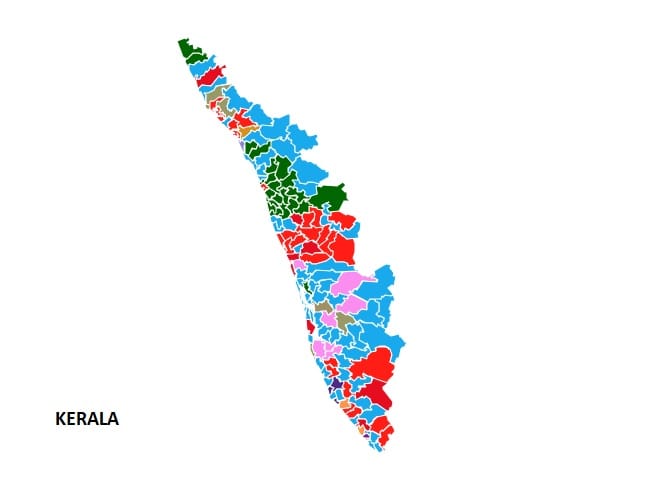
The Congress-led UDF swept back to power in Kerala with 102 seats in the 140-member Assembly. Of this, the Congress won 63 seats.
The UDF victory in Kerala is seen more as a loss for the LDF than a gain for the opposition, whose campaign leaned heavily on governance fatigue, corruption allegations, and a broader desire for change, while positioning itself as the alternative rather than relying on its own organisational strength.
Kerala—the only state where the Congress will form a government—is already facing the prospect of a power tussle, with multiple contenders for the chief minister’s post, raising the risk of a Karnataka-style situation where internal rivalries spill into governance.
It potentially adds to the pressure on Rahul Gandhi, as the party continues to deal with friction in Karnataka between Chief Minister Siddaramaiah and Deputy CM D.K. Shivakumar. The prospect of a similar situation emerging elsewhere could make matters even more difficult.
Assam
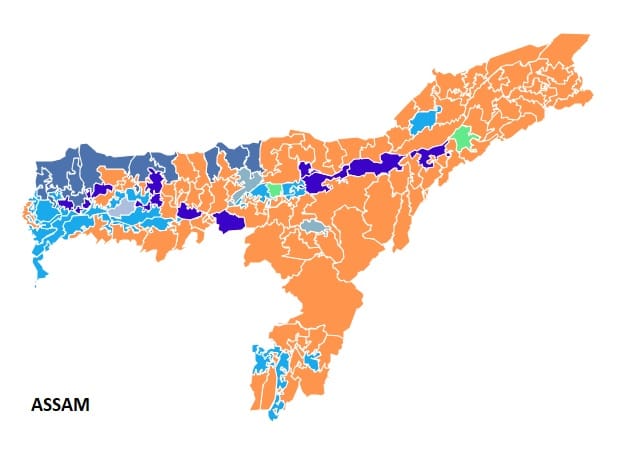
In Assam, where the Congress secured only limited gains with 19 seats in the 126-member assembly, the result was a major setback despite conditions that suggested it had a fighting chance.
The party attempted to position former chief minister Tarun Gogoi’s son and Congress MP, Gaurav Gogoi, as the principal challenger to Chief Minister Himanta Biswa Sarma, banking on anti-incumbency after consecutive terms in power and corruption allegations.
It also stitched together a broader anti-BJP platform, bringing in allies such as Akhil Gogoi’s Raijor Dal, Lurinjyoti Gogoi’s Assam Jatiya Parishad, and regional groups like the All Party Hill Leaders Conference.
This coalition— often framed as the coming together of “three Gogois”—was aimed at consolidating key social blocs, particularly the influential Ahom vote in Upper Assam, while also aggregating minority and anti-BJP sentiment.
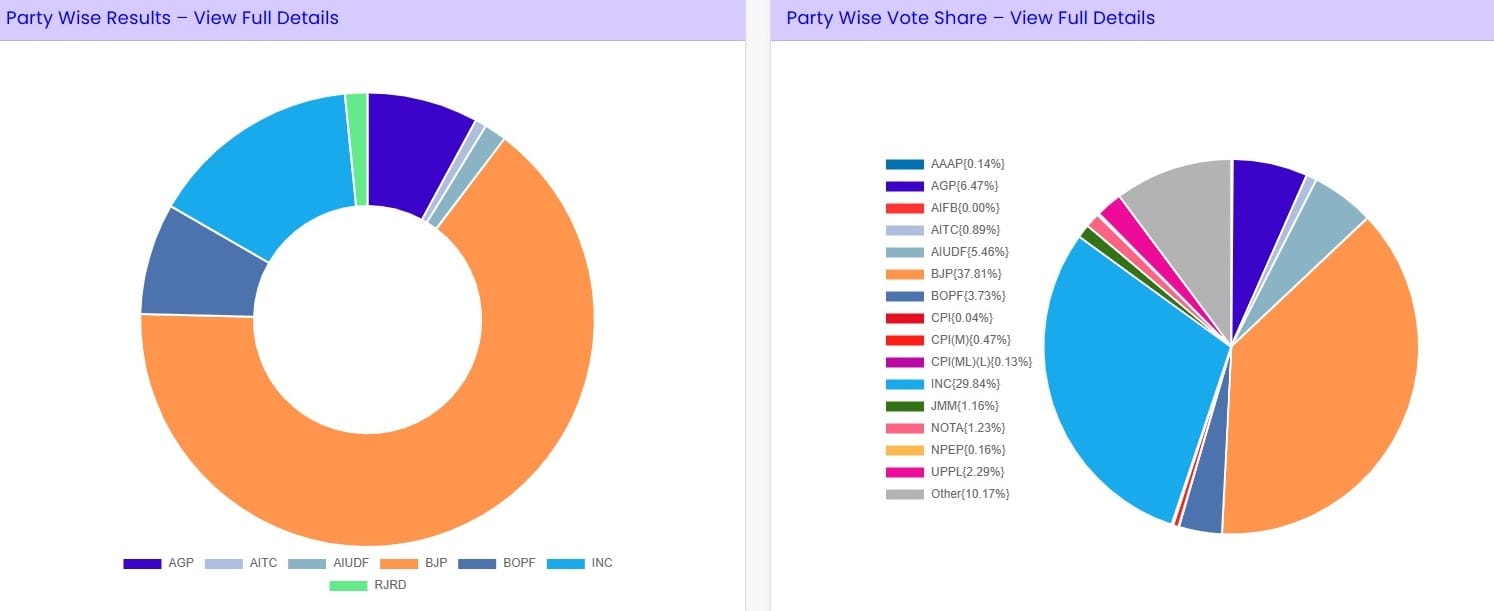
On paper, this gave the Congress a viable pathway to mount a serious challenge against the Himanta Biswa Sarma-led government, in a state where social coalitions have historically shaped electoral outcomes.
However, that potential failed to translate into results, exposing gaps between strategy and execution.
Also Read: Congress’ Assam wins confined to minority strongholds, 18 of its 19 new MLAs are Muslim
West Bengal
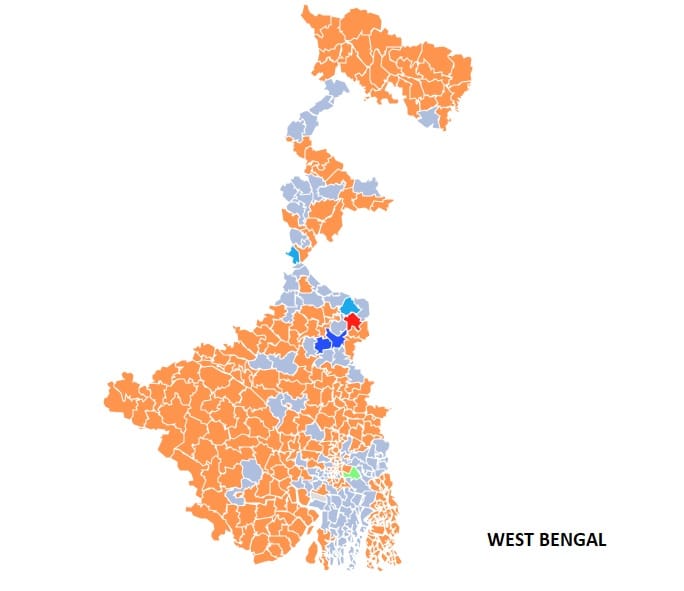
Already on the political margins in West Bengal, the Congress failed to make any headway in the state.
An all-party meeting is expected to be convened in the coming days after the TMC’s rout, but with Rahul Gandhi stepping up his attacks on Mamata Banerjee during his visit to West Bengal before the polls, questions remain over whether she will attend.
Sources close to Banerjee told ThePrint that she harbours a strong dislike towards Rahul Gandhi, even as she maintains respect for Sonia Gandhi.
His recent attacks — including allegations that she enabled the rise of the Bharatiya Janata Party — have not translated into any meaningful electoral gains for the Congress, but have further strained ties with the TMC chief, who may now be less inclined to cooperate at the national level where the Congress positions itself as the “big brother” of the INDIA bloc.
Despite being at a crossroads, both sides may ultimately need each other more than ever, as the BJP continues to expand its dominance at the state and central levels.
Several key INDIA bloc constituents—including the RJD’s Tejashwi Yadav, Hemant Soren of the JMM, and AAP national convener Arvind Kejriwal—joined the TMC’s campaign trail in West Bengal to canvass voters, signalling a broader consolidation of regional forces behind Banerjee. Samajwadi Party chief Akhilesh Yadav extended support on social media, though he didn’t travel to the state.
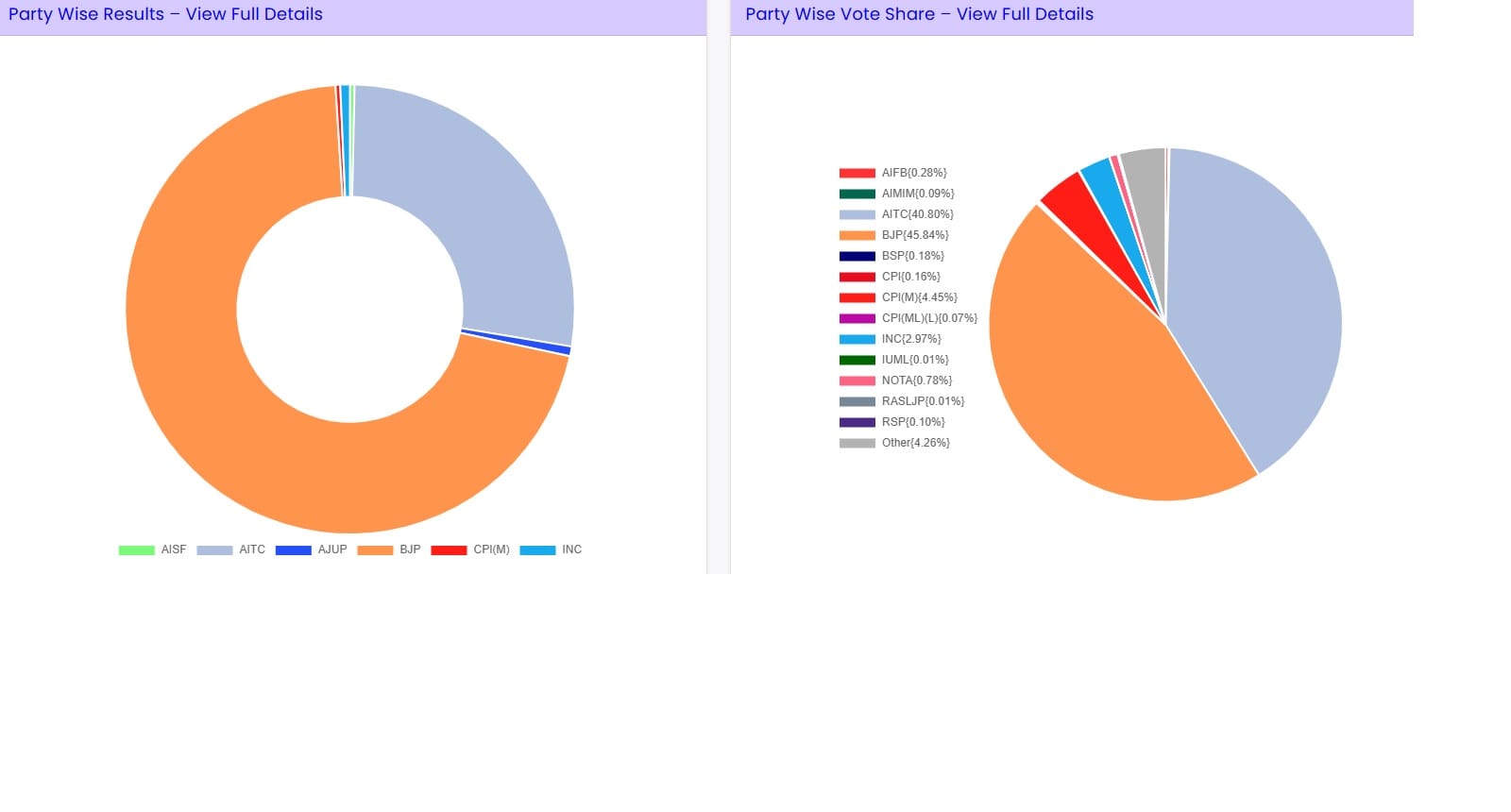
Political observers ThePrint spoke to said the Opposition’s show of support for Mamata Banerjee should serve as a cautionary tale for Rahul Gandhi—the INDIA bloc remains functional, but the Congress appears increasingly sidelined within.
A senior West Bengal Congress leader told ThePrint that there was limited support from the central high command and that local leaders were left to fend for themselves.
Experts who have studied the Congress described Rahul Gandhi’s poll strategy in West Bengal specially as naive and scattered, arguing that it projected no clear ideological direction and failed to resonate consistently with voters.
A senior Congress leader and a former minister speaking to ThePrint on condition of anonymity criticised Rahul’s politics.
“There was no need to go to West Bengal — nothing was going to come out of it; had we allied with the All India Trinamool Congress, we could at least have presented a stronger, united opposition,” he said.
Also Read: Rebels and turncoats deliver Assam constituencies to BJP, not so much for Congress
Tamil Nadu
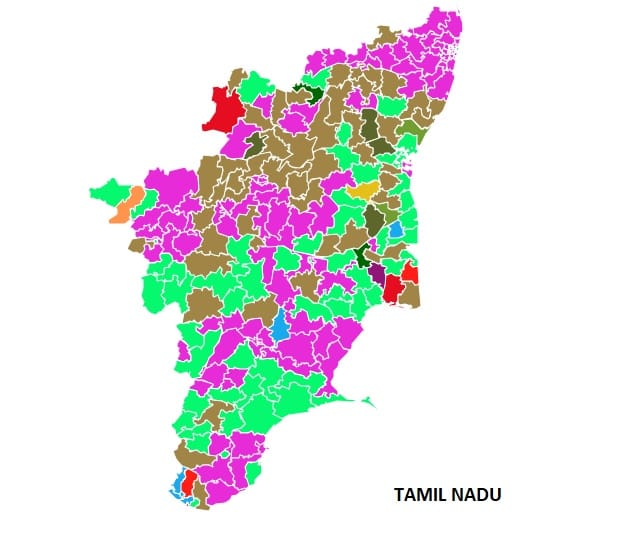
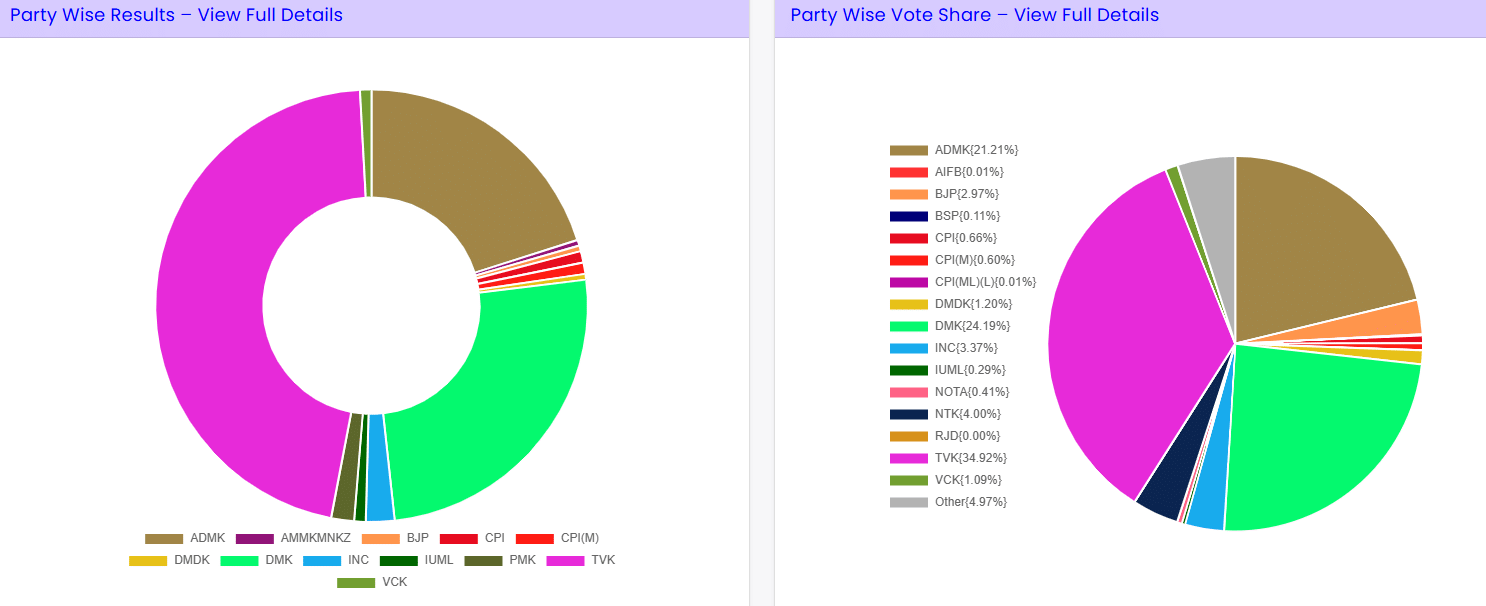
In Tamil Nadu, the Indian National Congress saw a sharp decline, winning only five seats in the 234-member assembly, according to the Election Commission website.
Contesting as part of the DMK-led alliance, the party was overshadowed by the dramatic rise of the Tamilaga Vettri Kazhagam (TVK), which emerged as the single largest party and disrupted the state’s traditional Dravidian political landscape.
The result highlights the limited independent base of the Congress in the state, with its performance largely tied to alliance dynamics rather than its own organisational strength.
Now, the looming question in Tamil Nadu is: will the party choose alliance loyalty or pivot towards the ‘Vijay wave’ led by the TVK?
Vijay’s father, S.A. Chandrasekhar, invited the Congress to align with the TVK, claiming Vijay was ready to share power with Congress.
Congress analyst Rasheed Kidwai suggested that the Congress needed to head back to the basics if it wanted to stay afloat.
“Congress missed an opportunity to tie up with Tamilaga Vettri Kazhagam in Tamil Nadu. Rahul Gandhi did not trust his political instincts, instead relying on the old guard — Mallikarjun Kharge, P. Chidambaram and Sonia Gandhi,” Kidwai told ThePrint.
“Going ahead, the Congress needs to get back to the basics, especially in Kerala — choose a chief minister based on the MLAs’ preference rather than imposing a name. The party still has space to revive itself in West Bengal, but has failed to follow up after elections in Bihar, Andhra Pradesh, Odisha and Delhi. It’s time to wake up and replicate the Kerala model, where strong organisation translated into victory,” he added.
Warning signs
The signs of strain were visible even before this election.
In 2020, 23 senior leaders—called the ‘G-23’—came together to demand internal reforms and greater organisational democracy. The group demanded visible and full-time leadership, internal elections at all levels, decentralisation of decision-making, and a more active, accountable party structure.
The G-23 also said that the Congress’s poor election performance was due to weak leadership and a lack of internal democracy.
Since then, Ghulam Nabi Azad and Kapil Sibal have left the Congress, pointing to a lack of reform in the party and showing that most of G23’s suggestions went unheard by the top leadership.
The ones who stayed back—Shashi Tharoor, Anand Sharma and Bhupinder Hooda—saw a decline in their influence within the party.
“The Congress needs to do some serious introspection; it needs to connect with its regional roots again. They are focussing on national politics more but neglecting regional politics, which has led to the state they are in,” Chandrachur Singh, a professor of political science at Delhi University, told ThePrint.
(Edited by Sugita Katyal)
Also Read: Congress CM face Gaurav Gogoi crashes & burns in Assam polls debut, loses Jorhat by 23,000+ votes