Captured after conflict, two Nagpur tigers to be released back into the wild | Mumbai News
4 min readNagpurJun 22, 2026 03:25 PM IST
In a rare conservation decision, the Maharashtra Forest Department has cleared the release of two conflict tigers — TUI-22 and TUI-25 — back into the wild after a state-level committee found both animals fit for rehabilitation.
The two male tigers, both around four years old, were captured in March this year from separate locations in Nagpur forest division following human-wildlife conflict incidents. While TUI-22 was linked to the death of a woman and repeated livestock kills in Deolapar, TUI-25, captured from Parseoni, had been involved only in cattle depredation cases.

Following their capture, both animals were shifted to the Transit Treatment Centre (TTC) at Seminary Hills in Nagpur, where they underwent health checks and behavioural assessment. Veterinary examinations found them to be healthy, disease-free and capable of surviving in the wild.
The decision was taken at a state-level committee meeting held on April 30. The committee concluded that despite their conflict history, both tigers had retained their natural instincts and were suitable for release into habitats with adequate prey and lower chances of human interaction.
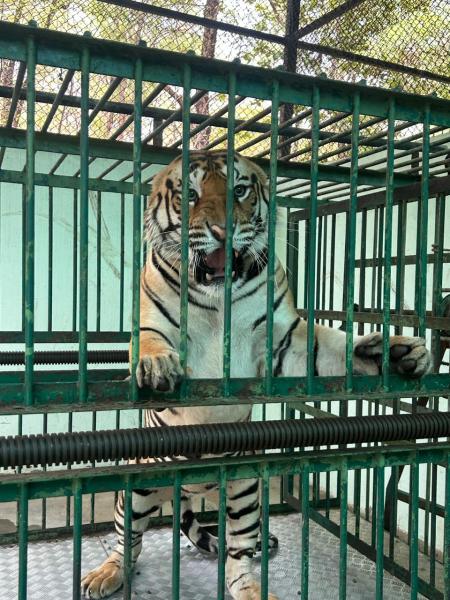 Formal orders for their release were issued on May 11. Officials said the tigers will be soft released at separate locations after temperatures ease.
(Express Photo)
“The committee examines every tiger captured by the forest department and assesses its condition, adaptability and suitability for release,” said M.S. Reddy, Principal Chief Conservator of Forests (Wildlife). “In this case, the recommendation was to release the animals, and we have acted accordingly.”
Formal orders for their release were issued on May 11. Officials said the tigers will be soft released at separate locations after temperatures ease.
Wildlife expert and committee member Kundan Hate said authorities did not want the rehabilitation effort to be affected by extreme summer conditions.
Story continues below this ad
“The tigers are currently housed in enclosures with cooling arrangements. We want to ensure they settle properly after release and do not face problems related to water availability or adaptation,” he said. Hate added that both animals are likely to be released within a week.
According to him, teams first identified suitable habitats before conducting field visits and finalising release sites.
“This is only the second instance of a captured tiger being released back into the wild. Earlier, a tigress that had been captured was also successfully rehabilitated,” he said.
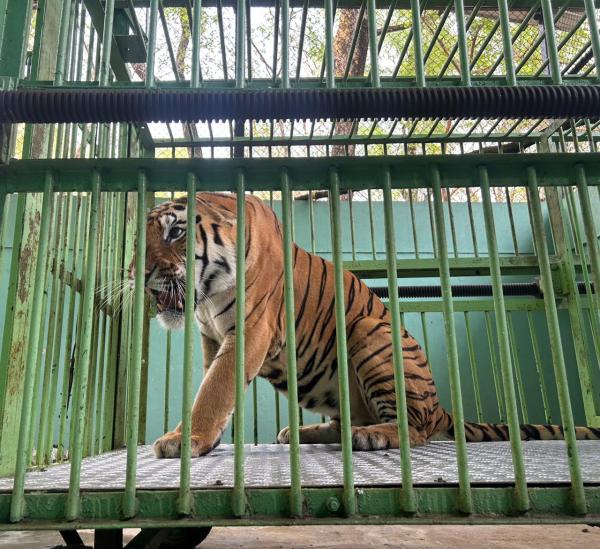 Wildlife expert and committee member Kundan Hate said authorities did not want the rehabilitation effort to be affected by extreme summer conditions.
(Express Photo)
Priyal Chouragade, wildlife veterinary officer at the TTC, said TUI-25 had no history of attacks on humans and releasing it was the best conservation outcome.
Story continues below this ad
“For any wild animal, returning to its natural habitat is important. Every successful rehabilitation is a win for both wildlife conservation and human-wildlife coexistence,” she said.
Chouragade said all captured tigers undergo a detailed health and behavioural assessment before a decision is taken. They are kept in isolation for 15 days, during which blood tests, faecal examinations and behavioural observations are carried out.
The Deolapar tiger, TUI-22, had arrived with a maggot-infested wound on its ear, which was treated successfully.
Interestingly, a local committee constituted under National Tiger Conservation Authority guidelines had initially recommended that TUI-22 be housed permanently at the Gorewada rescue centre, citing concerns over future human casualties. The state-level committee, however, eventually favoured rehabilitation after evaluating all biological and behavioural parameters.
Story continues below this ad
The decision gives both animals a second chance in the wild.

Stay updated with the latest – Click here to follow us on Instagram
 20
20 584226
 20
20
 20
20