
Remote Gadchiroli Hamlet Has Just One Household, But Not Isolated From Maha Map Of Development | Nagpur News
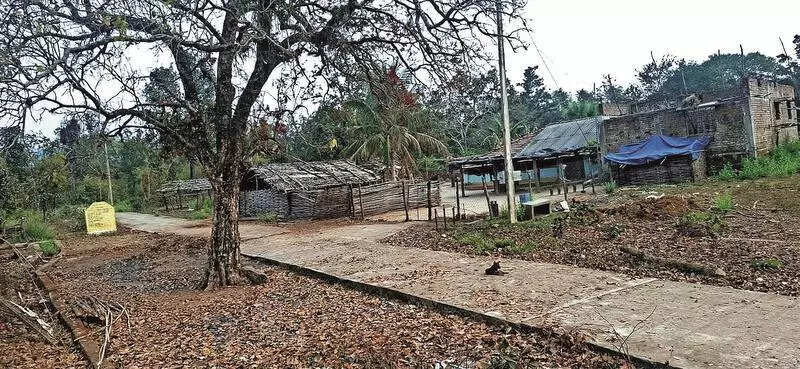
Gadchiroli: In around one hectare of land stands a lonely village with just one family as the official population of Irpundi — once a Maoist hub in Dhanora taluka of Gadchiroli in eastern Maharashtra. Remarkably, this single household of the Jales also functions as the village’s gram sabha, even allocating contracts to bamboo and tendu leaf contractors — a role normally conducted by a gram panchayat.Nestled deep inside thick forests of northern Gadchiroli, this remote hamlet was earlier a key guerrilla transit route and safe rehabilitation spot for dalams like Dhanora, Chatgaon, Korchi, and Korchi-Kurkheda-Khobramenda. With virtually no population — only one family — the secluded village minimized risks of information leaks to security forces and offered Maoists a low-profile shelter before commando operations wiped out these units. Irpundi’s extraordinary demographic reality has turned a remote forest hamlet into a living symbol of administrative uniqueness with exemplary govt outreach. Mobile connectivity improved with an Airtel tower erected in 2025. The family drew a pension under Sanjay Gandhi Niradhar Yojana for 22 years (recently discontinued), and a proposal for a new house under Pradhan Mantri Awas Yojana Phase-2 is pending approval in the current financial year. The nearest medical facility is the sub-primary health centre at Tukum, 3km away.The family has now requested for an irrigation well and solar panels for their fields and home to boost self-sufficiency, and district officials are actively pursuing these demands.The Jales have been its sole residents for 80 years and witnessed the rise and fall of guerrilla dominance in northern Gadchiroli. The village’s story begins in 1940, when Jhitka alias Chita Karu Jale led around 10 families to clear land and establish dwellings in this isolated patch. Over the decades, every other family migrated to the nearby Tukum village or elsewhere, 6km away, drawn by better access to resources like land, water and safety.The Jales stayed behind, rooted to their land. Today, the official population of Irpundi stands at around nine, which included the 77-year-old Yashodabai Maniram Jale and her four sons (two married), with around three of them living permanently in the solitary house on the one-hectare plot with a cemented road cutting across the forests.What makes Irpundi truly remarkable is not just its solitary-family status — a fact recorded in Maharashtra Census documents, but how the govt machinery refused to treat it as an aberration on the state map. Talathi Jayashree J Kulmethe, who maintains village records, captures the essence perfectly: “The village is unique with one family, but still govt extends all basic facilities which others receive.”The Jales sustain themselves through a blend of traditional and supported livelihoods. They cultivate around 2.21 hectares of owned farmland adjoining their one-room house in the hamlet and hold 0.66 hectares under forest rights (in the name of eldest son Bhajanrao Maniram Jale).A family-owned tractor aids farming, while eight cows, four goats, and two bullocks provide additional support. Seasonal income flows from tendu leaf collection, bamboo cutting, and work under MGNREGA.Govt interventions steadily bridged the gap between isolation and dignity. Maniram Jale received a pucca house 25 years ago.Electricity arrived in 2018. A hand pump was installed as early as 1992, followed by a borewell with solar-powered tap 10-12 years ago, courtesy the Tukum gram panchayat.A sanitary toilet was built three years back. Short stretches of cement road — 200m from the house to the main road and a 150m link from Tukum — offer partial connectivity, though a key rocky stretch awaits repair.Vikas Maniram Jale, the seventh-generation resident and a former member of Tukum gram panchayat, reflects on their life with pride. “We have lived here like this for decades. Besides stray wild animals, we also witnessed the Maoists coming to us. They did not meddle in our affairs and we too stayed aloof,” he says.A bachelor who continues to serve on the panchayat of the parent village, Vikas adds: “While staying amid nature one gets amalgamated into their ecosystem. We neither feel insecure nor lonely with no neighbours around.”In an age when rural schemes often target larger clusters, Irpundi demonstrates Maharashtra’s commitment to the last mile — delivering housing, water, electricity, sanitation, roads, communication, pensions, and livelihood support to a single household that doubles as an entire village.The Jales remain deeply connected to Tukum, yet they choose to stay rooted in Irpundi, tending their land and living in quiet harmony with the surrounding forest. Their story challenges conventional ideas of what a “village” should be, while quietly affirming that in India’s democratic framework, no citizen — however isolated — is left behind.