Why even cops are now banned from entering coaches for the disabled
3 min readMumbaiUpdated: Mar 24, 2026 04:59 PM IST
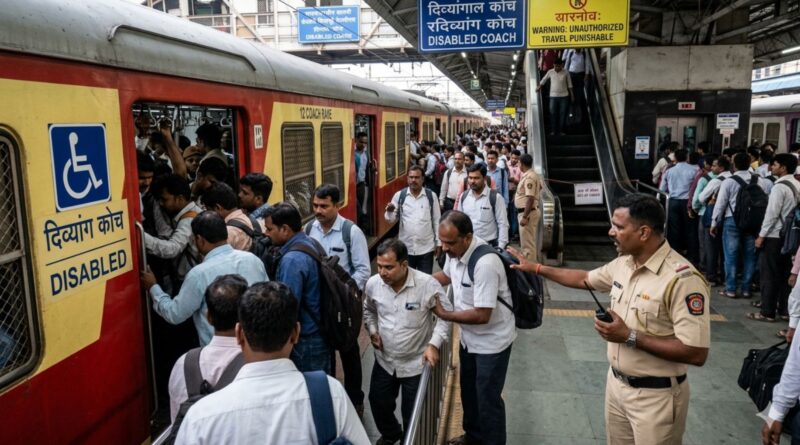
Mumbai Railway Police Commissioner Rakesh Kalasagar on March 11 issued a warning to police personnel against travelling in coaches reserved for persons with disabilities or escorting accused through them, stressing strict legal action for violations.
Unauthorised entry of able-bodied commuters into coaches reserved for persons with disabilities remains a persistent issue across Mumbai’s suburban railway network. Year-wise data shows that violations on Central Railway have risen from 10,852 cases in 2022 to 13,667 in 2024, and dipped slightly to 13,500 in 2025. Western Railway data also shows nearly 12,000 cases in 2024 with a slight dip to 11,900 cases in 2025

There is however no data on how many policemen were booked for the violation of travelling in cars reserved for disabled
Sameer Zaveri, a 90% disabled passenger and civic activist, said overcrowding during peak hours renders designated spaces ineffective. “In Mumbai Suburban’s 12-coach trains, two coaches are reserved with a portion for disabled passengers, but able-bodied commuters frequently occupy them. With trains halting for just 20 seconds, forceful boarding and deboarding endangers us,” he said.
Activists and commuters say that the problem extends beyond unauthorised entry into coaches to broader infrastructural challenges across stations, including non-functional escalator, crowded lifts, steep or absent ramps, and the gap between platforms and trains. These factors can make independent travel difficult for many passengers with disabilities, particularly given that suburban trains halt for only 15–20 seconds.
Nitin Gaikwad, president of Nirdhar Viklang Vikas Samajik Sangh, said, “Escalators at stations do not prioritise disabled passengers or women. Even benches near coaches reserved for the disabled are often unmarked, so commuters do not let us sit there. Overall, Mumbai’s local train infrastructure is not disabled-friendly.”
Responding to these concerns, Swapnil Nila, Chief public relation officer, Central railway said, “We have deployed facilities such as ramps, low-height ticket counters, disabled-friendly toilets, and accessible drinking water points for divyang passengers. Lifts are also designated to prioritise divyangjans, pregnant women, and senior citizens. However, we request able-bodied citizens to respect and give due priority to Divyang persons.”
Story continues below this ad
Railway officials maintain that ensuring the safety of differently abled passengers remains a priority, but acknowledge operational constraints in Mumbai’s high-density suburban network.
Railway authorities said multiple measures are being undertaken, including regular drives against unauthorised entry into reserved coaches, action under the Railway Act, and complaint redressal through the 139 helpline, control rooms, and dedicated WhatsApp groups. Coordination with the GRP and periodic meetings with disabled passengers are also conducted to improve enforcement.
Adding to this, Vineeth Abhishek, Chief Public Relations Officer of Western Railway, said, “Our priority is to keep differently abled passengers safe and comfortable throughout their journey. We continuously spread awareness through announcements and campaigns, and take strict action, including penalties and arrests, against those violating the rules.”