
Mumbai Gallery Redefining Accessible Art Spaces
5 min readUpdated: Mar 19, 2026 10:45 AM IST
Strangers House in Colaba doesn’t feel like a gallery when you first walk in. There is no white cube, no hushed reverence around the art. Instead, it feels like you’ve entered someone’s home, one that has been lived in, left behind, and quietly reassembled over time.
“I wanted to see how people could come together without fear of judgment,” said Sumesh Sharma, who curates the space. “Strangers can walk in, and they should feel at home.” It is this simple idea that shapes the gallery.

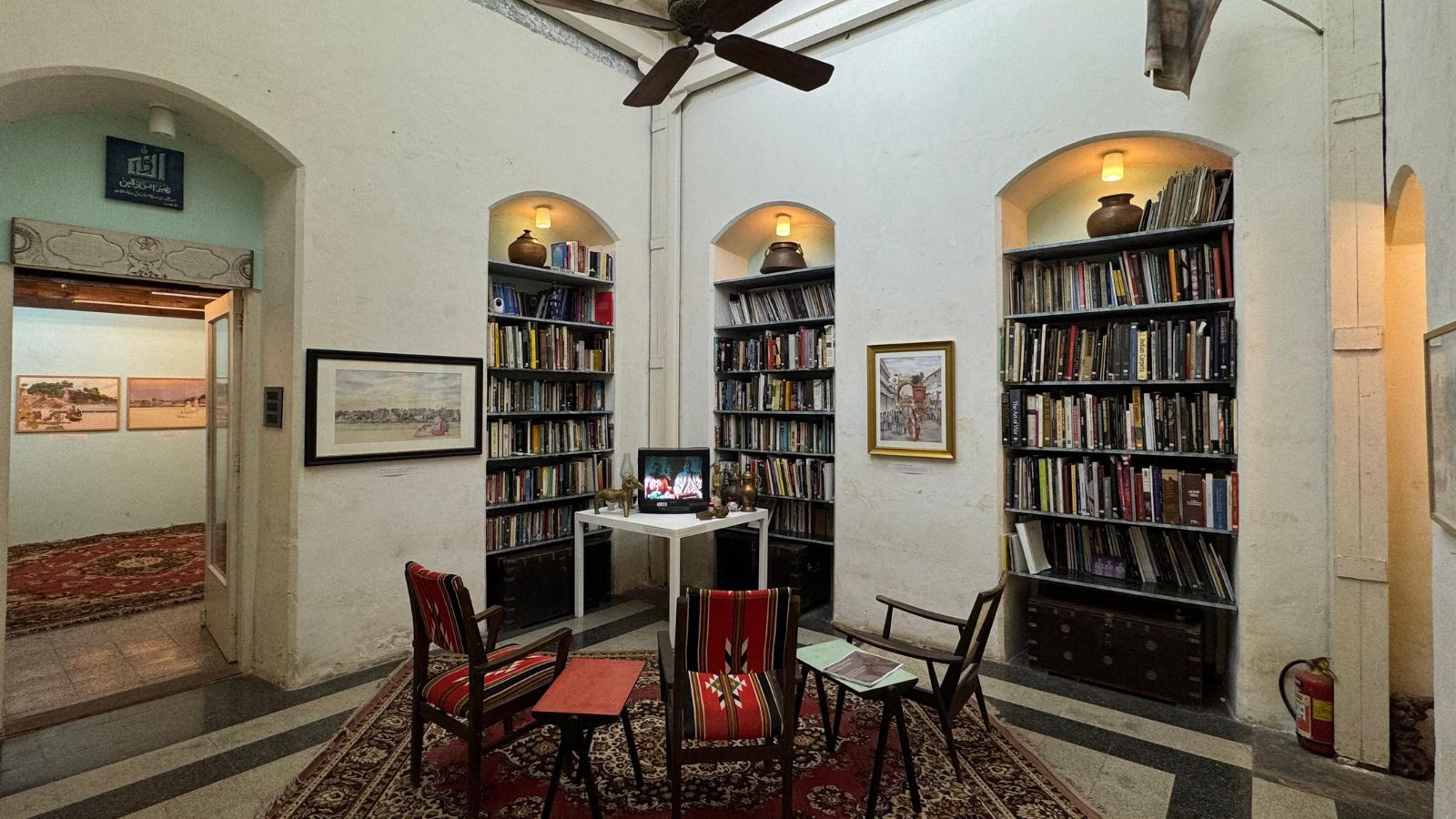
Inside, the space carries a calm, almost silent presence. Artworks hang on the walls as one might display cherished objects. A small library in the living room invites visitors to sit and read, though books don’t leave the space. Old furniture, left behind by migrants decades ago, forms seating nooks, while a narrow wooden staircase leads to a loft, an attic-like exhibition space.
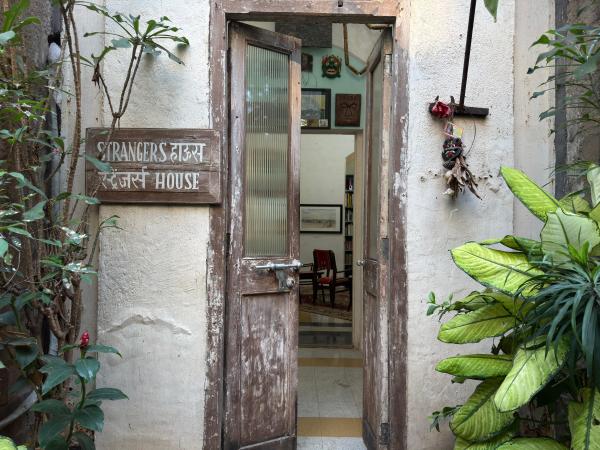 The entrance to Strangers House, marked by a modest wooden sign, opens into a space that feels more like a home than a gallery. (Express Photo)
“We didn’t want the pretentiousness of formal galleries. They can feel mentally inaccessible and intimidating. Art should not scare people,” he said.
The building, Clark House, itself holds layers of history. It once functioned as the Strangers Guest House between 1940 and 1962, home to long-term residents like “executives from abroad, sailors, people who had nowhere else to stay.” It was run by a man from Baghdad and a woman from Eastern Europe, both of Jewish heritage, offering shelter during a turbulent time. After the Second World War, it became home to Ram Bahadur Thakur & Co, run by the Sharma family.
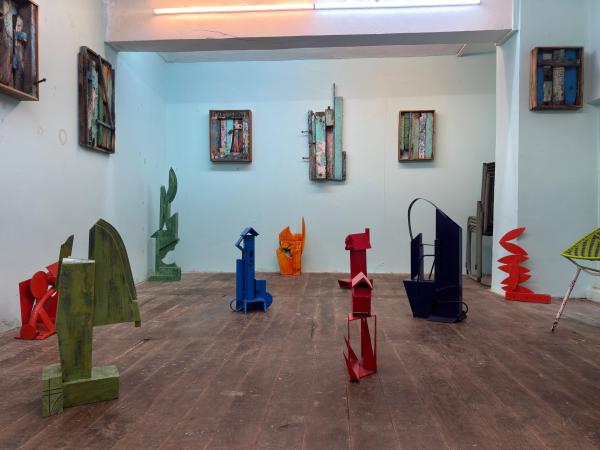 The upper loft features sculptural works by Bhushan Bhombhale, using primary colours and found materials to explore form and everyday life. (Express Photo)
The space has also hosted moments of remembrance, including the annual Lidice Memorial Day, marking the 1942 Nazi massacre of a Czechoslovak village. Artists such as K.K. Hebbar and Chintamoni Kar contributed works to the Lidice Collection. “We wanted the building to continue as a space for strangers, for displaced voices,” he said.
That ethos shapes the gallery today. Sharma believes all art is political. “Even abstract work carries a politics,” he said, pointing to practices like repainting walls in rural India, layers of colour that echo in the works shown here. Even the use of primary colours — red, blue and yellow, often dismissed in formal art spaces — is significant. “The demand for sophistication often denies someone else their reality. Art here doesn’t have to impress; it has to express.”
Story continues below this ad
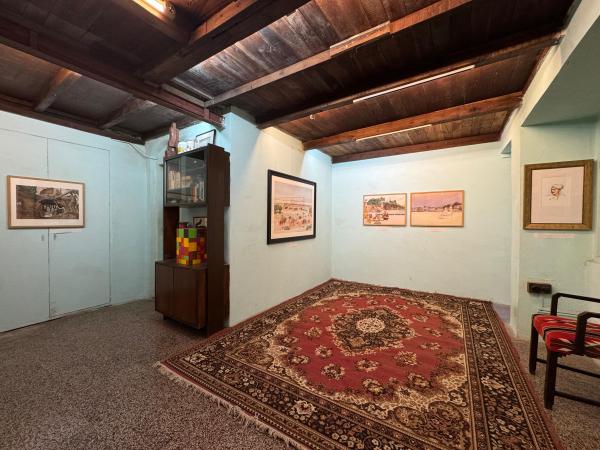 A ground floor room displaying Patna Kalam works from an exhibition by Mahesh Soundatte and Akshay Maksudpur, set within a preserved domestic interior. (Express Photo)
Strangers House actively platforms voices of Dalit artists, marginalised communities, and those without access to established galleries. “You can’t dismantle caste if you only give a voice to the mainstream,” he said. The approach is also global, bringing together local practitioners with artists from abroad.
A recent exhibition brought together artists who were strangers before their collaboration. Sharma points to the works of Mahesh Soundatte, Akshay Maksudpur and Bhushan Bhombhale, whose practices explored layered histories, from syncretic traditions to everyday material narratives.
While Soundatte and Maksudpur drew from archival material and visual traditions like Patna Kalam to revisit histories shaped by cultural exchange and colonial violence, Bhombhale’s sculptural works in the loft engaged with form, colour and found materials rooted in lived experience.
Story continues below this ad
Accessibility remains central. “Contemporary art in India often becomes about investment and auctions. That overshadows everything else,” he said, adding that the idea here is to make art approachable, not a marker of taste or status. “Art has to be seen, not feared,” he added.
For Sharma, the gallery is more than a place to display art. “It is a space for conversation, for humanity, for strangers to find common ground,” he said. The idea is simple, but deliberate: a place where anyone can walk in, and feel at home.