LDF’s push for continuity to NDA playing the long game, the strategies at play for Kerala polls
With the Congress taking four more days to release its full list of candidates for the 9 April poll, the Left took full advantage of the head-start it got.
This was made possible because the LDF fielded sitting candidates in nearly a hundred seats, with most of the MLAs retained, unlike the 2021 ‘term-clause’ enforced by the CPI(M). In the 2021 assembly polls, CPI(M) had denied seats to sitting MLAs who had completed two terms.
The whole spectacle gave the Left an early bird advantage.
Also Read: Marxist turncoats, signal to Ezhavas. Congress’ Kerala candidate list mixes risk with optimism
LDF strategy
The theme of the LDF candidate list is continuity. Many veterans will be contesting their last election, and except for V.K Sanoj in Mattannur—which incumbent K.K. Shailaja had to cede under pressure from the party to shift to Peravoor—no new faces have been given opportunities by the CPI(M).
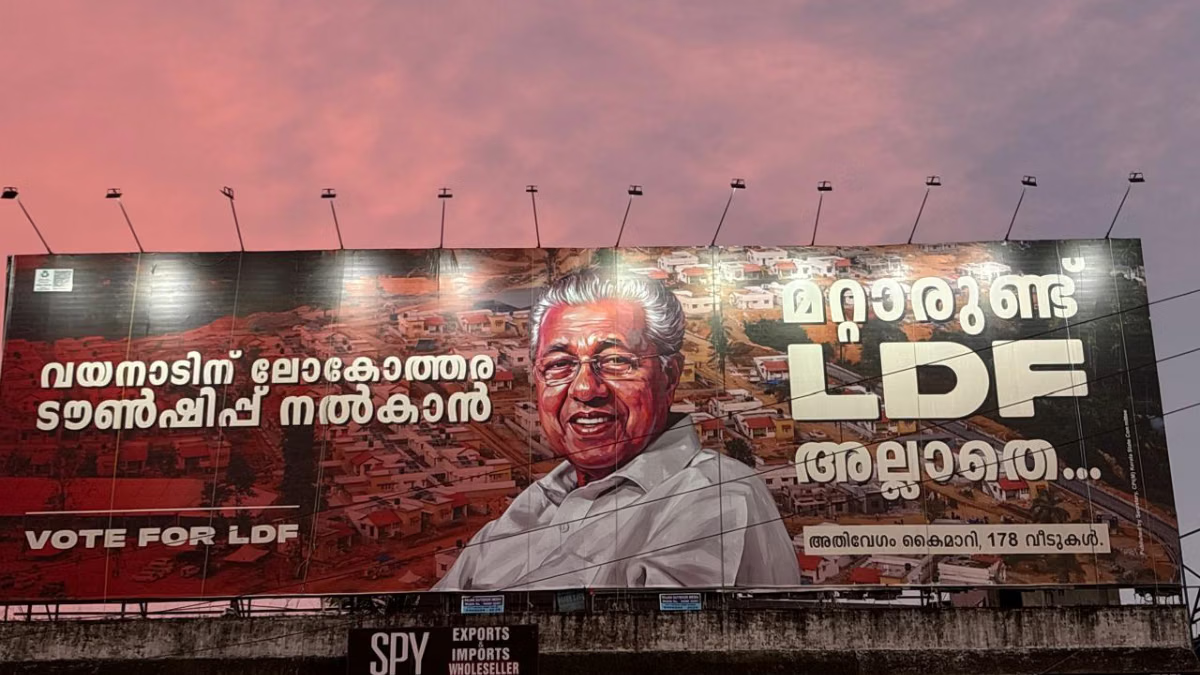
For the first time ever, state presidents of neither the Students Federation of India (SFI) nor the Democratic Youth Federation of India (DYFI)—the student and the youth wings of the CPI(M)—have been given tickets, according to CPI(M) insider K.C. Umesh Babu. The CPI(M)’s overall strategy seems to be playing safe and using the party machinery to its full potential to secure a record-third term for Pinarayi Vijayan. Retaining most of the sitting MLAs also meant that the party did not have to spend much time introducing and familiarising candidates with the voters.
The CPI(M) decision to field so many veterans emboldened allies to field sitting ministers past their prime who would have otherwise made way for younger faces.
Alongside Vijayan, other octogenarians on the list include ministers A.K. Saseendran and Kadannappally Ramachandran. Another minister, K. Krishnankutty, hung up his boots at 81, not long after recovering from a surgery.
Among other CPI(M) candidates, Thottathil Raveendran is 79, P.T.A Rahim 78, Left Convener T.P. Ramakrishnan 75, and K.K. Jayachandran 74. Dasan and Kunhahammad Kutty are 73, V. Sivankutty and Kadakampally Surendran are 71, C Raveendranath and A.C. Moideen are both 70.
The last time CPI(M) had fielded so many candidates in the 70-plus age bracket was in 2001, and had done poorly.
Alliance tactics
The preservation strategy was also evident in how the CPI(M) dealt with its allies. By preventing the last-minute switch of the Kerala Congress (Mani) to the Opposition United Democratic Front (UDF), purportedly by threatening to split that party, it managed to avert the perception that the LDF was doomed to lose.
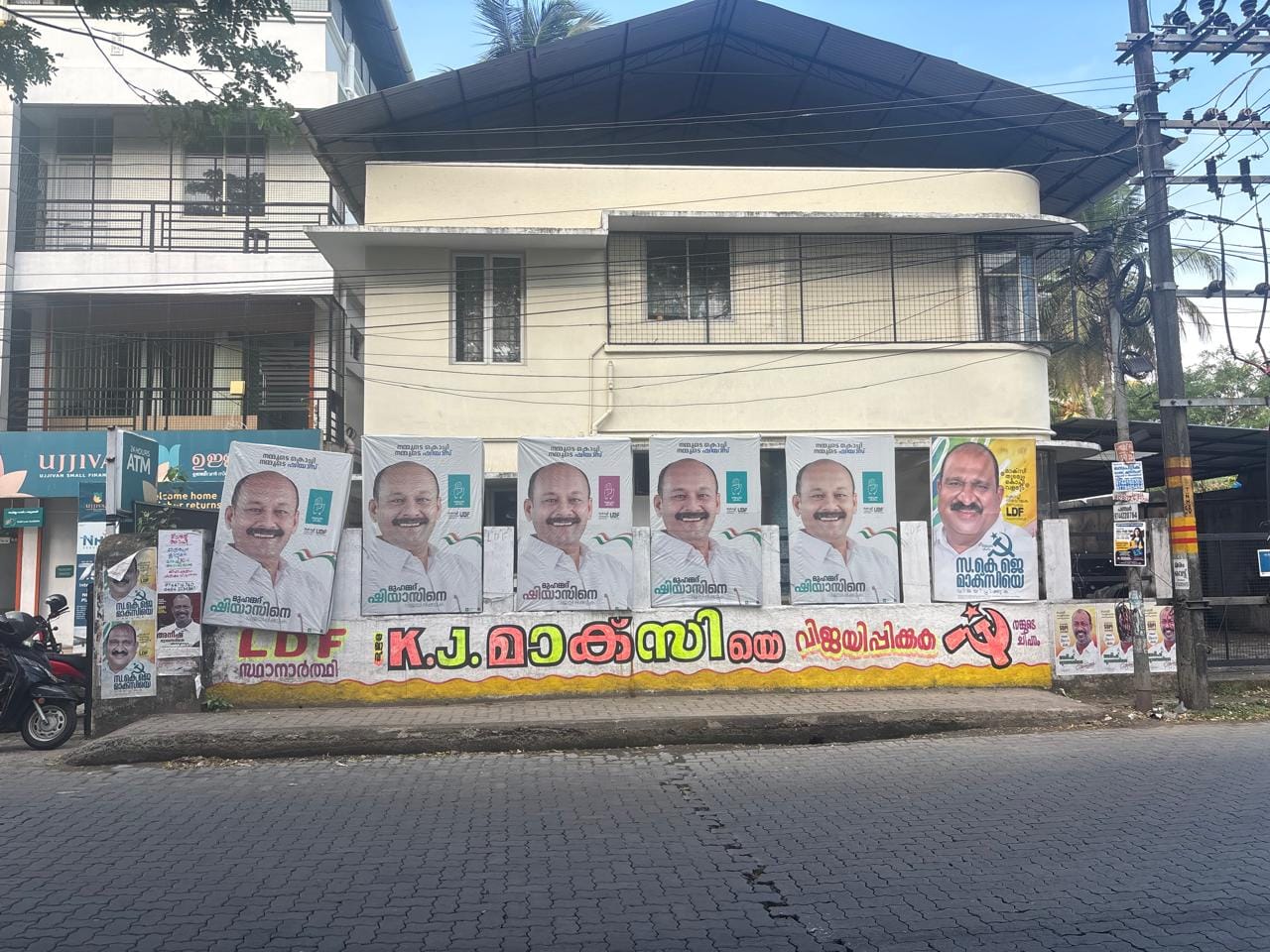
And unlike in the past, the CPI(M) chose to not snatch away seats from smaller allies, or trade seats with them, except in one instance.
In Malappuram, where the CPI(M) generally keeps a few seats vacant looking out for Congress or Indian Union Muslim League (IUML) defectors, in seats where they cannot directly pose a challenge to the UDF, the Left found no turncoats to contest.
The CPI, meanwhile, enforced its three-term limit wherever the party deemed it had a chance to retain its seat, even if it dropped the sitting MLA.
Surprise candidates
Amid the safety-first approach, one CPI(M) move that stood out was to field former Alappuzha MP and three-time MLA A.M. Ariff from Aluva, in Ernakulam district. Aluva is regarded as a Congress fortress and has withstood many a wave elections.
However, the popular Ariff’s entry at the last-minute, replacing A.K. Nazeer, indicates that the CPI(M) entertains hopes of exploiting undercurrents against three-term MLA Anwar Sadath.
The shifting of Vypeen MLA K.N. Unnikrishnan to Thrippunithura got a twist when the Congress released its list. Deepak Joy, the losing candidate in Vypeen last time, was named its candidate in Thrippunithura this time around—ensuring a familiar contest in a different terrain.
BJP’s long game
Like the CPI(M) delaying the naming of candidates in Malappuram for potential turncoats, the Bharatiya Janata Party (BJP) employed a similar strategy by keeping several seats vacant until the second list of Congress came out. From the BJP’s perspective in Kerala, this election is a quarter-final or a semi-final before going for the kill in 2031 and 2036.
From the high of winning a Lok Sabha seat in Kerala for the first time—Suresh Gopi won the Thrissur seat in 2024 parliamentary election—and nearly reaching the threshold of 20 percent vote share, the party’s performance in the local body polls turned out to be below-par.
Winning the Thiruvananthapuram Corporation aside, the National Democratic Alliance (NDA) vote share in 2025 was lower than the corresponding figures in 2020, even though marginally.
Observers feel the reason for the BJP’s setback had to do with the LDF wresting a section of the Hindu vote bank it lost to the saffron party in the Lok Sabha polls, particularly in Thrissur, Alappuzha and Thiruvananthapuram.
The ‘soft-Hindutva’ pitch of the Left makes the election equally tricky for the BJP. However, unlike the past, the party is in contention to win half-a-dozen seats across the state.
Notwithstanding the prospect of Muslim consolidation happening in these seats to deny the BJP, elections in over a dozen constituencies across the state are truly triangular.
BJP’s alliance strategy
While it was initially expected that the Twenty20 party would be given 10-12 seats, with majority of those seats in its base of Ernakulam, the newfound ally has been accorded 19 seats. Even as it defies logic, the move is dubbed a necessary “sacrifice” to reach out to potential allies.
In the process, however, the BJP lost a chance to mount triangular contests in seats such as Thrippunithura, Kodungallur, Etttumanoor and Ranni.
“It was a decision taken at the top,” said Anoop Antony, the BJP general secretary contesting from Thiruvalla. “This is a signal to potential allies that we have a big heart to accommodate them.”
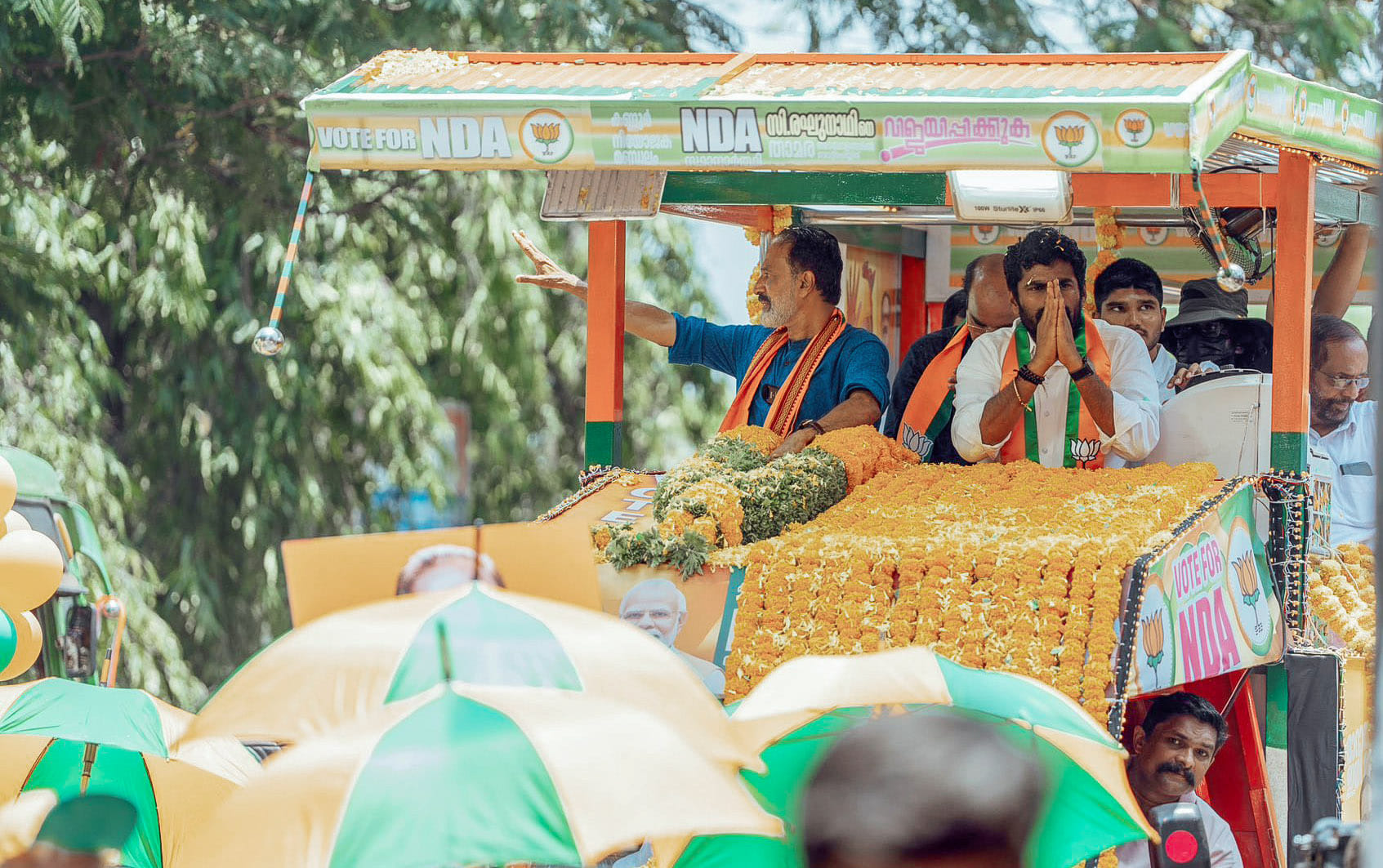
However, the trouble with both the Twenty20 and the Ezhava-backed Bharat Dharma Jana Sena (BDJS) is their poor organisational network. After having matched the BJP in vote share in its first election in 2016, the BDJS has been performing so abysmally that it could win merely 5 seats in the local body polls across Kerala, ending up with the lowest strike for any party in the state.
The BJP has managed to cannibalise the Ezhava votes of the BDJS in successive elections, but the latter has been given due consideration for symbolic purposes. Like the Twenty20, the BDJS is also contesting in several seats like Konni where the BJP had made gains in the past.
By allotting 22 and 19 seats each to the BDJS and Twenty20, the BJP was left to contest less than 100 seats for the first time, with one seat (Wandoor) allocated to the Janadhipathya Rashriya Sabha candidate.
Christian outreach
A BJP veteran who did not want to be identified told ThePrint the party has treated the Twenty20 like a (Church-backed) ‘Kerala Congress’ party as part of its long-term strategy.
Basically, the Christian outreach has been delegated to the Twenty20, as the BJP faced setbacks in the local body polls after fielding several Christian faces. The trouble with the assumption that Twenty20 can intercede on the BJP’s behalf is that the party caters to a small minority of Jacobites in the Christian community, in Ernakulam district alone.
Apart from Anoop Antony, the BJP has fielded vice-president Shone George in Pala, (his father and veteran) P.C. George in Poonjar and Union minister of State George Kurian in Kanjirappally.
The Foreign Contribution Regulation Act (Amendment) Bill, slated for introduction in Parliament, proved ill-timed ahead of the Kerala Assembly elections and was ultimately withheld.
Opposition MPs and various organisations claimed the Bill targets minority-run charitable institutions—particularly Christian organisations—and is aimed at controlling NGOs that are critical of government policies.
However, holding the Bill may not be enough, as even bishops deemed sympathetic to the BJP came out with strongly worded statements, threatening to undo the outreach undertaken until this point.
BJP’s chances
The BJP is organisationally at its strongest in Thiruvananthapuram district, and it has fielded familiar faces in the city seats—Rajeev Chandrasekhar in Nemom, V. Muraleedharan in Kazhakkoottam, R. Sreelekha in Vattiyoorkkavu; along with local face Karamana Jayan in Thiruvananthapuram Central.
The party also fancies its chances in Palakkad where Sobha Surendran is locked in a tight contest with the Congress and Manjeshwaram, where K Surendran came agonisingly close in 2016 and 2021.
Beyond these six seats, the BJP is looking forward to constituencies such as Chathannoor, Aranmula, Vaikom, Devikulam, Malampuzha, Kozhikode North and Thrissur.
A lot of people felt that the party missed a trick by not fielding a stronger candidate in Chengannur where the BJP is uniquely placed: ruling five panchayats and being the major opposition in another four. Such murmurs also led to quid pro quo allegations from veteran Marxist turncoat G Sudhakaran of a possible deal between BJP and sitting MLA and minister Saji Cherian.
BJP spokesperson Narayanan Namboothiri countered the narrative, “We have fielded the same candidate from 2021, who was the Alappuzha district president of the party earlier. In fact, Gopakumar is the brains behind the growth of the party in the constituency.”
The BJP has fielded turncoats from the CPI-M and the Congress alike, and this includes Padmaja Venugopal in Thrissur, Pandalam Prathapan in Adoor, M.J. Job in Alappuzha, R. Reshmi in Kottarakkara, R.S. Arun Raj in Chadayamangalam, B.S. Anoop in Chirayinkeezhu – all from Congress.
K Ajith in Vaikom, S Rajendran in Devikulam and C.C. Mukundan in Nattika, all are from the Left.
(Edited by Ajeet Tiwari)
Also Read: BJP’s Kerala story missing its lead actor: Suresh Gopi nowhere to be seen in Thrissur poll campaign