

From Oocyte Yield to Oocyte Competence, ETHealthworld
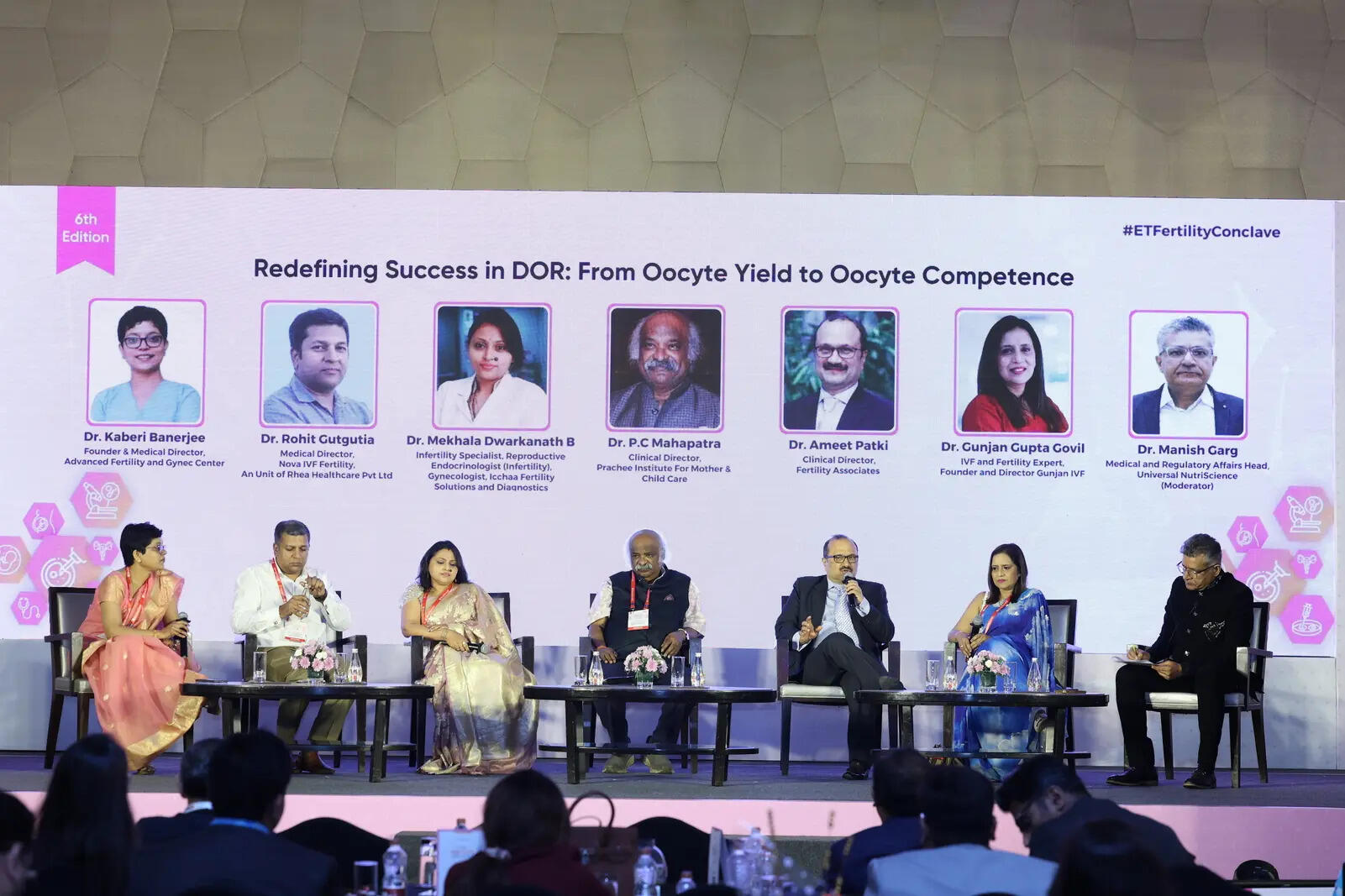
Mumbai: At the ETHealthworld Fertility Conclave, leading fertility experts came together to re-examine how success is defined in cases of diminished ovarian reserve (DOR), shifting the narrative from merely counting eggs to focusing on the quality and competence of oocytes.
The panel featured leading fertility experts including Dr. Ameet Patki, Clinical Director, Fertility Associates; Dr. P.C. Mahapatra, Clinical Director, Prachee Institute; Dr. Kaberi Banerjee, Founder & Medical Director, Advanced Fertility and Gynec Center; Dr. Rohit Gutgutia, Medical Director, Nova IVF Fertility, an unit of Rhea Healthcare Pvt Ltd; Dr. Mekhala Dwarkanath B, Infertility Specialist and Reproductive Endocrinologist (Infertility), Gynecologist, Icchaa Fertility Solutions and Diagnostics; Dr. Gunjan Gupta Govil, IVF and Fertility Expert, Founder and Director, Gunjan IVF and Dr. Manish Garg, Medical and Regulatory Affairs Head, Universal NutriScience.
Understanding DOR: Beyond Numbers
Setting the context, Dr. P.C. Mahapatra explained that diminished ovarian reserve is fundamentally a reduction in both the quantity and quality of ovarian follicles, directly compromising fertility. He underscored that maternal age remains the single most important independent factor influencing female fertility.
Tracing ovarian biology across life stages from intrauterine development to menopause he noted that follicular depletion accelerates with age, particularly after 35, although decline can begin as early as 30. He also highlighted contributing factors such as endometriosis, infections like tuberculosis, iatrogenic causes (including ovarian surgeries), and lifestyle influences such as obesity, environmental toxins, and endocrine disruptors.
Indian Women at Higher Risk
Adding an epidemiological perspective, Dr. Ameet Patki pointed out that Indian women tend to experience menopause 2 to 4 years earlier than their Western counterparts, largely due to genetic, nutritional, and environmental factors. This earlier decline translates into a higher prevalence of DOR at younger ages.He explained that every woman is born with a finite pool of oocytes, and those starting with a lower reserve—such as premature births—may experience earlier depletion. Lifestyle factors like smoking and obesity further accelerate this decline.
Echoing this, Dr. Kaberi Banerjee highlighted studies showing that Indian women may experience diminished ovarian reserve up to six years earlier than Caucasian women. She attributed this to a combination of vitamin D deficiency, central obesity, environmental toxins, and genetic predisposition, calling it a “cause for concern.”
DOR as a Spectrum, Not a Diagnosis
Dr. Rohit Gutgutia emphasised that DOR should not be viewed as a uniform condition but rather as a broad spectrum. It lies between normal ovarian function and poor ovarian response (POR), eventually leading to menopause.Because of this heterogeneity, he stressed that there is no one-size-fits-all treatment. Management strategies must be individualized, ranging from lifestyle interventions to assisted reproductive technologies like IVF, depending on the patient’s age, reproductive goals, and clinical profile.
Rising Burden and Clinical Nuances
Dr. Mekhala Dwarkanath described DOR as a pathological condition that can present at any age. She highlighted that while DOR often leads to poor ovarian response in IVF, the reverse is not always true some women with adequate follicle numbers may still yield fewer oocytes.She pointed to recent data suggesting that while global DOR prevalence ranges from 19–25%, it may be as high as 32% in the Indian population, indicating a growing clinical burden.
Dr. Gunjan Gupta Govil reinforced the importance of age-stratified and personalised care. A woman with DOR at 30 requires a very different approach compared to someone at 40. Factors such as genetic history, nutritional status, and family history of early menopause must inform treatment decisions.
From Quantity to Quality
A key theme of the discussion was the shift from focusing solely on the number of oocytes retrieved to improving their quality.
Dr. Mahapatra outlined four biological determinants of oocyte quality like Oxidative stress, DNA repair mechanisms, Telomere shortening and Mitochondrial function and energy production.
Building on this, Dr. Patki highlighted that while ovarian reserve cannot be reversed, oocyte quality can be optimised through lifestyle changes and adjuvant therapies such as antioxidants.
He also provided a clinical perspective: approximately 15 oocytes may be needed to confidently achieve one live birth, translating to around 6 to 8 embryos, underscoring the importance of both quantity and competence.
Dr. Mekhala Dwarkanath stressed the importance of realistic counselling and patient-centric care. Each additional mature oocyte can increase live birth rates by about 4 per cent, making every egg count.
She noted that younger women with low ovarian reserve may still conceive naturally with appropriate support, while others may require carefully timed IVF cycles. Emotional support, empathy, and clear communication are critical components of care.
Concluding the discussion, Dr. Patki advocated for a multidisciplinary care model involving clinicians, counsellors, and nutrition experts. Given the complexity of DOR, comprehensive patient support covering medical, emotional, and lifestyle aspects is essential to improving outcomes.
The panel collectively emphasized that success in DOR should no longer be measured merely by the number of oocytes retrieved, but by their functional competence and the likelihood of achieving a healthy live birth.
As fertility patterns evolve and patients delay childbearing, this paradigm shift—from quantity to quality—will be crucial in redefining reproductive success in modern clinical practice.