From ‘Hong Kong return’ to ‘Captain’: How belief, fear and access built ‘godman’ Kharat | Mumbai News
At Canada Corner in Nashik, outside an office known as Oakas Properties, people would wait, sometimes for hours, before being called in one at a time into a glass-panelled cabin.
They sat quietly or spoke in low voices about delayed marriages, broken engagements, business setbacks, job concerns, health issues and family disputes. Some spoke of earlier visits and others listened closely, trying to make sense of their own situations.
The waiting itself became part of the process, with belief forming even before the interaction.
“People would sit outside and talk about their problems… and also about how his predictions had worked for them. Even before going inside, you start thinking maybe he really knows things,” a regular visitor said, requesting anonymity.
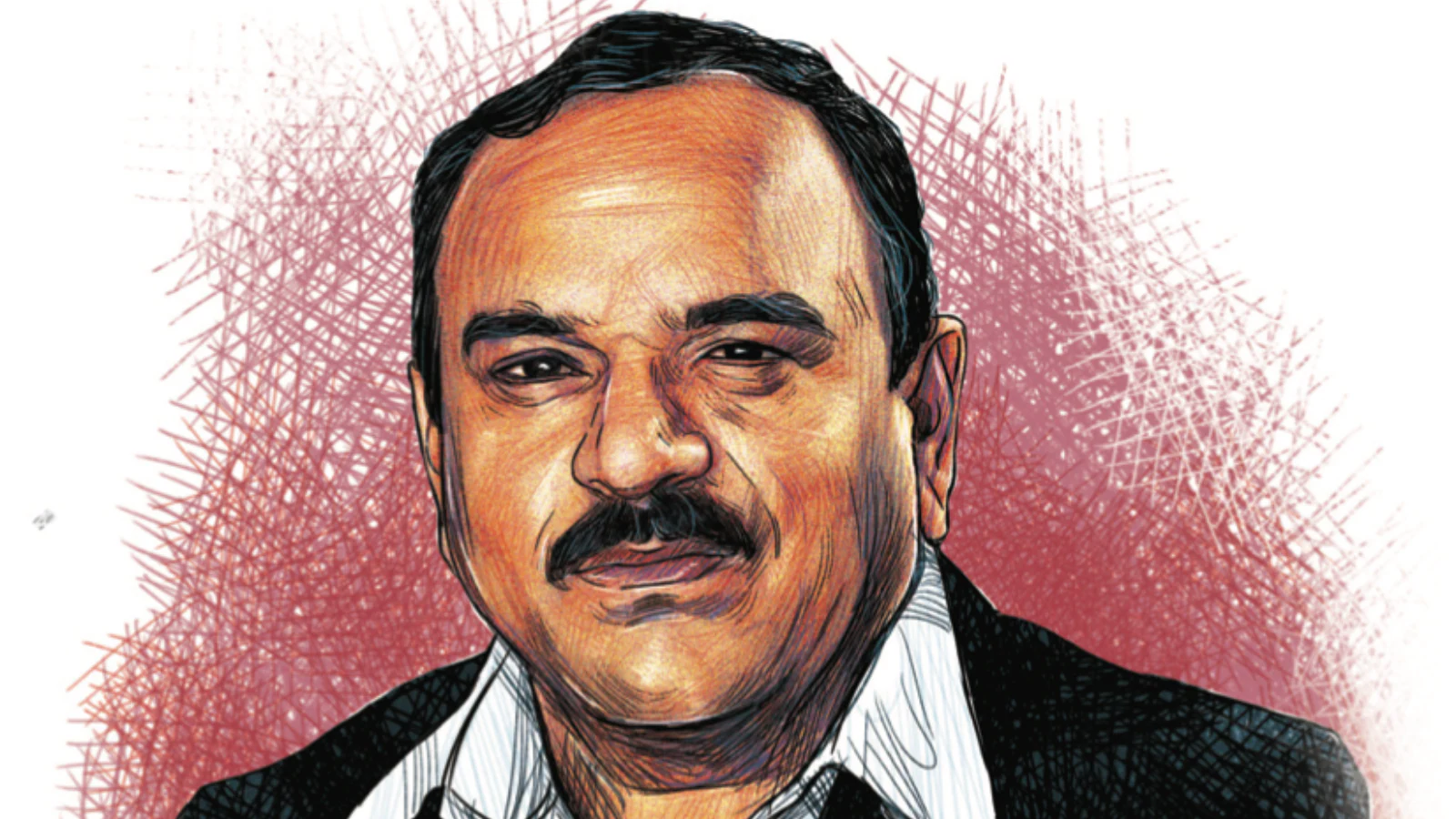
There was no signboard, no advertising. Inside sat Ashok Kumar Eknath Kharat, known simply as “Captain”. Visitors describe a commanding presence, with measured speech, depth in voice, and an ability to shift between languages, creating an impression of authority even before the consultation. The presence of influential visitors, including politicians and businessmen, served as a silent endorsement, reinforcing credibility for those still waiting outside.
As complaints of sexual exploitation surface and a police probe widens, accounts from villagers, former associates and clients suggest something more structured — a system built on belief, reinforced through fear, and sustained through control.
THE VILLAGE THAT NEVER BELIEVED
Born in 1965 into a farming family in drought-prone Kahandalwadi village in Sinnar taluka, Kharat’s early life, villagers say, bore little resemblance to the persona he later built.
Story continues below this ad
He was one of several siblings in a financially struggling household. Villagers recall him as a difficult presence, and some allege that during his teenage years he stole small items, even from his own home. One recalled him being caught stealing a chicken from the family farm.
After his SSC (Class 10 Board) exams, villagers say, he left home after a dispute with his father. He had been given money to repair the house roof but did not return. Neither his family nor others in the village made serious efforts to search for him. For over a decade, there was no contact.
When he returned in the early 1990s, the transformation was striking. “He came back with money and a jeep… People would call him ‘Hong Kong return’, sometimes teasingly,” a villager said. He claimed to have worked abroad in the merchant navy, a claim that neither villagers nor his family could independently verify.
According to his marksheet, Kharat had failed his Class 10 exams, scoring 28 out of 100. The document also records his first name as Laxman, not Ashok Kumar. A close associate told this newspaper that he later changed his name after returning to Nashik, believing, based on his birth chart and numerology, that the name Ashok Kumar would bring him success.
Story continues below this ad
The family has six brothers, two of whom still live in the village, while the others are settled elsewhere. Dattu, his younger brother, said Kharat would visit the village only occasionally, mostly during family functions, and would stay only for a few hours.
“We didn’t know what exactly he did. We would only hear that his predictions were coming true and that he was solving people’s problems. Many influential people, including politicians and ministers, used to visit him. We only saw this from a distance,” Dattu told this newspaper.
Villagers said they kept their distance for a reason. “We knew him from before, so we never trusted him,” they said. That scepticism was reinforced by an episode involving Chandrabhan Kahandle, a fellow villager, which those in Kahandalwadi still cite as an early warning. Kahandle alleges that Kharat took him outside the state and prevented his return.
“I somehow managed to escape, but I had no money. It took me over 45 days to return,” he said, adding that he had tried to approach the police but did not pursue a complaint, citing Kharat’s influence at the time.
Story continues below this ad
Around 2008–09, Kharat established the Eshaneshwar temple in Mirgaon, a nearby village, under the Shivnika Sansthan trust, giving formal institutional shape to what had until then been an informal operation. “The temple and the trust gave a sense of legitimacy. People coming from outside would see a proper setup and trust it more,” said a former trustee who served on the trust for over a decade, requesting anonymity.
The former trustee described how the pitch was made: “He said the trust would construct a temple and conduct religious, social, cultural and welfare activities. He gave plans for constructing schools and health centres for needy villagers. Thinking it was something for the welfare of society, we agreed.” Prominent individuals from industrial, social and political circles were brought on board, among them was NCP’s Rupali Chakankar, who had to resign from the post of Women’s Commision chairperson after her videos and photos with Kharat surfaced.
The promised welfare activities never materialised. Instead, a sprawling farmhouse came up beside the temple.
“One by one, the initial prominent members started resigning because of his untrustworthy nature and the suspicion that he had only formed the trust to create his own image and expand his network,” the former trustee said. “Despite people resigning, he was smart enough to get other prominent personalities into the trust board to maintain his image.”
Story continues below this ad
Official documents indicate the temple site received government funding under tourism-related schemes. A government resolution from March 31, 2018 lists development works, including a sabhamandap, toilets, parking and devotee accommodation, with approximately Rs 25 lakh sanctioned out of an estimated project cost of Rs 105.83 lakh. The temple had been registered as a Grade C tourist destination.
FROM PROPERTY OFFICE TO FOLLOWING
Back in Nashik, Kharat began operating from Oakes Properties at Canada Corner, initially as a real estate office. He claimed academic credentials, including studying “cosmology” and being a gold medallist from a foreign university, claims that could not be independently verified at the time.
The shift from property to prophecy was gradual. People first came for property advice, then began returning for personal matters. A former associate described how the transition worked. “I was already aware of him since he was involved in land and property dealings and apart from that he was consulting clients with knowledge of astrology, cosmology and numerology. He was correct about many properties and their future appreciation. So people started trusting him for property buying and during that consultation he would even attempt predicting their future. Coincidentally, if and when that came true, people would feel surprised and more attracted to him.”
By the mid-2000s, consultations had overtaken property work. This was not visibility-driven growth. It was a network-driven belief.
Story continues below this ad
But belief did not form instantly. It built gradually through repetition, reinforcement and social proof. It often began with simple instructions, such as stones to wear and rituals to perform, linked to outcomes such as marriage, health or financial stability. When events appeared to align with predictions, belief strengthened. Even setbacks were interpreted as consequences of not following instructions.

A frequent visitor described to this newspaper how that process worked. Shortly after his wedding, he and his wife ran into Kharat at a public event. Kharat glanced at the couple and told them the wife was pregnant. “We were shocked… there were no symptoms.” It was a girl, he said, and they must travel south for a ritual. They did not go. Within weeks, his wife had a miscarriage. “At that time, we felt it happened because we didn’t heed his advice.” Later, Kharat told them she would conceive again, a boy this time. That, coincidentally, also turned out to be true. “After that, we started believing him… and also referred him to others. At one point, we had stopped making decisions on our own. We would consult him for everything.”
Investigators say his rise also tapped into Nashik’s reputation as a centre for rituals such as Kalsarp dosh and Narayan Nagbali, drawing people from across the country.
Kharat’s credibility in political circles was built gradually, case by case. Around 1999–2000, he is said to have predicted not only that an NCP politician would win the assembly election then and that despite the win, he would not be able to celebrate it. Coincidentally, while the said politician won the election, a close relative died immediately after the results. Followers saw this as confirmation.
Story continues below this ad
Many say the inflection point came in November 2022, when a Maharashtra cabinet minister visited the Mirgaon temple. After this visit, Kharat’s reach expanded sharply. “After that, every Sunday, many politicians and businessmen would come to the temple,” a villager said.
INSIDE THE CABIN
What began as consultations about property, marriage and health gradually became something more controlled and predatory, and eventually turned into sexual exploitation. Speaking to *The Sunday Express*, a former employee described a structured, repeatable process.
“When a couple came, both would go inside. After some time, the man would be sent out, and the woman would remain inside,” he said. As part of his role, which included cleaning the office, handling calls, fixing appointments, recording ring sizes, noting prices, and coordinating the delivery of stones, he said he observed the process closely.
He said he too initially believed. “Seeing influential people come and hearing others say their problems were solved, I also started believing him.” Over time, he began to notice patterns.
Story continues below this ad
Visitors were given prasad and water, after which some reported feeling dizzy, weak or disoriented. “The water tasted salty and bitter… after that, your thinking is not clear,” one complainant said. They were then instructed to perform rituals, often with eyes closed, in controlled, isolating settings. According to complainants, this reduced resistance and increased dependence. In several such instances, according to complaints now under investigation, women allege they were then sexually assaulted. There were also allegations of threats. “He told me that if I didn’t listen, my husband would die, my children would suffer,” one complainant told this newspaper.
Police say complaints point to a similar pattern: women were called in alone, given substances that left them disoriented, and then allegedly sexually assaulted. Eight complaints so far reflect comparable accounts. Kharat’s lawyer Sachin Bhate did not respond to text messages and calls by this newspaper for comment.
Investigators say the alleged sexual exploitation was part of a larger system that also involved financial extraction.
Consultations also involved objects such as stones, powders, yantras, kasturi (deer musk) and chichoka (tamarind seeds), presented as “energised” and sold at inflated prices. Tamarind seeds bought for Rs 100 per kilo were cleaned, polished and passed off as stones, sold for Rs 10,000 to Rs 1 lakh, a former employee alleged. Clients were also directed to perform rituals at the Eshaneshwar temple in Mirgaon, linking consultations in Nashik to a physical site.
At the Mirgaon temple, large gatherings were held on full moon and new moon nights. As it grew dark, visitors were led into dimly lit spaces. During rituals, a snake, described by some witnesses as around 20 feet long, would appear, raising its hood and swaying on apparent command. Some fainted. Police now suspect the snake was a prop, possibly controlled remotely. Fake tiger skins and similar elements are also under examination. What appeared supernatural, investigators say, may have been staged.
According to accounts under investigation, this sequence — belief, prescription, isolation, ingestion and ritual — was followed by increasing control. Complainants said they were repeatedly called back, before exams, before marriage or before major decisions, and warned that failing to return would lead to harm, exposure or misfortune.
The process rarely remained limited to a single consultation. Initial remedies were simple, a thread to wear, a small ritual, a temple visit. Once belief was established, prescriptions escalated. In one case, a businessman was told that rituals performed abroad three times a year were essential for good fortune. “He would also say that on New Year’s Eve, performing rituals abroad is crucial since the divine powers are activated then,” an official said. “The victim followed it, since he thought it would help, but it didn’t.”
What emerges from these accounts, investigators say, is not just a pattern of individual cases, but a system that operated over years. One whose effects, those who knew him say, continue even after his arrest.
Ten FIRs have now been registered against Kharat, seven for sexual assault, one for cheating and extortion. A Special Investigation Team is examining financial transactions, digital evidence and his network of associates. Properties identified include land in Nashik, a farmhouse, land in Panvel, a flat in Pune and a marriage hall in Sinnar, estimated together at around Rs 40 crore.
Yet even after the arrest, hesitation persists among those who knew him, many of whom point to the influence he appeared to wield through his network and political connections. “There is always a fear that he may come back someday,” one villager said.