Force majeure on Mumbai skyline: How a distant war in West Asia is stalling city’s big public infrastructure push | Mumbai News
A global conflict entering its second month is starting to show up on the building sites in Mumbai, which is in the middle of one of its most ambitious public infrastructure build-outs in decades.
Contractors on at least three major projects — the Sewri-Worli Connector, Metro Line 6, and the Thane depot for the Mumbai-Ahmedabad bullet train — have invoked force majeure, an uncontrollable and unavoidable event that affects work, warning that shortages of LPG and imported construction material could push up costs and blow past deadlines. Others, not yet in writing, have told The Indian Express that the price variation clause will be invoked when bills are due.

The trigger is the blockade of the Strait of Hormuz, which has forced cargo ships onto the longer Cape of Good Hope route, adding 6,000-10,000 nautical miles, up to 20 extra days at sea, and Rs 1.5-3.5 lakh per container. Research firm ANAROCK Group, in a March 19 report, estimated steel costs have risen 20%, with cascading hikes across aluminium, bitumen, tiles, ceramics and more. For high-rises, the added burden works out to Rs 50 per square foot.
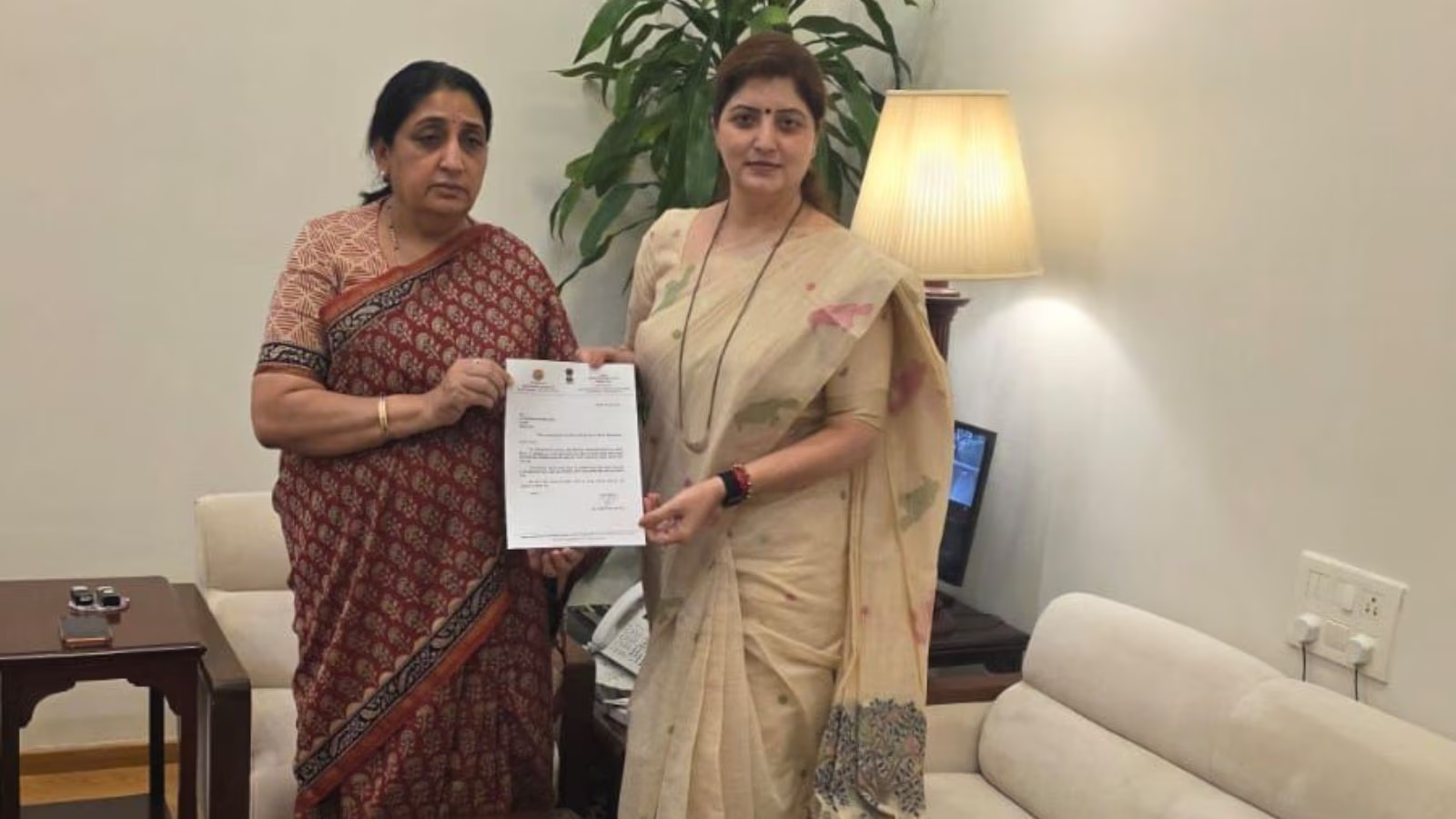
 From the MMRDA, metropolitan commissioner Sanjay Mukherjee reiterated that price variations would kick in and cover the additional costs, as contracts come with a variation clause with formulas based on indices set by the central government.
On the ground, the consequences are more immediate.
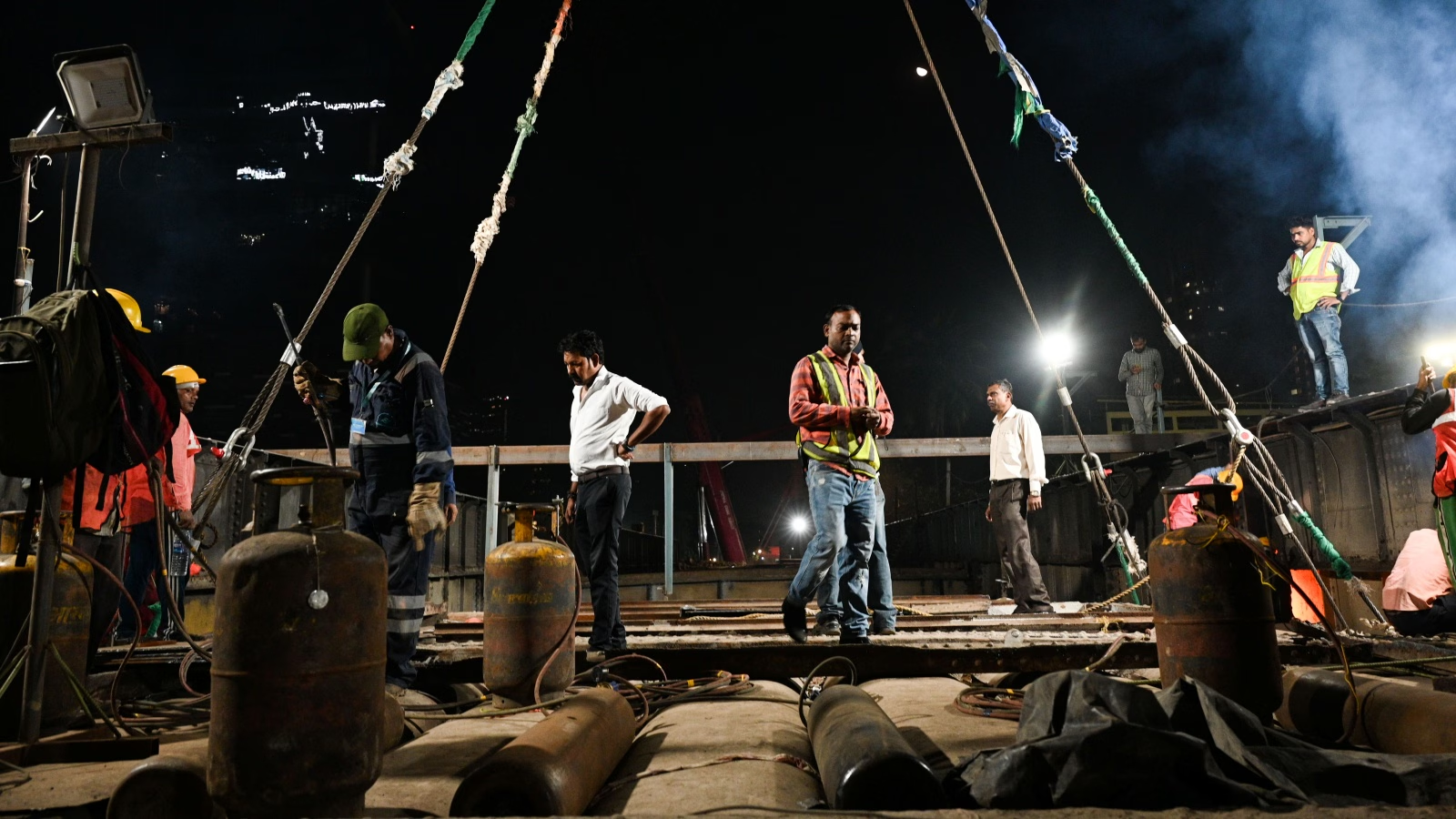
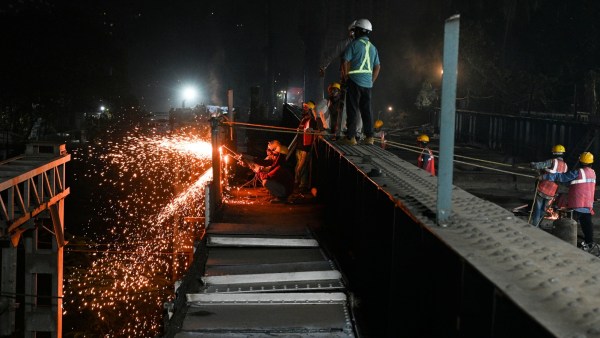
At the dismantling of the 112-year-old Elphinstone bridge — a critical component of the Sewri-Worli Connector — LPG is central to the work. Gas cutters are used to slice through century-old steel using a combination of fuel gas and oxygen. “For the last stretch of dismantling, we needed 20 LPG cylinders,” said an official from Space Chem Engineers Pvt Ltd, the contractor under the Maharashtra Rail Infrastructure Development Corporation (MRIDC). A cylinder that cost around Rs 2,000 now costs Rs 7,000, said the sub-contractor.
With September deadline bearing down on them, delaying the work was not an option. The sub-contractor drew from past stock and procured at escalated prices, and this was conveyed to MRIDC in a letter late March. An MRIDC spokesperson, however, said they were not aware of the matter. Managing director Rajesh Jaiswal did not respond to questions.
On Metro Line 6 — the east-west line from Swami Samarth Nagar along JVLR to Vikhroli, due to open fully by 2027 — a contractor wrote to the Delhi Metro Rail Corporation, which is the implementing agency roped in for this project by MMRDA, in late March, invoking force majeure citing cost escalations across steel, aluminium, tiles, cement, paints, plumbing materials, electrical fixtures and false ceiling components. Compensation claims for additional costs would follow, the letter said.
Story continues below this ad
From the MMRDA, metropolitan commissioner Sanjay Mukherjee reiterated that price variations would kick in and cover the additional costs, as contracts come with a variation clause with formulas based on indices set by the central government.
At the Thane depot for the Mumbai-Ahmedabad High Speed Rail, construction is still two to three months away from beginning, but the worry has arrived early. Zamil Steel Buildings India, which is to supply pre-engineered steel buildings for the 55-hectare depot, has invoked force majeure on two grounds — unprecedented cost hikes and possible timeline slippage.
“We’ve written a letter similar to what we wrote during Covid,” said an official from the company which has previously worked at the Aarey depot for the Metro Line 3 as well as other Metro stations and depots across the country. “Steel prices have shot up by at least 15%. LPG, used in cutting, fabricating and welding, is difficult to come by,” the official said.
A spokesperson for the National High Speed Rail Corporation Limited (NHSRCL), under which the Thane depot falls, told this newspaper that at present, work on sites is going on as per schedule.
Story continues below this ad
At the Byculla bridge reconstruction, contractor GPT Infrastructure Projects has switched from LPG to Dissolved Acetylene gas for fabrication — itself getting more expensive. “Material costs have gone up, but the price variation clause is there, so we don’t have to write to the authorities yet,” an official said. That clause is the safety net most agencies are counting on.
Officials from other agencies, such as the MSRDC undertaking the Versova Bandra Sea Link, said contractors were managing with cost hikes, but they would expect the cost variation clause to be invoked in due course.