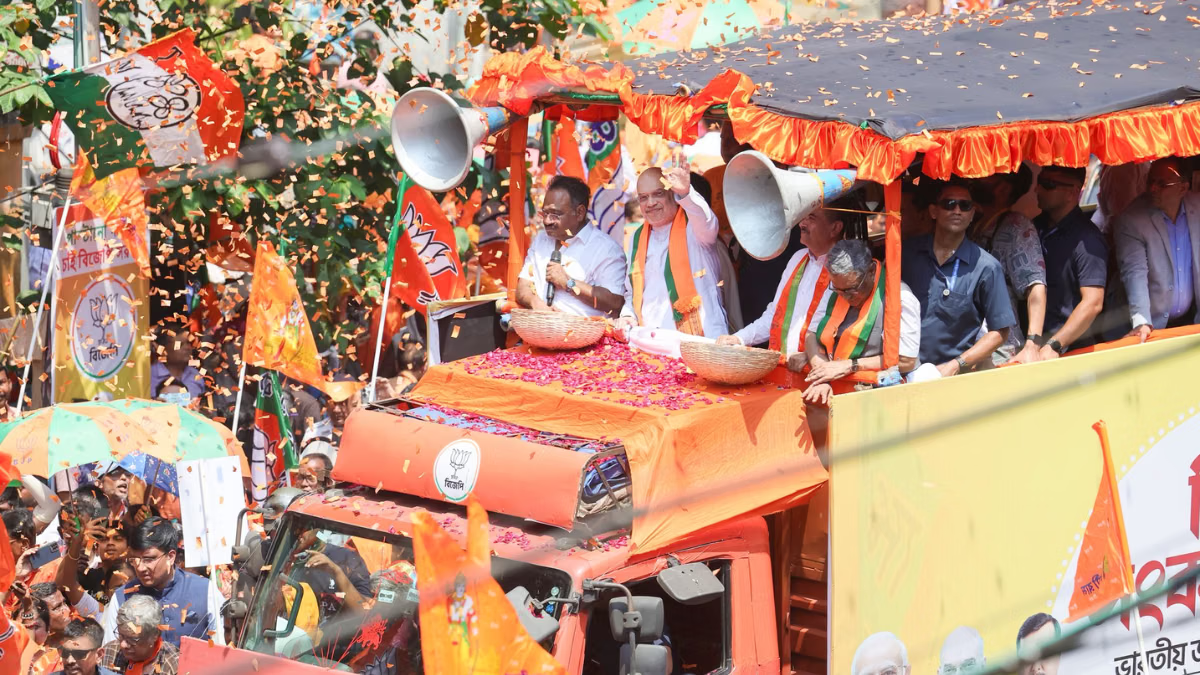
BJP’s carpet bombing battle plan for Bengal—Amit Shah to camp for 15 days, heavyweights to follow
Elections in West Bengal will be held in two phases on 23 and 29 April, with counting all set to take place on 4 May.
Apart from Shah, the BJP has pressed a battery of leaders into action in Bengal hoping to unseat the Mamata Banerjee government this year. “A number of our senior leaders are camping in the state and more are set to join once elections in Assam are over. Apart from carrying out micro-management and strategising, the presence of senior leaders also enthuses the party workers,” a senior BJP leader said, explaining the rationale behind the move.
Another senior party functionary said work is being carried out at various levels, including at the level of Vidhan Sabha and Lok Sabha constituencies.
“For coordination, we have divided West Bengal into nine zones and each zone is being handled by senior leaders including ministers such as Dharmendra Pradhan, Nityanand Rai, Gajendra Singh Shekhawat, Sanjay Jaiswal, Nishikant Dubey among others,” he said.
Work is also being carried out for better social media outreach, a narrative building unit is operating separately too, the leader explained.
“Most of the leaders deployed so far are from Chhattisgarh, Bihar, Jharkhand, Uttar Pradesh, Tripura among others. We are fighting to win the elections and are quite confident this time around. The fact that Amit Shah ji has himself announced that he will campaign and stay in West Bengal for 15 days shows the party’s commitment and seriousness,” a third senior leader.
The BJP, which had been making steady inroads in West Bengal over a period of time, had faced a setback in the 2024 Lok Sabha elections as its tally came down to 12 seats from 18 in 2019.
Though this is not the first time the party has deployed senior leaders for election work to counter the ‘local-vs-outsider’ narrative, the party leaders want to spend as much time in the state as possible to interact more with local workers and have greater involvement in party work at the ground level by being more visible.
In 2021, the ruling Trinamool Congress (TMC) secured 215 seats, while the BJP finished a distant second with 77 seats to become the official Opposition.
Appearing more aggressive in its campaigning this time, the BJP is banking heavily on what it calls “high anti-incumbency” to unseat the TMC, which has been in power since 2011 after ending the Left Front’s 34-year rule in the state.
From a vote share of around 4 percent in the 2011 assembly elections, the BJP has come a long as it has made significant inroads in Bengal over the past decade—a point reiterated by its about 38 percent vote share in 2021.
Union Minister Bhupender Yadav is the party’s election in-charge, with the former Tripura chief minister Biplab Kumar Deb entrusted with the responsibility of co-incharge. Apart from them, Union Minister Dharmendra Pradhan has made frequent visits, including accompanying Adhikari when he filed his nomination from Nandigram.
“A battery of ministers, MPs and other leaders from various states have been assigned various duties to ensure the focus remains on West Bengal and workers also remain motivated,” said the leader.
Keeping the heat on the TMC, Shah has been visiting the state frequently. Last month, he released a ‘charge sheet’ against the Trinamool government, framing the election as a battle not merely for West Bengal, but for the country’s security.
The party is also making sure to counter any ‘negative narrative’ by the TMC to ensure such depiction does not affect its prospects. For instance, soon after Chief Minister Mamata Banerjee claimed that the BJP would ban fish, meat, and even eggs if it came to power, Union Minister Sukanta Majumdar claimed that Bengal’s next chief minister from the BJP will be a ‘non-vegetarian’ when it comes to food habits.