Suman Kalyanpur funeral: Melodies and memories mark singer’s final journey in Mumbai | Mumbai News
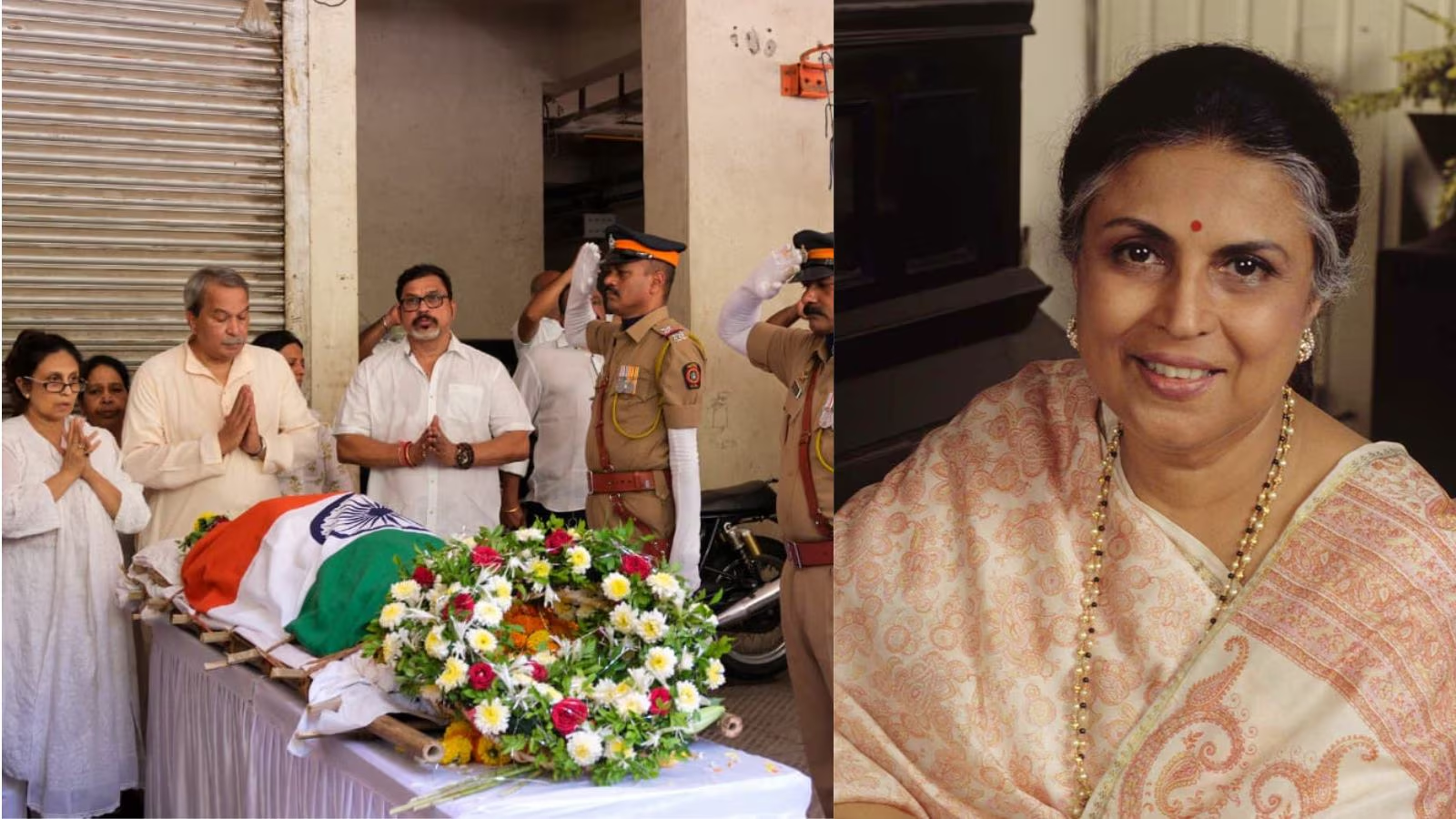
As legendary vocalist Suman Kalyanpur embarked on her final journey on Monday, family members, admirers and colleagues from the Marathi music fraternity gathered in Mumbai to bid her a heartfelt farewell. Kalyanpur died at the age of 89 at her residence in Mumbai Sunday.
Kalyanpur, who sang more than 3,000 songs across 13 languages during a career spanning several decades, first came into the limelight with the lullaby “Koi Pukare Dheere Se Tujhe” from the 1954 film Mangu. She went on to lend her voice to several timeless classics, including “Na Na Karte Pyaar”, “Aajkal Tere Mere Pyaar Ke Charche” and “Na Tum Humein Jaano”, securing her place among India’s most celebrated playback singers.

For many who had grown up listening to her music, the loss felt deeply personal. Eminent personalities from the Marathi film and music industries, including playback singers Mandar Apte and Suresh Wadkar, were present at Kalyanpur’s last rites.
As a tribute to her enduring musical legacy, those gathered sang some of her most-loved songs, including “Ajhun Na Aye Balamwa” and “Omkar Pradhan Roop Ganeshache”, before concluding with the evergreen favourite “Rahe Na Rahe Hum”. A shlok was later recited, praying for the peaceful departure of her soul.
As loved ones paid their respects before her final journey, emotions ran high and many were left teary-eyed. Admirers remembered Kalyanpur not only for her voice but also for her humility and grace, describing her as an inspiration for generations of singers and music lovers.
“The elegance and humility with which she carried herself reflected in her songs. She will be remembered for decades to come,” said an admirer who had travelled from Navi Mumbai to catch one last glimpse of ‘Suman Tai’.
Stories of her warmth and simplicity echoed through the gathering. Mangala Khadilkar, author of Kalyanpur’s Marathi biography Suman Sugandh, recalled several instances that reflected the singer’s humility.
Story continues below this ad
‘A kind soul’
“She was such a kind soul. I vividly remember one of her programmes in Nashik, where I requested that she sing her iconic song “Thehriye Hosh Mein Aa Loon”, which she had rendered with Rafi sa’ab,” Khadilkar said.
“I told her that hearing it would give me immense joy and transport me to Vaikunth—a state of complete peace and freedom from anxiety. She immediately clasped my hands and, with great warmth and excitement, replied that it wouldn’t be just me; she, too, would be transported to Vaikunth by singing that song.”
What began as a professional association between the two gradually evolved into a close friendship built on mutual affection and admiration. During Kalyanpur’s final days, Khadilkar visited her regularly and often joined family members in singing the veteran singer’s songs and thumris in an effort to rekindle cherished memories.
“She had gradually withdrawn from worldly comforts and embraced a very simple life. Yet, listening to her own songs continued to bring her immense happiness,” Khadilkar recalled.
Story continues below this ad
Describing her death as a significant loss to both the Marathi and Hindi film industries, several political leaders paid tribute to Kalyanpur on social media. Condolence messages poured in from Prime Minister Narendra Modi, Union minister Nitin Gadkari, Maharashtra Chief Minister Devendra Fadnavis, Nationalist Congress Party (SP) leader Sharad Pawar and several others.
Kalyanpur’s last rites were performed by her daughter Charul Agny and other family members at a crematorium in Santacruz on Monday afternoon. Among those who paid their respects were Dr Kiran Kulkarni, Chief Secretary, Maharashtra Department of Cultural Affairs, and Snehlata Swami, head of the Revenue Department in Andheri.
As a mark of honour for her contribution to India’s musical landscape, the state police accorded ceremonial honours and fired three rounds in salute before the final rites were completed.
 20
20 584226
 20
20
 20
20