
DBS testing helps Maharashtra scale up sickle cell screening in Nandurbar | Mumbai News
In Maharashtra’s tribal district Nandurbar, a simple finger-prick test is helping scale up screening for sickle cell disease, a genetic blood disorder that continues to affect thousands in the region.
Under the National Sickle Cell Anaemia Elimination Mission, the district has screened nearly seven lakh people since April 2025 using dried blood spot (DBS)-based Polymerase Chain Reaction (PCR) testing, replacing older methods that were faster but less reliable. Officials say the shift has improved both accuracy and coverage, with around 7,000 people diagnosed so far in Nandurbar and up to 22% of those screened identified as carriers.
The disease, which causes red blood cells to become rigid and block blood flow, leads to severe pain, infections and organ damage.
In tribal districts like Nandurbar, a predominantly tribal region of nearly 20 lakh people, where communities often marry within close social groups, the risk of transmission is higher. Sickle cell disease follows a clear genetic pattern, if both parents are carriers, there is a 25% chance that their child will be born with the disease and a 50% chance that they will be born as carriers, even though the parents themselves may not show symptoms. Health officials estimate that over 15,000 people in the district may be living with the condition, many of them undiagnosed.
Under the National Sickle Cell Anaemia Elimination Mission, Nandurbar has identified around 11 lakh people below the age of 40 for screening. With the introduction of DBS-based testing in April 2025 in the district, screening has gathered pace. The district conducts close to 50,000 tests every month.
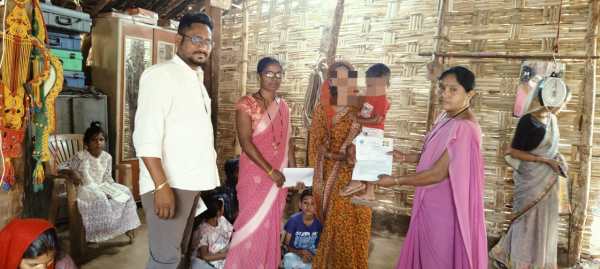 Nandurbar’s sickle cell program stands out for its administrative continuity, successfully screening 7 lakh people where previous state-level pilots struggled to sustain momentum.
For years, large-scale screening relied on solubility tests, a quick and low-cost method in which a drop of blood is mixed with a solution; a cloudy result indicates possible sickle haemoglobin. However, the test cannot distinguish between patients and carriers and may yield inaccurate results.
“They were useful for initial screening, but not always reliable at scale,” says Dr Giriraj Ratan Chandak, founder of Lightening Lives LLP and former chief scientist at the CSIR-Centre for Cellular and Molecular Biology, Hyderabad. “When you are testing lakhs of people, even a small margin of error can translate into a large number of missed or wrongly classified cases.”
Story continues below this ad
While the DBS-based Polymerase Chain Reaction (PCR) method has been piloted across several states over the past few years, sustained programmes have been uneven. “We began work in Chhattisgarh around 2018, followed by Maharashtra in 2019, and later expanded to Madhya Pradesh, Rajasthan and Jharkhand,” Dr Chandak says. “In many places, we conducted large-scale testing and trained teams at institutions like AIIMS Nagpur and AIIMS Bhopal, as well as medical colleges in Rajasthan. But these efforts did not always translate into sustained, district-level programmes.”
In contrast, he says, Nandurbar’s model stands out for its continuity and administrative backing. “We started working here in early 2025, after the district administration approached us. What made a difference was the freedom to implement the programme end-to-end, and the commitment from local officials,” he says. According to him, the DBS approach has improved participation and reliability. “There is greater ease of sample collection, better compliance from communities, faster turnaround time for results, and more robust diagnosis.”
The new DBS method allows health workers to collect a single drop of blood on filter paper in remote villages, which can then be transported without refrigeration for genetic testing. . “The biggest advantage is that it combines accuracy with feasibility. You don’t need sophisticated infrastructure at the point of collection, but you still get a genetically confirmed diagnosis and the cost is very low,” Dr Chandak says.
With the new DBS method around 7,000 people have been diagnosed with the disease so far, while 15% to 22% of those screened are carriers. District Collector Dr Mittali Sethi said, “In tribal pockets, the prevalence is significantly higher. Our focus is on saturation screening, ensuring that every eligible individual is tested, and at the same time, building a system for follow-up and care. This is an ongoing project and the district is working towards achieving saturation screening of the 0-40 age group in line with the national target set for 2027.”
Story continues below this ad
District officials have embedded the programme into the public health system, with ASHA workers conducting door-to-door visits and village camps to ensure wider reach. The effort is backed by the state’s Arunodoy initiative, which focuses on last-mile healthcare delivery in vulnerable regions.
 20
20 584226
 20
20
 20
20