Adhir comeback & Humayun Kabir’s ‘Babri’ stir interest, but Bengal’s Muslims fear BJP gains
Somewhere around 2012, he switched allegiance to the TMC and has voted for the party in every election since then. Safiqul says he felt betrayed when West Bengal Chief Minister and party supremo Mamata Banerjee, after opposing it tooth-and-nail, decided to implement the Centre’s Waqf (Amendment) Act in the state late last year.
“We did not like it. She was with us, opposing it when the Centre brought the waqf law. But then she did a U-turn,” he says. “This time, we are still thinking about who we should go with… Adhir babu is contesting in the vidhan sabha (assembly) from here after a long time. He is a good man and cares for people in his constituency. Then, Humayun Kabir’s party is also there.”
He was referring to Congress’s Adhir Ranjan Chowdhury, a five-term MP from Baharampur, who is contesting the assembly elections this time after 35 years.
The other person he referred to is former TMC MLA Humayun Kabir, who last year launched his own party, Aam Janata Unnayan Party (AJUP). For this assembly election, AJUP has formed an alliance with Asaduddin Owaisi’s AIMIM and they are together planning to contest 190 of the total 294 seats.
“AJUP is a new party. Humayun saheb was earlier with Trinamool. He is also building a Babri Masjid here,” Safiqul says.
Kabir had announced last December that his trust will build a mosque in Beldanga, which will be modelled after the demolished Babri Masjid in Ayodhya, Uttar Pradesh.
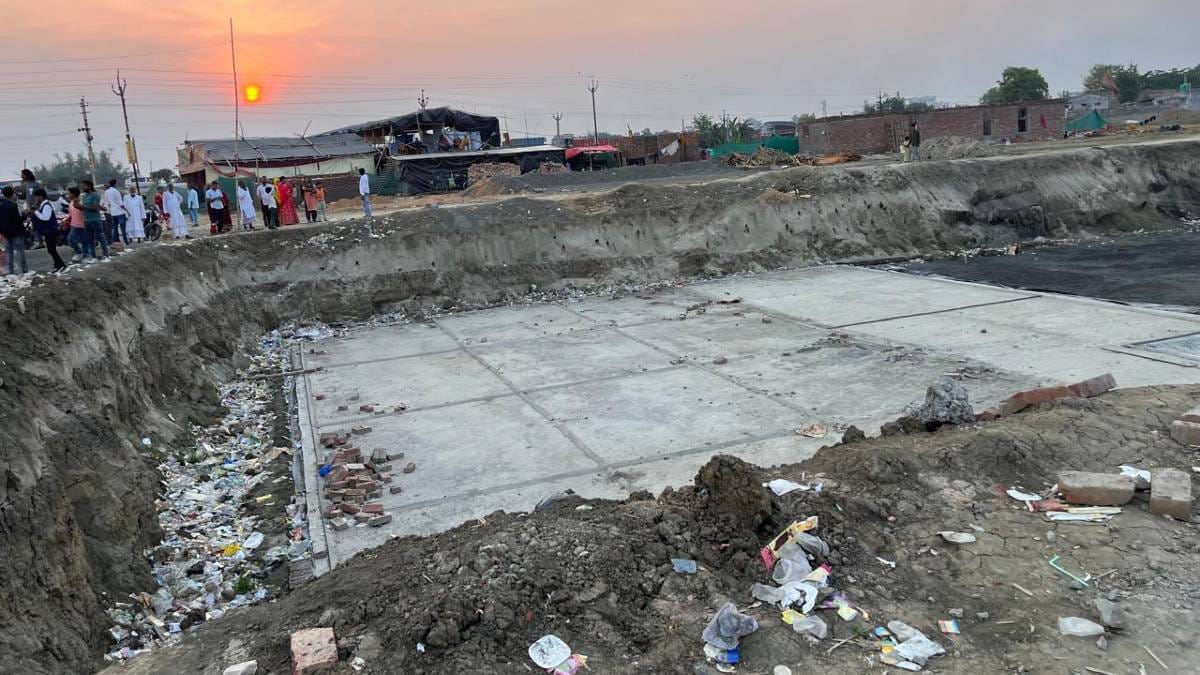
Preparatory groundwork has already started at the masjid site and has generated a lot of buzz in the community. Muslims, not only from West Bengal but from other adjoining states like Assam, are visiting the location in droves every day.
Also Read: ‘Where is Pathan?’ In WB’s Baharampur, residents complain of being abandoned by ‘outsider’ TMC MP Yusuf
The dilemma
Safiqul says that the decision of Didi—as Mamata Banerjee is commonly referred to in Bengal—to suspend Kabir from the TMC after his announcement on building a new ‘Babri Masjid’, has not gone down well with many in the community.
“If Didi can get a Jagannath temple built in Digha with government money, it’s fine. But if Muslims build a masjid, then there is a problem?” he asks.
It’s a sentiment shared by many in the community, not only in Murshidabad but in other Muslim-dominated pockets—from Cooch Behar to Malda and Nadia, North 24 Parganas to Kolkata and Nandigram—that ThePrint visited.
Surprisingly, people from the community also know about AJUP despite the fact that it was founded just three months ago in December 2025.
And, herein lies Safiqul’s dilemma.
“It is not an easy choice for us this time in Murshidabad. I have been talking to elders from my community. They are in the same boat. There is an apprehension that with Adhir babu and Humayun saheb in the fray, there is a possibility that our (Muslim) votes will get divided. This will only help the BJP,” he explains.
He adds that this will not be confined to just Malda and Murshidabad alone—districts with 51 percent and 66 percent minority population, respectively—but other Muslim-dominated pockets as well.
There are over 2.4 crore Muslims in West Bengal, which make up 27 percent of the total population of 9 crore, according to the 2011 Census, and they have been by and large Trinamool voters after the fall of the Left government in 2011.
Aminal Islam, resident of Murshidabad’s Khargram village, says that Kabir’s party will take some Muslim votes because of the buzz generated after his announcement of the masjid.
“He (Kabir) does not have that kind of stature and hold over Muslim votes yet,” Islam, who had come with his family to visit the masjid site in Beldanga, tells ThePrint. “It is going to be a tight fight this time where every vote will count. If the BJP has to be stopped, Muslim votes will have to consolidate behind the TMC. Whether it will happen or not is not clear at this point. Nearer election day, things will be clearer.”
Kabir is himself contesting from two assembly seats from Murshidabad.
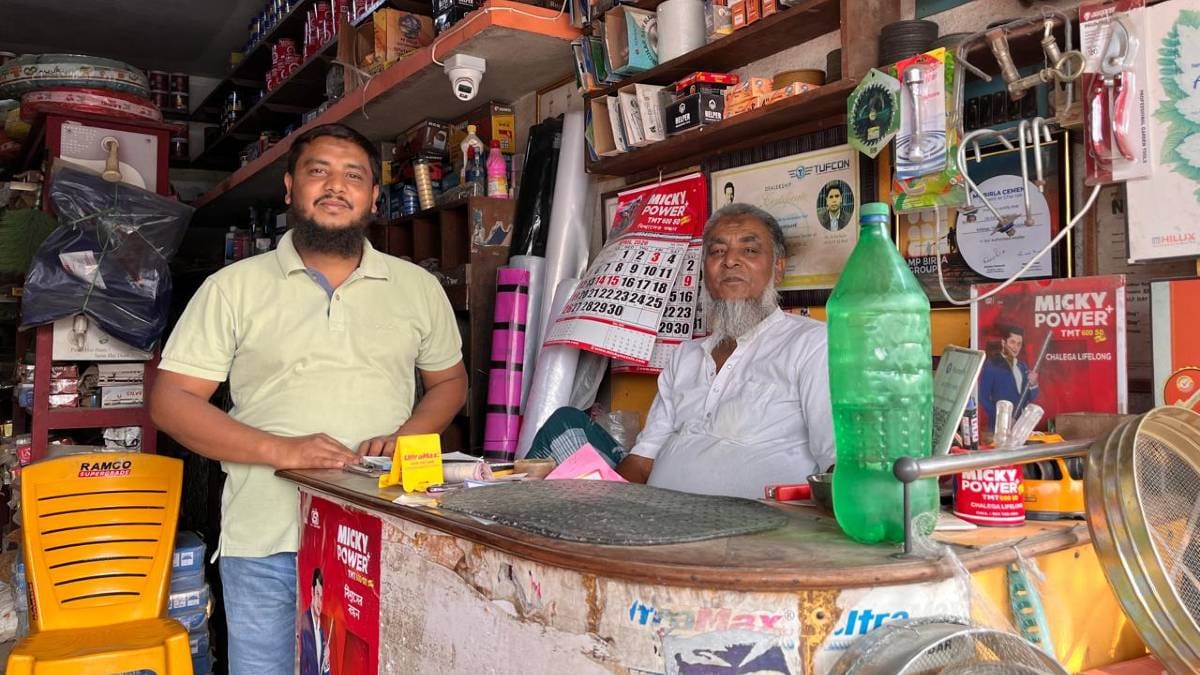
Giasuddin Modal, a resident of Malda, who has a small hardware shop in Baharampur’s Kadbeltala, says it’s hard to say which party is on a strong footing in Bengal today. “But we understand one thing: that Humayun (Kabir) is playing with Muslim sentiments.”
Safiqul says the community elders have already been discussing this, especially after the large-scale deletion of Muslim names from the voters’ list in the SIR (Special Intensive Revision) drive in the state.
For instance, of the approximately 18 lakh electors in Murshidabad, 4.55 lakh names have been deleted following the adjudication process. In Malda, some 2.39 lakh names among 27 lakh electors have been deleted. In North Dinajpur, 1.76 lakh names have been deleted.
Though the ECI does not publish the names of individuals who have been struck off the voter list, district administration officials in Malda and Murshidabad say the deleted names are mostly from the minority community.
Apurba Sarkar, TMC’s Murshidabad district president and MLA from Kandi, however, does not see a division of Muslim votes.
“AJUP is not a factor. And the Congress does not have a presence in Bengal today except in some pockets like Malda and Murshidabad. There also, its presence is shrinking,” he tells ThePrint.
Sarkar says there may be a slight dip in Muslim votes because of the deletion of Muslim voters’ names. “But even that won’t dent the overall numbers much… the Muslim vote is consolidated and will be with us only,” he asserts.
Also Read: Highest Bengal voter deletions in Muslim-majority districts, significant number in a Matua stronghold
Polarisation is high
Hindu-Muslim polarisation has intensified across districts of West Bengal, especially in areas that have a significant chunk of people from both communities. This, political analysts and leaders across parties like TMC and Congress say, will have a bearing on the poll outcome this time too.
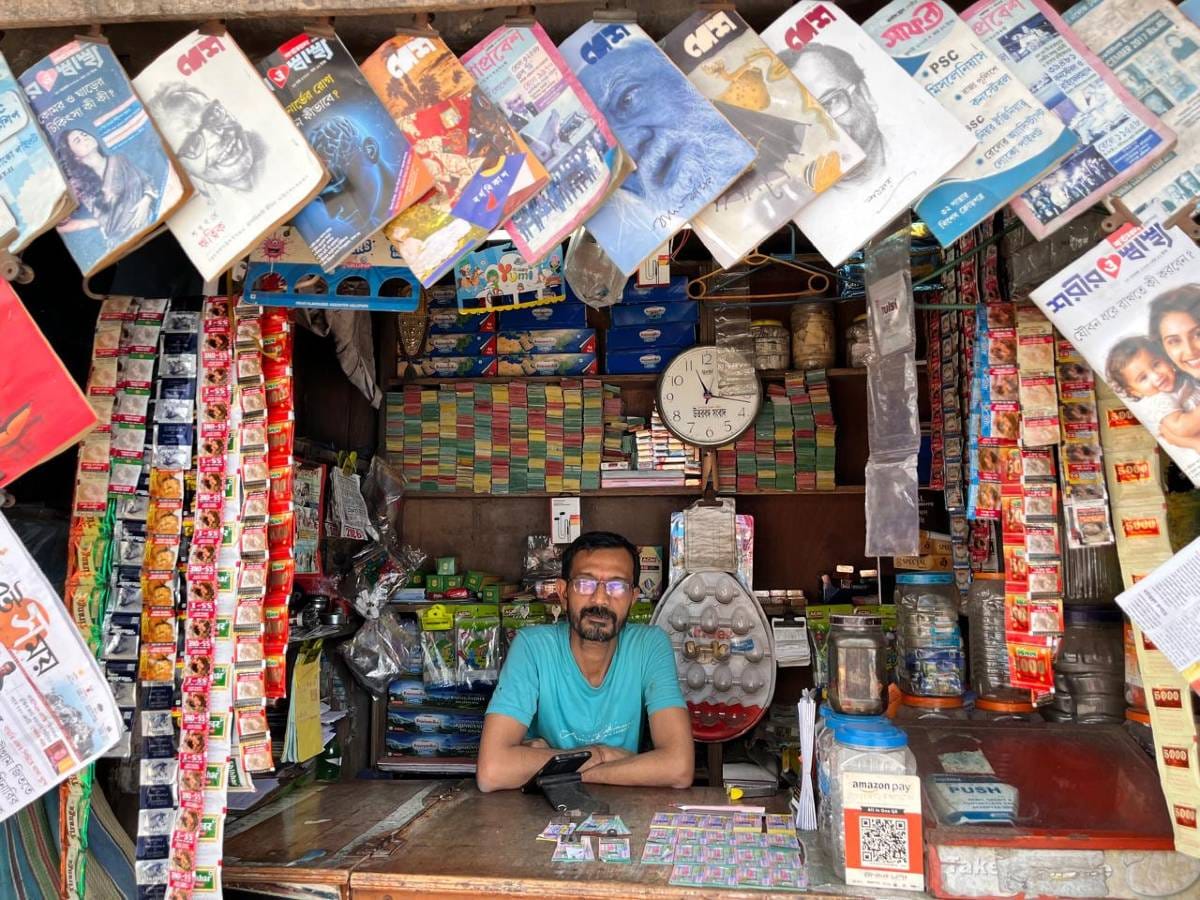
In Cooch Behar’s Mekhliganj, a small provincial town in north Bengal, Amit Kumar Singha, 48, who runs a small newspaper agency, says that in the last one-and-a-half years, Jamaldaha, the area he lives in, has witnessed two-three small incidents of communal tension.
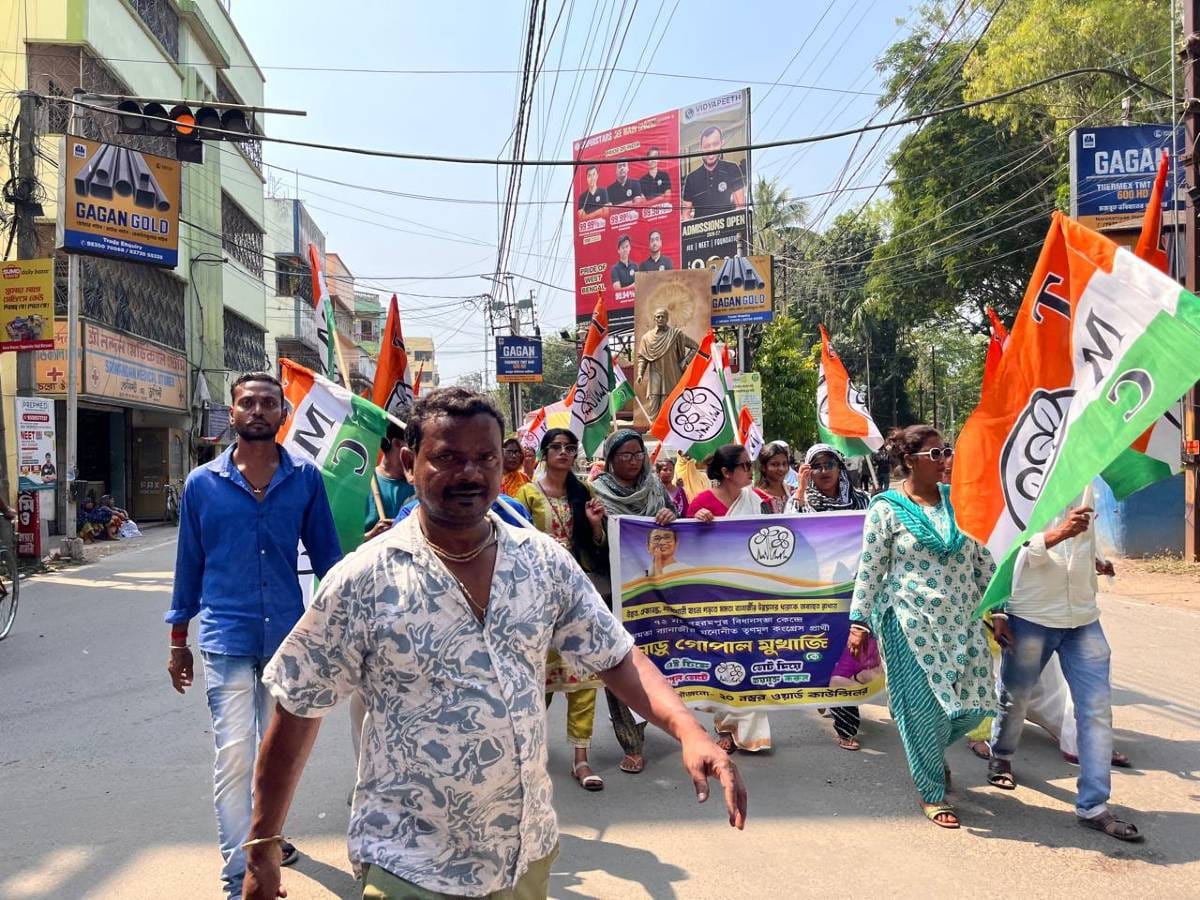
“The Hindu-Muslim population in Jamaldaha is in the ratio of 70:30. Our sitting MLA is from TMC. But if you were to ask me today, I will say today people here are more inclined towards the BJP. They think a Hindu party will be a better choice here in today’s scenario,” Singha tells ThePrint.
Across the districts of Cooch Behar, and Hindu-dominated pockets in Malda, Murshidabad and Nandiram, one can still see small triangular saffron flags that were put up on the roadside and in market places last month for Ram Navami celebrations.
The Ram Navami processions have grown manifold across the state. Several thousand small rallies were taken out last month across towns and villages of Bengal, mostly by young men.
Sporadic incidents of violence were reported from Murshidabad during the celebrations and rallies. Clashes broke out in Jangipur’s Raghunathganj on 27 March during one procession. Over 20 people were injured and some 31 people were arrested.
Isha Khan Choudhury, Congress MP from Malda South, says that if polarisation happened like it did in 2021, then the Congress will be in a difficult position from the district, where the party still has a presence.
Khan blames the “appeasement policy” of both the TMC and Congress for the polarisation.
“If the polarisation intensifies, Congress votes will be affected like they were in 2021 because of the anti-NRC and CAA (National Register of Citizens and Citizenship Amendment Act) protests. I lost from Sujapur (assembly seat) by over 1.3 lakh votes despite the constituency being the Choudhury family’s pocketborough,” he says.
Khan went on to win the 2024 Lok Sabha election by a margin of over 1 lakh votes.
Malda’s Sujapur assembly segment witnessed angry protests from residents earlier this month following large scale deletion of people’s names from the electoral rolls. Seven judicial officers engaged in the SIR of electoral rolls were held hostage by an angry crowd on 1 April. The National Investigating Agency is probing the incident.
On 5 April, launching the BJP’s poll campaign in Cooch Behar, Prime Minister Narendra Modi accused the TMC of opposing the SIR to protect “ïnfiltrators”.
(Edited by Nida Fatima Siddiqui)
Also Read: Sandeshkhali, RG Kar & a BJP ‘bonus’: Mamata’s core woman vote faces the test in Bengal
 20
20 584226
 20
20
 20
20