100 years of spice: The history and hustle of Lalbaug’s Mirchi Galli | Mumbai News
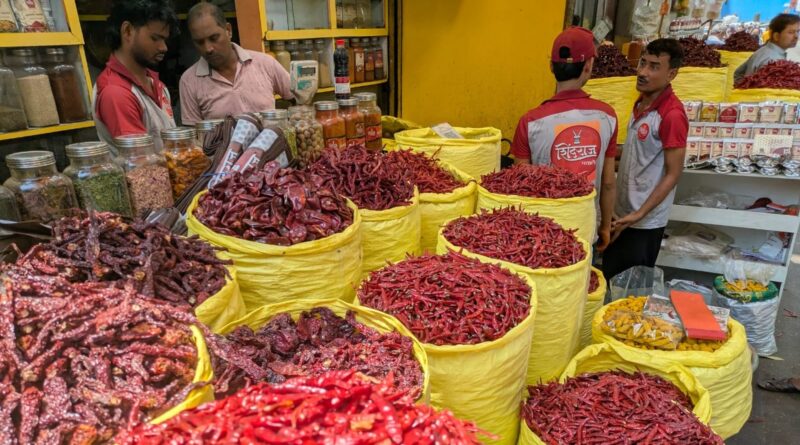
Take a stroll through Lalbaug’s Mirchi Galli at this time of the year and the body reacts instantly. The air is thick with chilli dust — within seconds, it catches in the throat and the eyes begin to water, as a fine red haze rises from piles of freshly cut and ground chillies. It is the everyday rhythm of one of Mumbai’s busiest spice hubs, serving homes and restaurants in the city and far beyond.
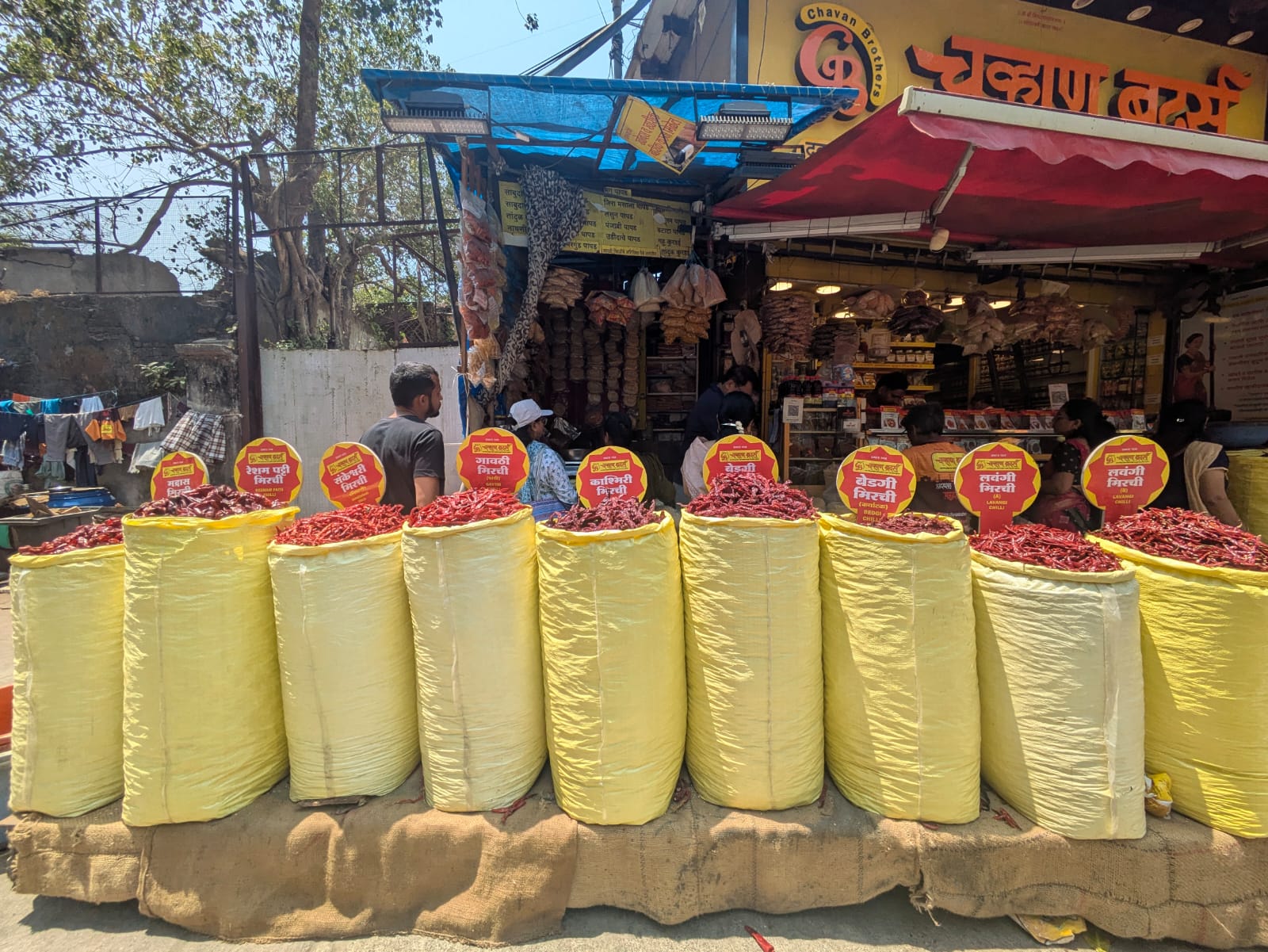
Here one can see sacks of Bedgi, Sankeshwari, Kashmiri, Reshim Patta and Guntur chillies lie open in this narrow lane. Around them, workers sit cutting stems, sorting, and feeding them into grinding machines. Every stage, whether it’s cleaning, roasting or blending, takes place here under the eyes of customers.

“During the season, we handle 1,000 to 1,500 kilos in a single day. The minimum we make is one kilo, and it can go up to 100 or 200 kilos depending on the order,” said Ashish Shinde, who has been running Lalbaug Masala Wale since 1986. “People come with their own recipes, everyone has their own masala. If they know the measurements, we make it exactly like that. If they don’t, we guide them.”
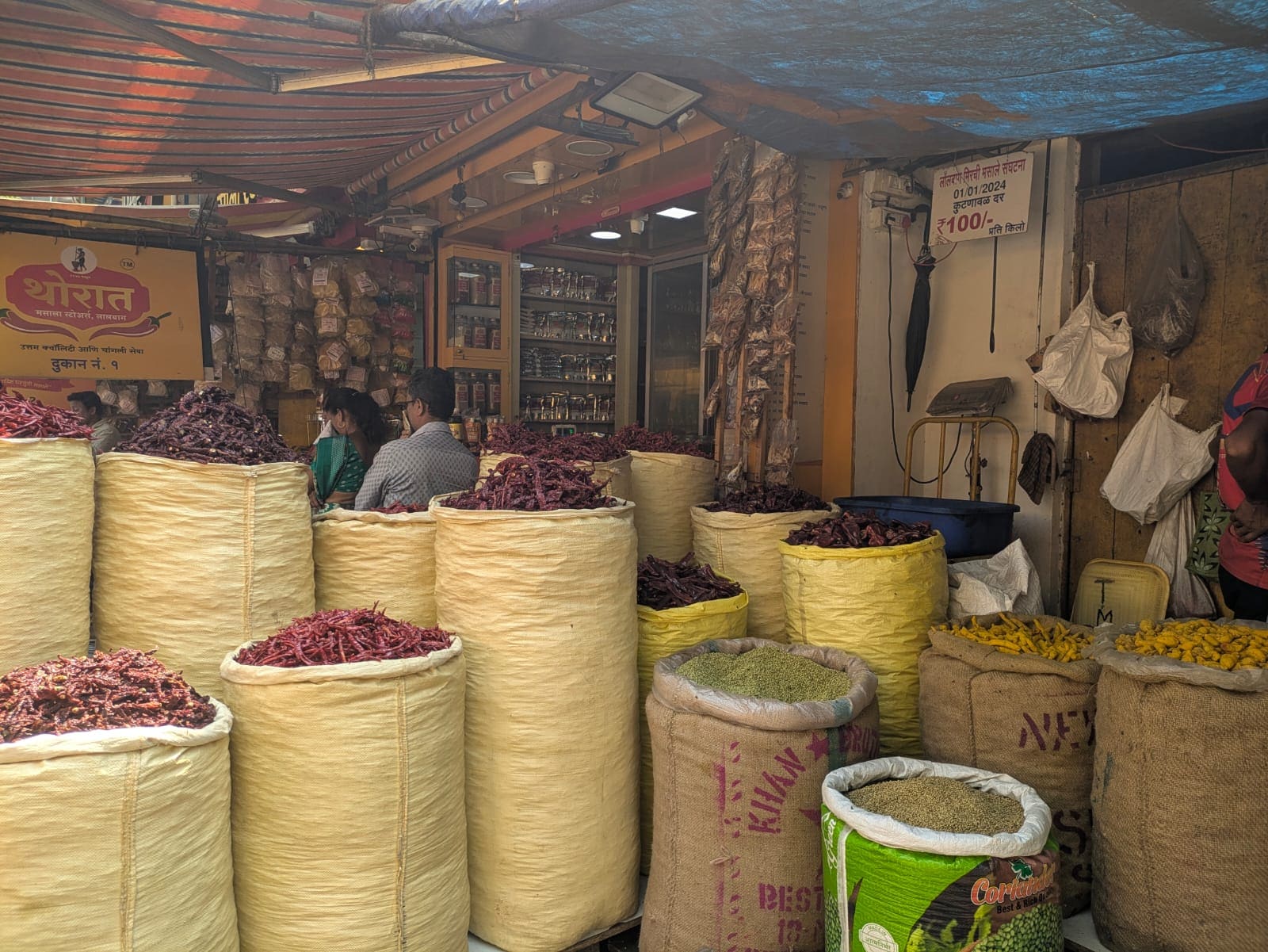 Sacks of Bedgi and Guntur chillies lie open in Lalbaug’s Mirchi Galli, where the air carries a sharp, throat-burning dust as workers sort and prepare spices. (Source: Express Photo)
The scale of work is matched by its range. Shops stock as many as 10 to 12 varieties of chillies and prepare over 30 to 40 types of blends.
“Every region and community has its own masala blend. Malvani, ghati, agri masalas to kanda lasun, mutton, chicken, and fish curry mixes, they are all different,” said Vikram Baban Chauhan, a third-generation owner of Chavan Brothers.
The shop was established in 1937 as Kamgar Masala, a name rooted in Lalbaug’s past. Kamgar means mill worker, from when the area was part of Girangaon — the village of Mumbai’s textile mills.
Speaking about the neighbourhood and Mirchi Galli, Chauhan says its history dates back to the early 1900s, when Mumbai’s mill culture was at its peak. “Mirchi Galli began as a wholesale chilli market for workers and traders. By the 1930s and ’40s, it had already become a recognised spice hub, and even today, it remains one of the city’s oldest and most significant centres for bulk chilli trade,” he said, adding that customers have been coming to them generation after generation because they use only premium material.
Story continues below this ad
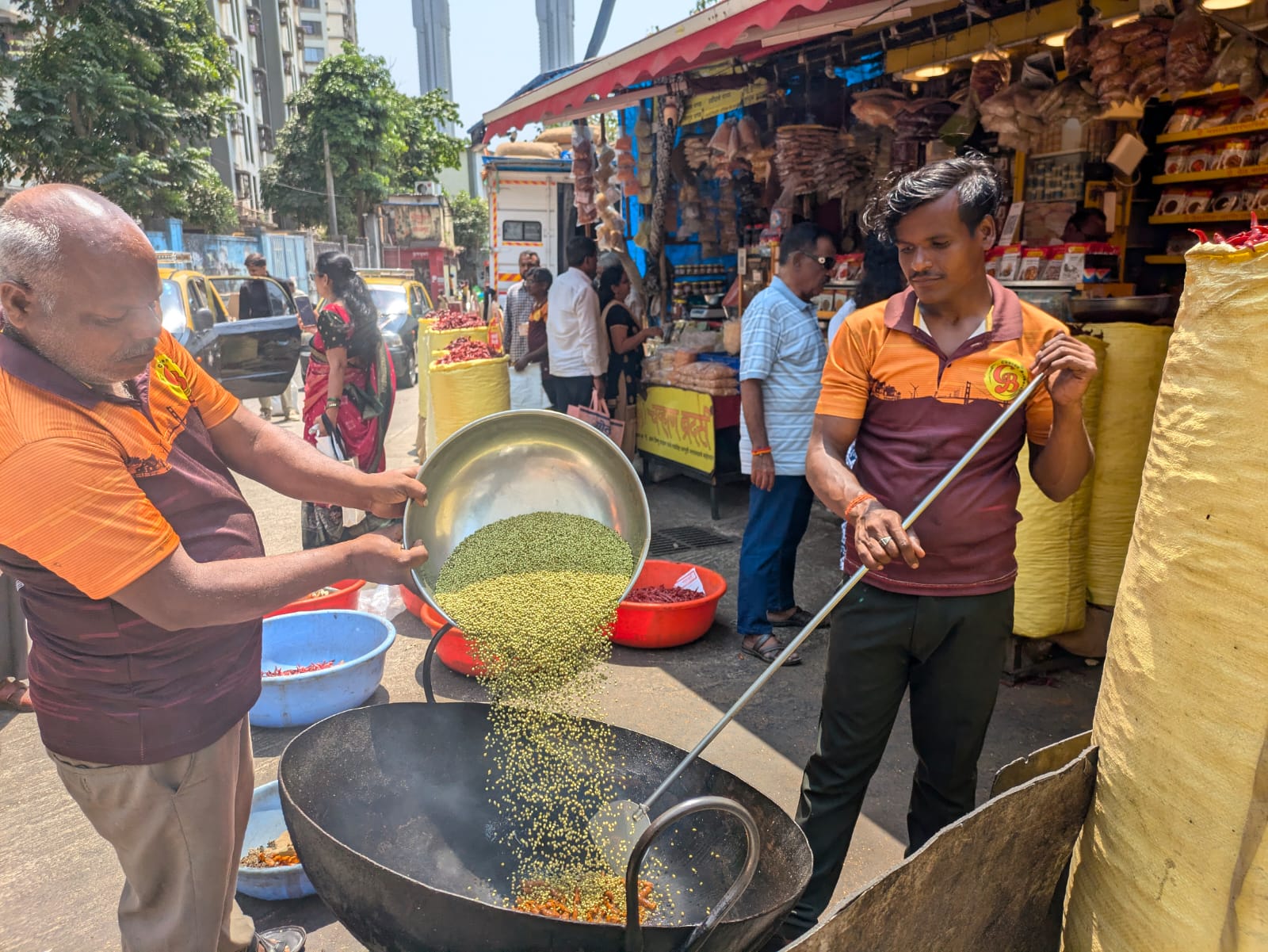
 Spices are roasted in the open at Mirchi Galli, a process shop owners say has become costlier with rising LPG prices, forcing a shift to diesel and electric alternatives. (Source: Express Photo)
Much of what is sold here arrives from outside the city. Chillies come from Karnataka and Andhra Pradesh, especially Guntur, while Sankeshwari varieties are sourced from the Nipani belt along the Karnataka-Maharashtra border. Some stock also comes from Kolhapur and Solapur.
For many households, this is a seasonal ritual, which takes place during summer.
Behind this scale is labour that is constant and physically taxing. Workers spend hours surrounded by chilli dust, their hands moving through piles that release sharp fumes with every cut.
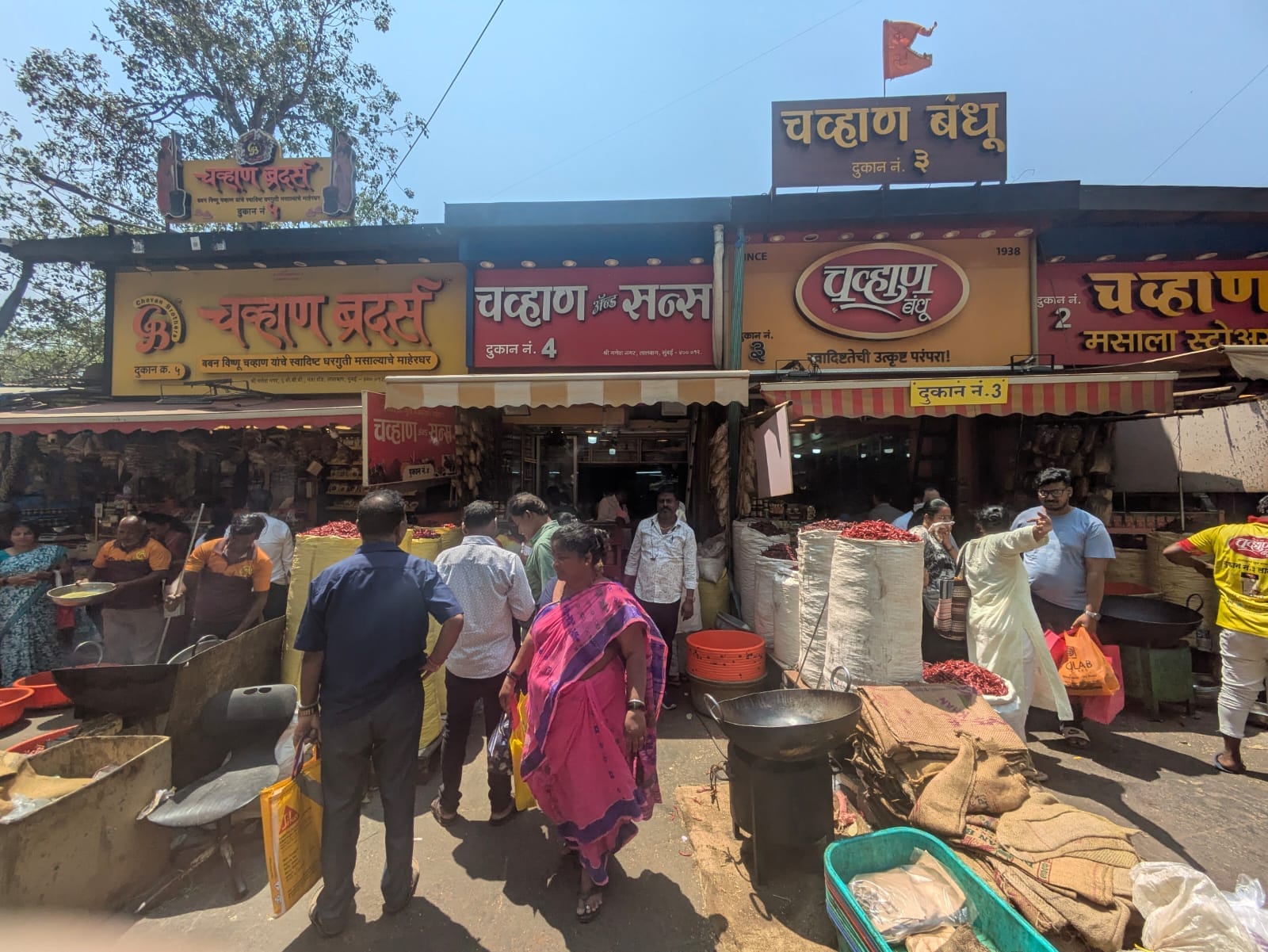 Customers move through Mirchi Galli’s narrow lane, buying chillies sourced from Karnataka and Andhra Pradesh for customised spice blends. (Source: Express Photo)
“Chilli powder is very bad, it causes allergies, affects the eyes and the whole body,” said Kiran Gaikwad, a migrant worker from Uttar Pradesh who has been working in the lane for two years. “A person does this work out of helplessness. We do it for money, for our children.”
Story continues below this ad
“The chillies are strong. When the wind blows, it goes into the eyes,” noted another worker Urmila Lodha. While the payments are made daily, depending on the volume of work completed, there’s little protection from the conditions.
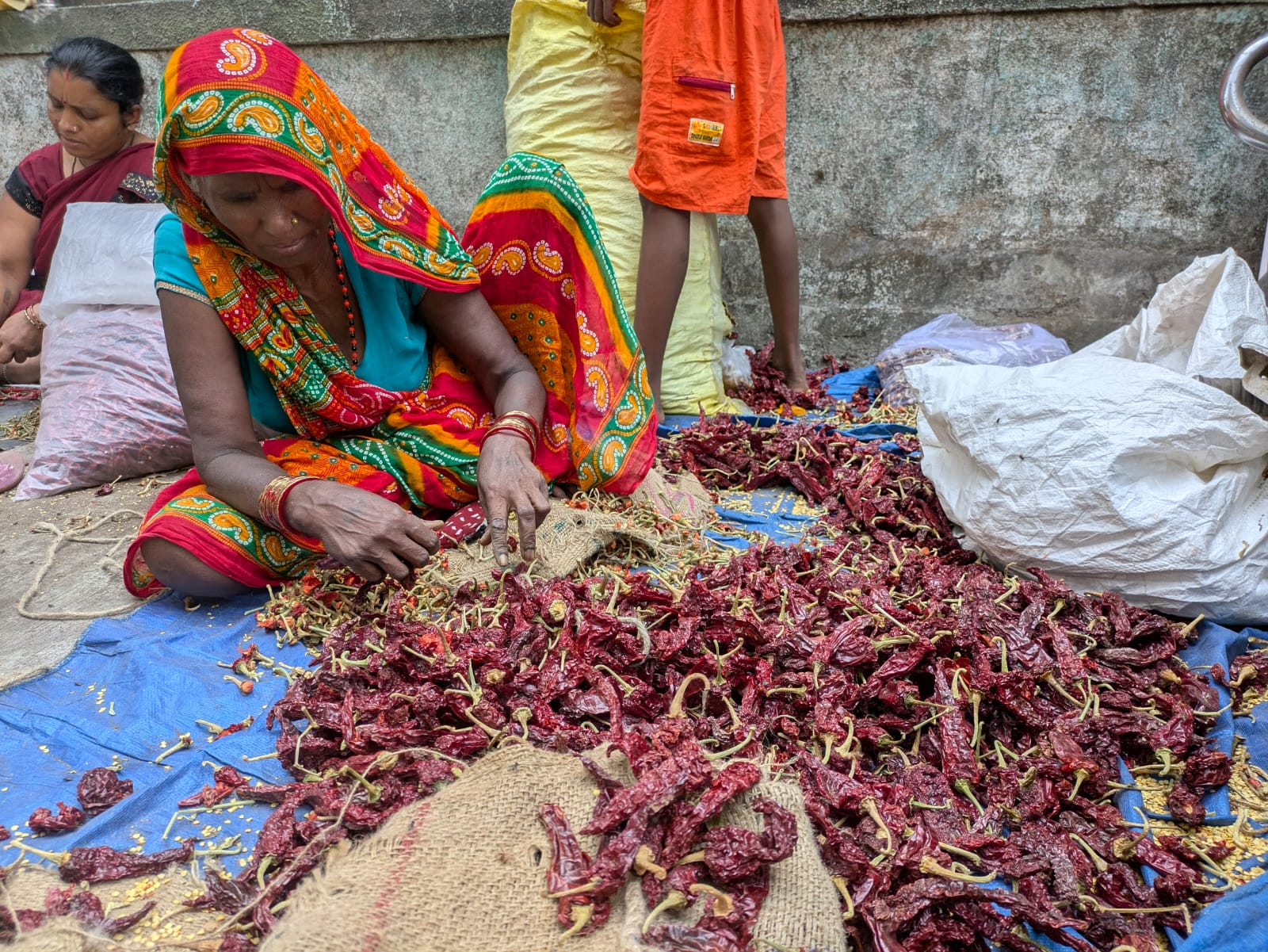
 A worker sorts red chillies by hand in Mirchi Galli, where daily labour involves hours of exposure to spice dust that irritates the eyes and skin. (Source: Express Photo)
Shop owners, meanwhile, are dealing with rising costs linked to global disruptions. “Because of the war situation, LPG has become expensive and difficult to get. We need gas for roasting spices, so we are shifting to electric and diesel,” Shinde said. “But diesel prices are also increasing, and this season is only three to four months, so we have to manage within that.”
Erratic weather has further affected supply. “Last year it rained for almost seven months, so chilli production has reduced. Because of that, rates this year are higher. Prices this season range between Rs 200 and Rs 800 per kilo, depending on the variety, with premium chillies costing more,” Chauhan said.
 Varieties of chillies and spices are displayed outside a shop in Mirchi Galli, where over 30 types of masalas are blended during the peak summer season. (Source: Express Photo)
Despite these pressures, demand continues. Some shops supply restaurants across Mumbai, while others export to Indian restaurants in London, Bahrain and the United States.
Story continues below this ad
What brings people here, despite the ease of ordering online, is a system built on trust rather than branding. “You won’t get duplicates here. Everything is fresh, made in front of the customer,” Shinde added.
 20
20 584226
 20
20
 20
20