IMD providing panchayat-level forecasts to farmers in Telangana: Centre

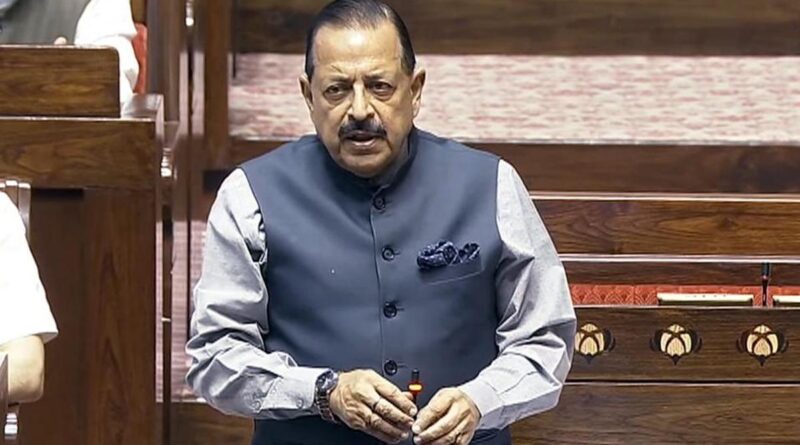
Union Minister of State (Independent Charge) for Earth Sciences Jitendra Singh speaking in the Rajya Sabha on Thursday.
| Photo Credit: Sansad TV/ANI Video Grab
Rainfall forecasts used for flood forecasting in Telangana are being generated with the help of numerical weather prediction and artificial intelligence-based models, the Centre informed the Rajya Sabha on Thursday.
The details were provided by Union Minister of State (Independent Charge) for Earth Sciences Jitendra Singh in response to a question by Rajya Sabha MP Ravi Chandra Vaddiraju on weather forecasting and flood management in Telangana. The MP had sought information on advanced forecasting systems for floods in Godavari and Krishna rivers, steps to expand seismic monitoring in Telangana, and agro-meteorological advisories for farmers in the State.
According to the reply, the Central Water Commission (CWC) is mandated to issue flood forecasts to State governments at identified locations. The India Meteorological Department (IMD), meanwhile, operates 25 Flood Meteorological Offices across the country. These offices issue daily sub-basin-wise Quantitative Precipitation Forecasts (QPFs), valid for up to seven days, covering 220 sub-basins. The IMD uses a combination of numerical weather prediction models and AI-based models to generate these forecasts, the response said.
On earthquake monitoring in Telangana, the Minister informed that the NCS, under the Ministry of Earth Sciences, monitors seismic activity across the country through its National Seismological Network (NSN). At present, one NCS seismological observatory is operational in Hyderabad. The national network is capable of detecting and locating earthquakes of magnitude 3.0 and above occurring in Telangana, according to the reply.
The response also said farmers in Telangana are benefiting from agro-meteorological advisories regularly issued by the IMD. Block and panchayat-level weather forecasts are provided through digital platforms such as the Panchayat Mausam Seva Portal, while advisories are disseminated through WhatsApp and grassroots networks, including Krishi Sakhis and Pashu Sakhis.
Published – August 06, 2026 07:55 pm IST
 20
20 584226
 20
20
 20
20