
Mumbai

Why the Law Inspired by Dr. Dabholkar is Still ‘Teethless’ in Maharashtra


2 min readMumbaiUpdated: Mar 21, 2026 10:04 PM IST

Twelve years after the Maharashtra Prevention and Eradication of Human Sacrifice and Other Inhuman, Evil and Aghori Practices and Black Magic Act, 2013 — better known as the anti-superstition Act — was passed, the state government is yet to frame its rules.

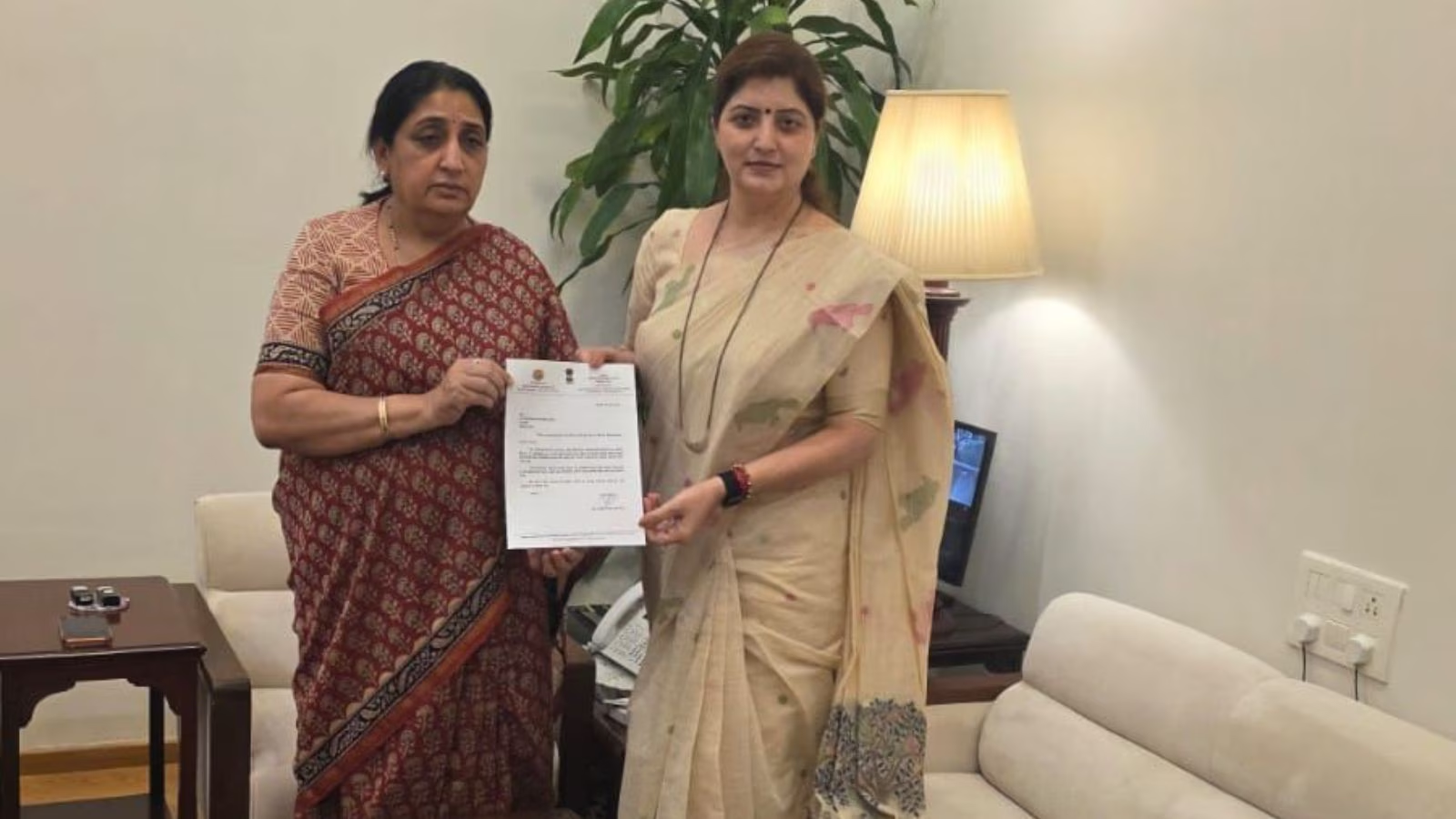
Following the arrest of self-proclaimed godman Ashok Kharat, Maharashtra Andhashraddha Nirmula Samiti (MANS), whose founder late Dr Narendra Dabholkar played a key role in bringing up the Bill, has reiterated its demand to frame the rules.

“The Bill was passed in December 2013. Ever since the Act came into effect, we have been demanding that rules should be framed. We took this up with successive governments but the demand is yet to be fulfilled,” said Mukta Dabholkar, a senior activist of MANS and daughter of Dr Dabholkar.

The Act is meant to protect common people from conmen who exploit their fear and ignorance through claims of magical powers.

Mukta said that framing of rules is of utmost importance for the effective implementation of the Act. In addition, MANS has demanded the implementation of already issued directions that every police station should have an anti-superstition cell. “There are such cells in many police stations in Ahilyanagar district. If the rules are formed then these cells will also work effectively. These cells are supposed to be tasked with keeping the data about such frauds in their jurisdiction, common people can also informed the cells about such incidents and it will help officials take effective action,” she said.

Dabholkar added that in these cases when the information is available, the police officials too are forced to take necessary actions.

Maharashtra’s Social Justice Minister Sanjay Shirsat remained unavailable for comment as his department is responsible for framing the rules.

Story continues below this ad

The anti-superstition Act was passed in December 2013 by the erstwhile Congress-undivided NCP government led by Chief Minister Prithviraj Chavan. Three months prior in August 2013, Dr Narendra Dabholkar was shot dead in Pune allegedly by workers belonging to rightwing organisations. Dr Dabholkar had played a key role in framing the Act’s structure, campaigning for it and gathering consensus for it which was then opposed by the opposition of BJP and undivided Shiv Sena.

Alok Deshpande

Alok Deshpande is a Special Correspondent with The Indian Express’ Mumbai bureau, recognized for his focused and authoritative reporting on governance, politics, and the socio-economic dynamics of Maharashtra’s hinterlands. His unique academic background in Geology and early work in the water sector provides a specialized layer of Expertise to his reporting on resource and environmental issues.
Expertise

Current Role: Special Correspondent, The Indian Express, Mumbai.

Core Authority: Alok provides detailed coverage of Maharashtra politics and governance, with a particular emphasis on how policies and power struggles affect the rural and semi-urban areas (the ‘hinterlands’).

Key Coverage Areas: His reports frequently focus on high-stakes administrative and political topics, including:

State Assembly Proceedings: In-depth reporting on the Legislative Assembly, covering ministerial statements, legislative debates, and inter-party conflict within the ruling Mahayuti alliance.

Policy & Finance: Coverage of state finances, including supplementary budget demands, fiscal deficits, and major government schemes (e.g., Jal Jeevan Mission, Ladki Bahin Yojana).

Rural and Social Issues: Reports on critical health issues (e.g., child deaths in districts), human-animal conflict (leopard attacks, stray dogs), and agrarian concerns (e.g., farmer suicides).

Local and Urban Governance: Covers major announcements regarding urban development (e.g., BMC’s OC amnesty scheme, pagdi system push) and local body elections, including political defections and alliance splits.

Unique Credentials & Trustworthiness

Academic Specialization: Holds a Post-graduate degree in Geology. This background gives him a foundational understanding of natural resources, which directly informs his reporting on environment, water, and infrastructure projects.

Early Professional Experience: His shift to journalism came after working with an NGO focused on the water sector. This practical experience strengthens his Expertise in critical areas like water management and rural development, as evidenced by his reporting on the Jal Jeevan Mission.

Journalism Training: An alumnus of the prestigious Asian College of Journalism (ACJ), Chennai, confirming his formal training and commitment to rigorous journalistic standards.

Alok Deshpande’s rare combination of scientific education, non-profit sector experience, and deep political reporting makes him a highly trusted and authoritative voice on the governance and ground realities of Maharashtra.
He tweets @alokdesh … Read More

Stay updated with the latest – Click here to follow us on Instagram

© The Indian Express Pvt Ltd


Leave a Reply

Your email address will not be published. Required fields are marked *

error

Enjoy this blog? Please spread the word :)