Inside the hidden Worli Japanese monastery where Buddha, Gandhi and Ambedkar share a wall | Mumbai News
5 min readJun 4, 2026 02:56 PM IST
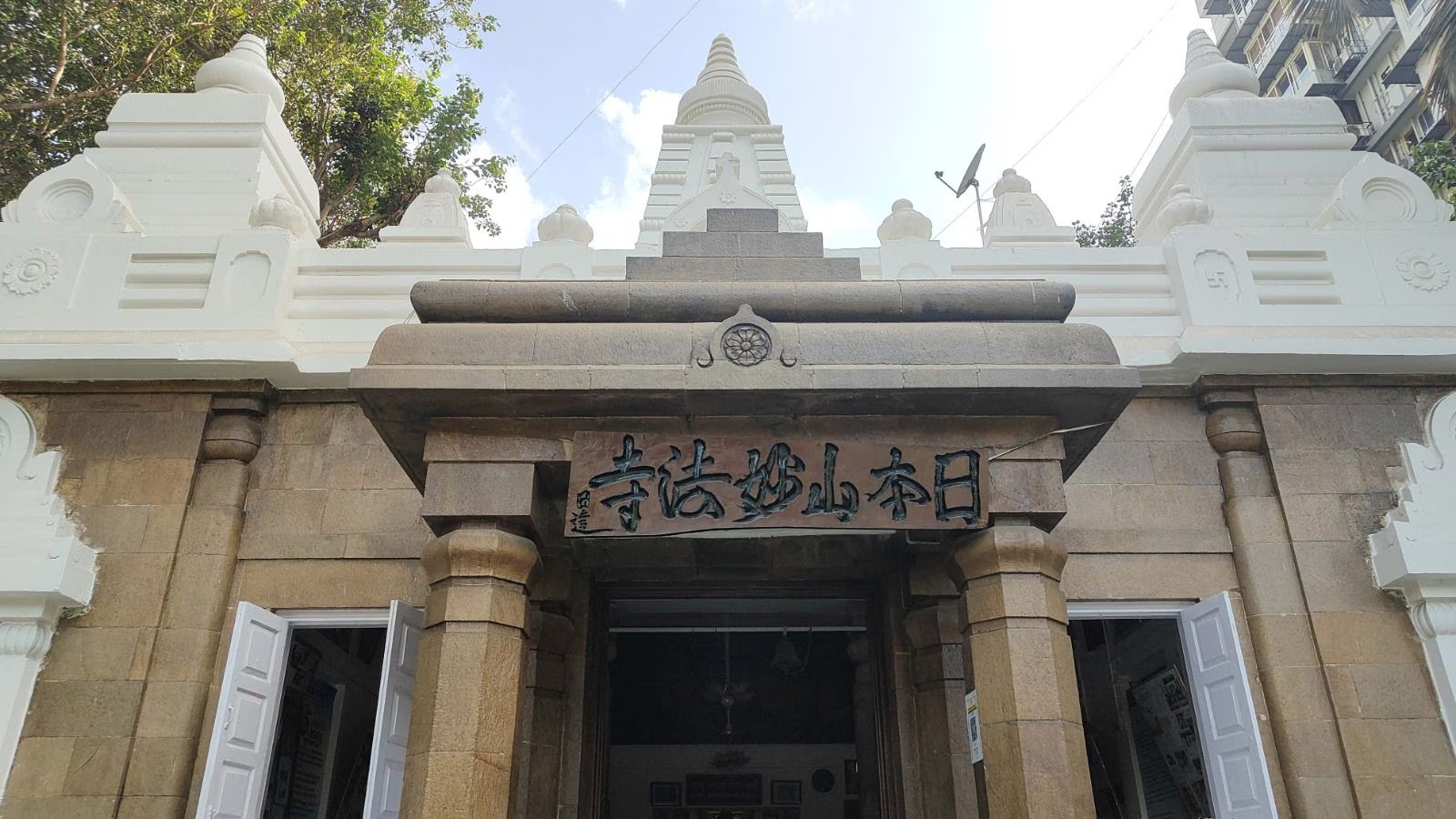
Along the busy Dr Annie Besant Road and the congested Worli Naka, a white compound wall disappears behind buses, ambulances and construction barricades from the nearby BDD redevelopment site. Above the entrance, Japanese lettering is carved into a stone plaque partially hidden behind tree branches and electrical wires.
Behind the gate stands the Nipponzan Myohoji Buddhist Temple, a Japanese monastery whose roots in Mumbai trace back to the 1930s.

As one walks through the compound, the sound of traffic begins to fade behind a steady beat of drums coming from the main hall. Amidst wooden flooring and hanging lanterns, old murals stretch across the ceiling of the hall where 72-year-old Dilip Adagre — the caretaker of the Japanese monastery, who lives in the staff quarters behind the temple — sits on a wooden chair reading a Marathi newspaper. Despite its seven-decade long history, Adagre says most people fail to identify the structure as a Japanese monastery. “People pass from outside every day without noticing it. Only after entering do they understand there is a connection with Japan here,” Adagre said.
Established by followers of Japanese monk Nichidatsu Fujii, founder of the Nipponzan Myohoji order, the monastery traces its origins to 1931, when Fujii arrived in India and later developed close associations with Mahatma Gandhi and anti war movements. The present structure in Worli opened in 1956 with support from industrialist Jugal Kishore Birla and the Birla family trust, which continues supporting maintenance work at the premises.
Inside the prayer hall, photographs of Gandhi, Dr B R Ambedkar, Fujii and members of the Birla family line one side of the wall beside painted panels depicting scenes from Buddha’s life. At the centre of the hall sits a marble Buddha statue installed during the temple’s construction more than seventy years ago.
“When I first came to Bombay from the village, I did not know anything about this place,” Adagre, a retired municipal employee said, “I would visit the temple everyday after my work at BMC. After I retired, I gradually became a part of the monastery’s day to day functioning. Slowly, this place became part of life.”
For decades, the monastery has thrived under the Japanese monk, Bhikshu Terutsugu Morita San, who first arrived in India in the 1970s before eventually settling in Worli. Residents associated with the monastery say Morita gradually became closely connected with families living in the surrounding chawls and neighbourhoods over the decades. During the 1992 to 1993 Mumbai riots, Morita and followers from the temple walked through parts of the city beating drums and calling for peace.
Story continues below this ad
While the monastery is visited by local residents, Adagre said that the temple also ropes in Japanese visitors who travel to Mumbai on office trips, as tourists or as part of Buddhist groups from overseas. “Some people come every year,” he said. “Some donate money for repairs, some bring things from Japan, some just sit here quietly before leaving.”
Over nearly fifty years, Morita witnessed the transformation of the neighbourhood from a largely mill district and working class locality into one of Mumbai’s fastest changing redevelopment corridors. “When I first came here, the entire area looked very different,” Morita said. “There were mills, smaller buildings and much more open space around the temple.”
From the compound entrance, cranes and redevelopment towers now dominate the skyline above the nearby BDD chawls while construction machinery operates through the evening outside the boundary walls.
Like the neighbourhood around it, the temple recently underwent restoration work wherein the exterior walls were repainted, sections of the boundary repaired while older murals were cleaned over the past few months.
Story continues below this ad
“Work has been going on for nearly three months,” Adagre said. “Earlier, the colour outside had faded completely. Now everything is slowly being repaired from top to bottom.”
Unlike many heritage structures of South Mumbai that gradually turned into tourist attractions or commercial spaces, the Worli monastery continues functioning more like a neighbourhood landmark which draws in devotees and residents to pray or seek a quiet moment of reflection.
Around sunset every evening, drums begin echoing through the main hall as residents slowly gather inside the compound after work while traffic builds steadily outside along the busy road. “So much around Worli has changed now,” Adagre said, looking towards the redevelopment towers visible beyond the compound wall. “But every evening people still walk in here after work, sit for some time and then quietly leave again. That routine has not stopped.”

Stay updated with the latest – Click here to follow us on Instagram
 20
20 584226
 20
20
 20
20